
Shoes endure more than most garments—exposed to dirt, moisture, salt, and daily wear. Whether it’s coffee spilled on your white sneakers or mud tracked across suede loafers, stains are inevitable. But with the right knowledge, nearly every blemish can be reversed. This guide delivers actionable, material-specific strategies to restore your footwear to its original condition, prolonging both appearance and lifespan.
Understanding Shoe Materials and Stain Types
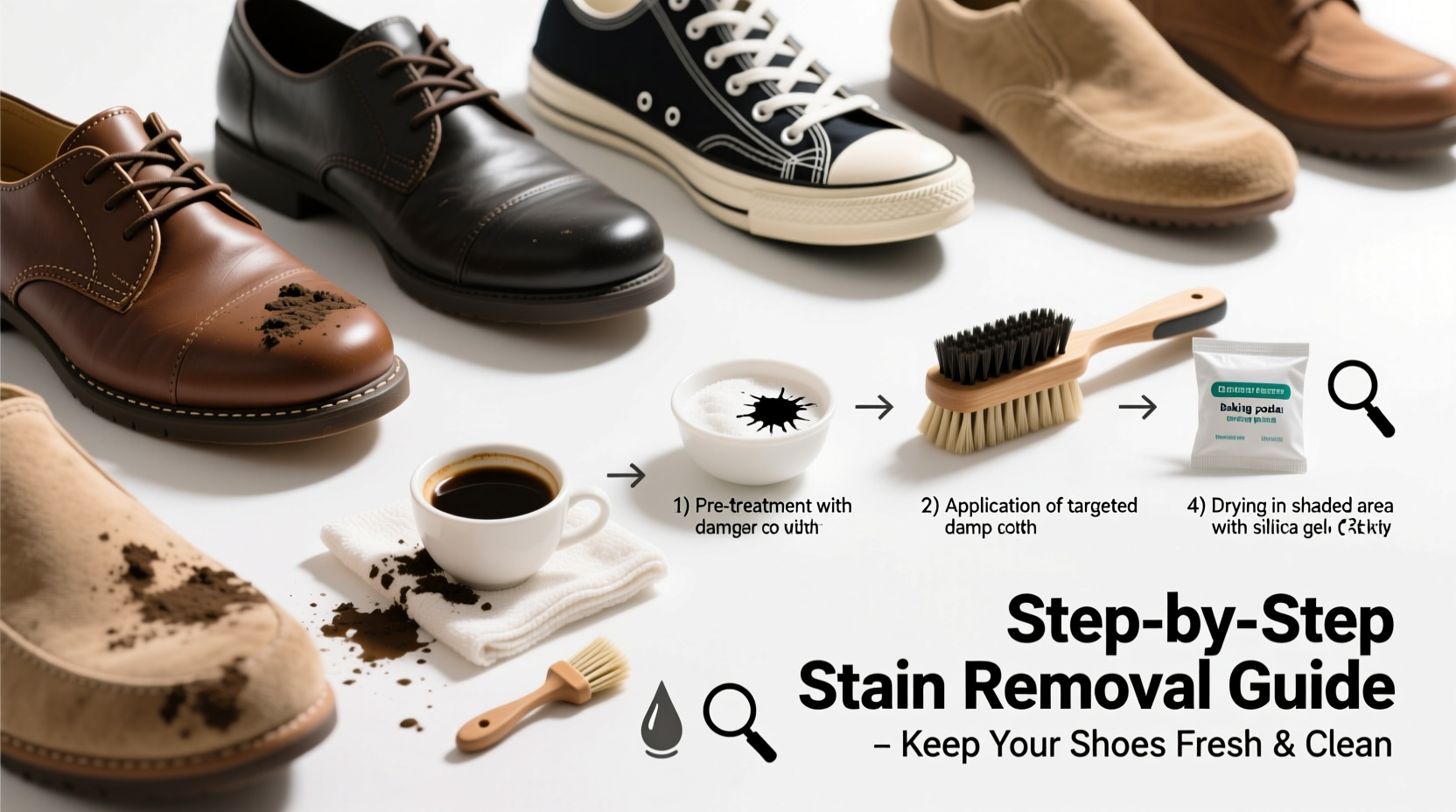
The first step in effective stain removal is identifying the shoe's material. Each fabric or leather type reacts differently to cleaning agents and techniques. Applying a harsh cleaner to delicate suede, for instance, can cause irreversible damage. Similarly, water-based stains behave differently than oil-based ones.
Common materials include:
- Leather: Durable but sensitive to moisture and abrasives.
- Suede/Nubuck: Porous and soft; requires gentle, dry-cleaning methods.
- Cloth/Canvas: Absorbent and machine-washable in many cases.
- Mesh/Knit: Lightweight but prone to fraying if scrubbed aggressively.
- Rubber/Plastic: Resistant to most cleaners but may yellow over time.
Stains fall into three primary categories:
- Organic (mud, food, blood): Often protein-based; respond well to enzymatic cleaners.
- Oil-based (grease, makeup): Repel water; require absorbents like baking soda or cornstarch.
- Water-soluble (coffee, juice, sweat): Can be lifted with mild detergents and blotting.
Step-by-Step Stain Removal Techniques by Material
Different materials demand tailored approaches. Below is a detailed, step-by-step breakdown for treating common stains based on shoe composition.
Leather Shoes
- Wipe off surface dirt with a dry microfiber cloth.
- Mix a few drops of mild dish soap with warm water.
- Dip a soft cloth into the solution, wring thoroughly, and gently wipe the stain.
- Rinse with a damp (not wet) cloth to remove soap residue.
- Let air-dry away from direct heat.
- Apply a leather conditioner once dry to prevent cracking.
Suede and Nubuck
- Use a suede brush or eraser to lift dry surface stains.
- For oil stains, sprinkle cornstarch or talcum powder; let sit overnight to absorb grease.
- Brush off powder gently with a brass-bristled brush.
- For water stains, steam lightly with a garment steamer and brush while damp.
- Never use water directly—this can leave rings or stiffen the material.
Cloth and Canvas
- Remove laces and clean separately.
- Pre-treat stains with a paste of baking soda and water; apply with an old toothbrush.
- Let sit for 15–30 minutes.
- Scrub gently in circular motions.
- Wipe with a damp cloth or rinse under cool water.
- Air-dry completely—avoid direct sunlight to prevent fading.
White Rubber Soles
- Create a paste of baking soda and hydrogen peroxide (1:1 ratio).
- Apply with a toothbrush to yellowed areas.
- Let sit for 20 minutes.
- Scrub again, then rinse with water.
- Wrap in a clean, damp paper towel and place in indirect sunlight for 2–3 hours to enhance whitening (sunlight activates peroxide).
Do’s and Don’ts: A Quick Reference Table
| Material | Do’s | Don’ts |
|---|---|---|
| Leather | Use pH-balanced cleaners, condition regularly, store with shoe trees | Submerge in water, use vinegar or alcohol, expose to heat |
| Suede | Use a suede brush, apply protective spray, treat spills immediately | Wet with water, use soap, scrub hard |
| Cloth/Canvas | Machine wash (if label allows), pre-treat stains, air-dry | Use bleach, tumble dry, iron |
| Rubber | Use baking soda paste, wipe after wear, store away from UV light | Use acetone, leave in hot cars, ignore buildup |
Expert Insight: The Science Behind Stain Removal
“Stain removal isn’t just about scrubbing—it’s chemistry. Oil needs emulsifiers, proteins need enzymes, and tannins (like coffee) need oxidation. Matching the method to the molecule makes all the difference.” — Dr. Alan Reyes, Textile Chemist and Footwear Care Researcher
Understanding the chemical nature of stains allows for smarter interventions. For example, hydrogen peroxide acts as an oxidizing agent, breaking down organic compounds in yellowed rubber. Enzymatic cleaners target protein residues in sweat or blood. Baking soda, mildly abrasive and alkaline, lifts acidic stains while deodorizing.
Real-World Example: Reviving a Coffee-Stained Suede Loafer
Sarah, a marketing executive, spilled latte on her favorite pair of taupe suede loafers during her morning commute. Panicked, she almost tossed them—until she followed a simple protocol.
She blotted the excess liquid with a paper towel, avoiding rubbing. That evening, she sprinkled cornstarch over the damp spot to absorb oils from the milk. After 12 hours, she brushed gently with a suede eraser. Though a faint shadow remained, she used a color-matched suede touch-up pen to blend the area. Within two days, the shoes looked presentable enough for client meetings.
This case illustrates that even delicate materials can recover when treated promptly and correctly.
Essential Shoe Care Checklist
Follow this routine to keep your shoes stain-free and in peak condition:
- ✅ Remove dirt and debris after each wear
- ✅ Use protective sprays on leather, suede, and canvas
- ✅ Rotate shoes to allow drying between uses
- ✅ Store in breathable cotton bags or boxes
- ✅ Clean stains within 24 hours for best results
- ✅ Condition leather every 4–6 weeks
- ✅ Reapply waterproofing after deep cleaning
Frequently Asked Questions
Can I put my canvas shoes in the washing machine?
Yes, but only if the care label permits. Always remove laces and insoles, place shoes in a pillowcase to reduce agitation, and use cold water with mild detergent. Never use a dryer—air-dry naturally to prevent shrinkage or sole separation.
How do I remove ink stains from white sneakers?
For ink on rubber or synthetic upper parts, dip a cotton swab in rubbing alcohol and dab gently—don’t rub, as this spreads the stain. Test on a hidden area first. For fabric uppers, try a mix of dish soap and hydrogen peroxide, applied sparingly with a toothbrush. Rinse immediately.
Why do my white shoes turn yellow after washing?
Yellowing often results from residual detergent, exposure to sunlight during drying, or oxidation of chemicals in the rubber. To prevent this, rinse thoroughly, avoid chlorine-based cleaners, and dry indoors away from UV light. Using a UV-blocking shoe cover during storage also helps.
Final Thoughts: Make Stain Care a Habit, Not a Crisis
Effective stain removal isn’t about emergency fixes—it’s about consistent maintenance. Waiting until a scuff becomes a stain, or a stain becomes permanent, reduces your chances of recovery. By integrating simple habits like immediate blotting, regular brushing, and seasonal conditioning, you preserve not just appearance but structural integrity.
Your shoes reflect your lifestyle. Treat them with care, and they’ll support you mile after mile. Start today: pull out your most worn pair, assess the stains, and apply the appropriate technique. With patience and precision, even the most stubborn marks can disappear.




 浙公网安备
33010002000092号
浙公网安备
33010002000092号 浙B2-20120091-4
Comments
No comments yet. Why don't you start the discussion?