
Acrylic paint is beloved by artists for its vibrancy and versatility, but when it ends up on clothing—especially after drying—it can feel like a permanent stain. Unlike water-based spills that wash away easily, dried acrylic forms a tough, plastic-like film on fabric fibers. The key to successful removal lies in acting quickly, choosing the right solvent, and protecting the garment’s integrity throughout the process. With the correct approach, even set-in paint can be lifted without harming delicate materials.
Understanding Acrylic Paint and Fabric Interaction
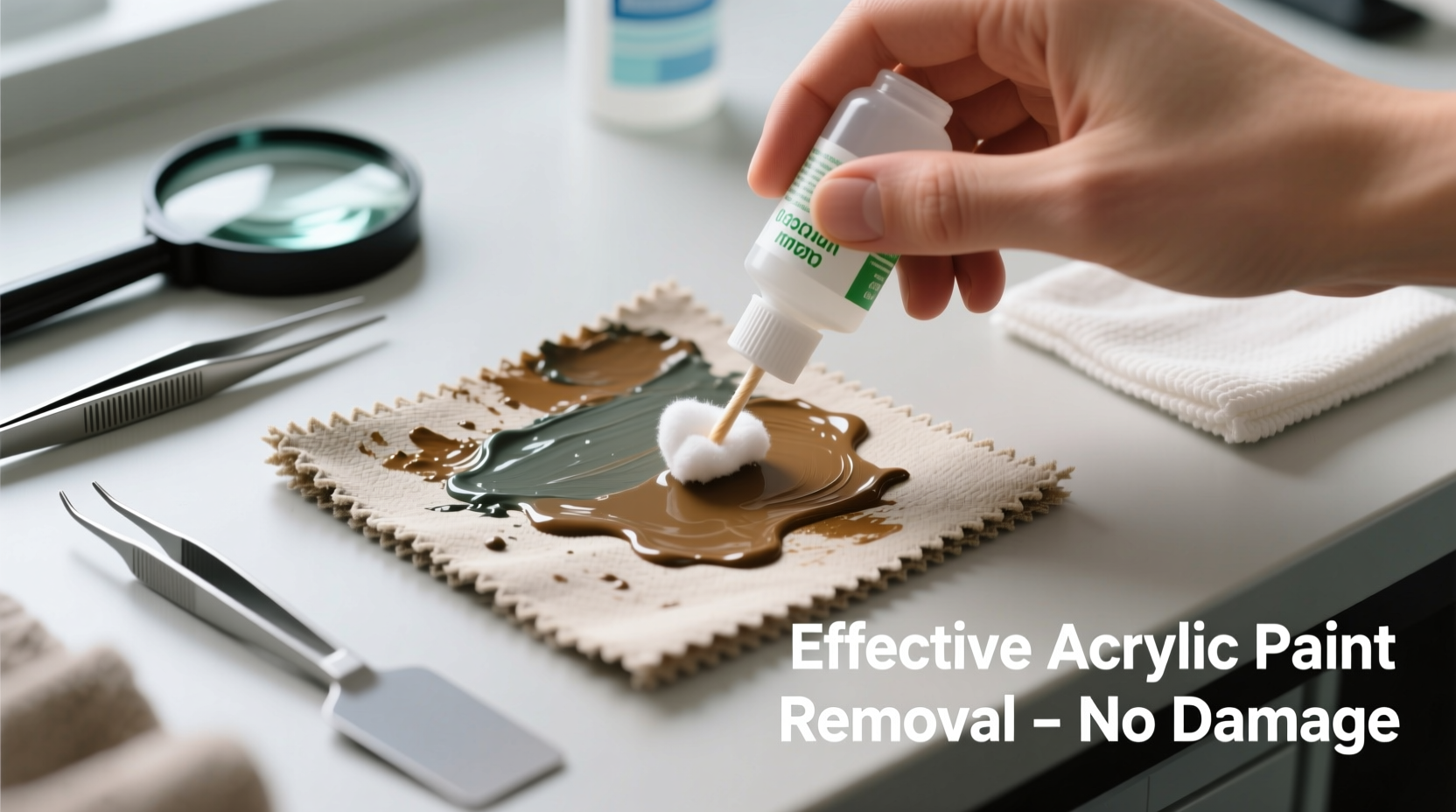
Acrylic paint consists of pigment suspended in an acrylic polymer emulsion. When wet, it’s water-soluble, but once it dries, it becomes water-resistant and flexible—essentially forming a thin layer of plastic over the surface it touches. This transformation makes mechanical or chemical intervention necessary for removal. The type of fabric plays a crucial role: cotton and denim are more resilient, while silk, rayon, or synthetic blends require gentler treatment to avoid fiber degradation.
The longer the paint sits, the more tightly it bonds with the textile. Immediate action improves outcomes significantly, but even week-old stains can be addressed with patience and proper technique.
“Once acrylic dries, you’re no longer dealing with a stain—you’re removing a coating. That means solvents must penetrate without weakening the underlying fabric.” — Dr. Lena Pruitt, Textile Chemist at the Institute for Fabric Innovation
Step-by-Step Guide to Removing Dried Acrylic Paint
Follow this structured method to maximize effectiveness while minimizing fabric stress. The goal is gradual softening and lifting rather than aggressive scraping, which can spread or embed the paint deeper.
- Assess the fabric and paint location: Check the care label. Avoid harsh chemicals on delicate fabrics like wool or silk unless tested first.
- Scrape off excess: Use a butter knife or spoon edge to gently lift flaking paint. Work from the outside inward to prevent spreading.
- Pre-treat with a solvent: Apply one of the recommended agents (see table below) directly to the stain. Let it sit for 10–15 minutes to soften the paint.
- Blot and reapply if needed: Do not rub. Blot with a clean cloth to absorb loosened paint. Reapply solvent for thick layers.
- Rinse thoroughly: Flush the area under lukewarm running water to remove residue.
- Wash normally: Launder the garment according to the care instructions, using the warmest safe water temperature.
- Air dry and inspect: Do not use a dryer until the stain is fully gone, as heat sets remaining paint permanently.
Effective Solvents and Their Best Uses
Not all removers work equally across fabric types. Below is a comparison of common solutions, their efficacy, and safety considerations.
| Solvent | Effectiveness on Dry Paint | Fabric Safety | Notes |
|---|---|---|---|
| Isopropyl Alcohol (70%+) | High | Good for cotton, denim; caution on synthetics | Breaks down polymers quickly; may fade dark colors |
| Nail Polish Remover (acetone-based) | Very High | Poor on acetate, triacetate, some synthetics | Powerful but risky—use sparingly and ventilate well |
| Dish Soap + Warm Water | Low (only for residual traces) | Excellent for all fabrics | Best for pre-wash cleaning or fresh spots |
| Commercial Paint Removers (e.g., Goo Gone, Oops!) | Moderate to High | Varies—check label for fabric compatibility | Formulated for surfaces; patch test required |
| Hairspray (alcohol-based) | Moderate | Generally safe on cotton and polyester | Cheap alternative; avoid oily formulas |
For mixed-fiber garments, prioritize gentler options like alcohol or specialized cleaners. Acetone should be reserved for heavy-duty cases on sturdy fabrics only.
Real Example: Recovering a Painter’s Favorite Shirt
Jamie, a mural artist, accidentally sat on a bench with wet acrylic paint, transferring a dime-sized blotch onto the sleeve of a favorite cotton shirt. By the time she noticed, the paint had dried completely. Instead of discarding it, she followed a targeted removal process.
She began by scraping the thickest part with a credit card, then applied 90% isopropyl alcohol using a cotton pad. After 12 minutes, the paint softened and lifted in layers. She repeated the process twice, rinsed under cool water, and laundered the shirt in warm water with enzyme detergent. After air-drying, the stain was gone, and the fabric remained intact. Jamie saved a sentimental piece through careful, informed action.
Do’s and Don’ts of Acrylic Paint Removal
- Do act as soon as possible—even dried paint responds better within the first 48 hours.
- Do use a soft-bristled toothbrush for gentle agitation after solvent application.
- Do rinse thoroughly to prevent chemical buildup.
- Don’t use hot water initially—it can set the paint further.
- Don’t put the garment in the dryer until you’re certain the paint is gone.
- Don’t mix solvents (e.g., acetone and bleach), as dangerous fumes may result.
Frequently Asked Questions
Can vinegar remove dried acrylic paint from clothes?
Vinegar alone is generally ineffective against dried acrylic due to its weak acidity. While it may help loosen fresh paint, it lacks the solvent strength needed to break down polymerized acrylic. For better results, combine vinegar with rubbing alcohol in a 1:1 ratio as a mild alternative to pure alcohol.
Is it safe to use acetone on colored clothing?
Acetone can cause fading or bleaching, especially on dark or dyed fabrics. It’s safest used on white cotton or durable workwear. Always perform a spot test in an inconspicuous area and limit exposure time to under 5 minutes. Rinse immediately after paint removal.
What if the paint has already been washed and dried?
Heat from drying cycles hardens acrylic further, making removal harder—but not impossible. Rehydrate the area with isopropyl alcohol and let it sit for 20–30 minutes. You may need multiple applications. Gently work the fibers with a soft brush, then hand-wash before laundering again.
Conclusion: Protect Your Clothing with Smart Action
Removing dried acrylic paint doesn’t require extreme measures or expensive tools. Success comes from understanding the material, selecting appropriate solvents, and treating the fabric with respect. Whether you’re an artist, DIY enthusiast, or caught in an accidental spill, these techniques empower you to restore garments safely and effectively. The difference between a ruined item and a rescued favorite often lies in the first few steps taken—and whether heat was avoided.




 浙公网安备
33010002000092号
浙公网安备
33010002000092号 浙B2-20120091-4
Comments
No comments yet. Why don't you start the discussion?