
Brooches are timeless accessories that elevate any outfit with elegance and personality. Whether vintage heirlooms or modern statement pieces, they deserve to be worn with confidence. However, improper pinning can lead to torn fabric, stretched holes, or snagged threads—especially on delicate materials like silk, lace, or knits. The good news is that with the right tools and techniques, you can wear your favorite brooches without risking damage to your garments. This guide covers proven methods, expert insights, and practical steps to keep both your clothing and accessories in pristine condition.
Understanding Brooch Pin Mechanics
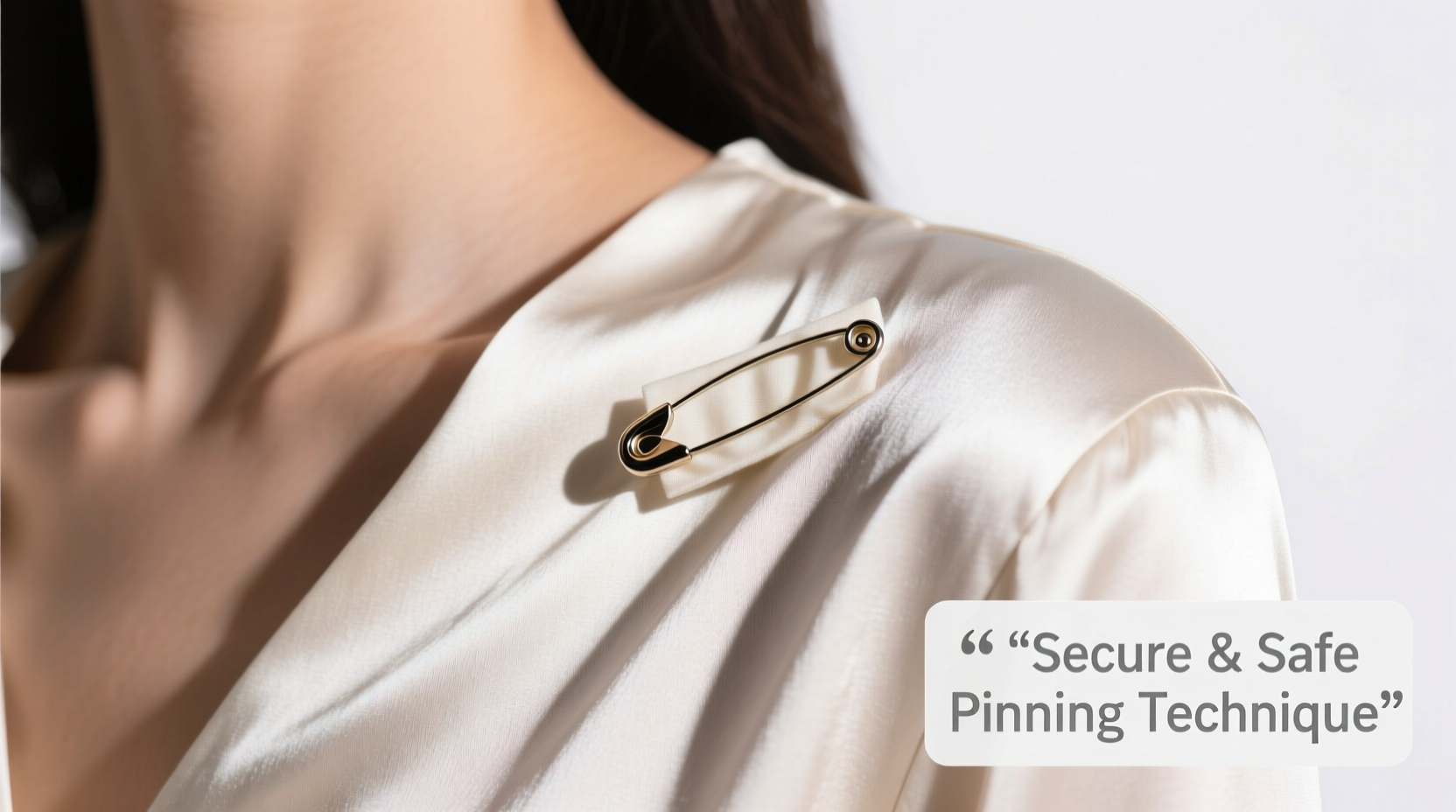
Most brooches use a pin stem with a locking mechanism—commonly a butterfly clutch, safety catch, or screw-down back. When inserted through fabric, the pin exerts pressure at two points: where it enters and where it exits. On thin or loosely woven fabrics, this force can cause fibers to break or create permanent holes over time. Understanding how these mechanisms work helps in choosing the safest method for attachment.
For example, heavy brooches require more secure backing but also distribute more stress on the fabric. Lightweight pieces may seem harmless but can still pull threads if worn repeatedly in the same spot. The key is not just how you attach the pin, but also where, when, and how often.
“Many people don’t realize that even small brooches can compromise fabric integrity after repeated use. It’s about distribution of pressure and support.” — Lydia Chen, Textile Conservator at the Metropolitan Museum Costume Institute
Step-by-Step Guide to Safe Brooch Attachment
Follow this five-step process to securely fasten a brooch while minimizing fabric strain:
- Evaluate the Fabric: Determine the weight and weave of the garment. Delicate silks, chiffons, and knits need extra protection; wool blazers or structured cottons can tolerate direct pinning with care.
- Select the Right Backing: Use padded pin backs, rubber stoppers, or magnetic closures instead of standard butterfly clutches when possible. These reduce tension and prevent sharp ends from piercing through.
- Choose the Insertion Point Wisely: Aim for seams, hems, or folds where fibers are reinforced. Avoid high-stress areas like shoulders or elbows unless absolutely necessary.
- Insert at an Angle (if appropriate): For heavier brooches, insert the pin diagonally so the weight rests partially on the fabric surface rather than pulling straight down through it.
- Secure Gently But Firmly: Fasten the clutch without over-tightening. A snug fit prevents slipping without crushing the material between the pin and back.
Best Tools and Accessories for Fabric Protection
Using protective aids significantly reduces the risk of damage. Below is a comparison of common solutions and their suitability across different fabric types.
| Tool | Fabric Suitability | Pros | Cons |
|---|---|---|---|
| Padded Pin Backs | Silk, Chiffon, Lace | Distributes pressure, soft surface contact | Limited availability; may not fit all brooch stems |
| Rubber Stopper Backs | Cotton, Wool, Linen | Inexpensive, widely available, grips well | Can degrade over time; less effective on thick fabrics |
| Magnetic Closures | All (except very thick layers) | No puncturing required; ideal for delicate items | Weaker hold on heavy brooches; magnets may rust |
| Pin Guards (Clear Plastic Covers) | Knits, Blends | Prevents snagging; nearly invisible | Doesn’t reduce puncture damage, only protects surrounding fibers |
| Reinforcement Patches (Fabric Backing) | All, especially fragile vintage textiles | Adds structural support; long-term preservation | Requires sewing; permanent modification |
Real Example: Preserving a Vintage Silk Scarf
Marie, a vintage fashion collector, wanted to wear her 1950s silk scarf with a family heirloom brooch during a gallery opening. Direct pinning posed a serious risk—the scarf had already developed slight fraying near the edges. Instead of attaching the brooch directly, she used a small square of lightweight fusible interfacing applied to the back of the intended pin site. She then attached a magnetic closure behind the reinforced area. The brooch stayed securely in place throughout the evening, and the scarf showed no signs of stress afterward. This approach preserved both the aesthetic and structural integrity of the piece.
Do’s and Don’ts of Brooch Wearing
- Do rotate brooch positions on frequently worn items to avoid repeated punctures in the same spot.
- Do store brooches separately to prevent pin tangles and accidental snags on other garments.
- Do inspect pins regularly for sharpness or bending—file down rough edges gently with an emery board.
- Don’t force a stiff clutch onto a pin stem; this can bend the pin and increase insertion pressure.
- Don’t leave brooches pinned on clothes during washing or dry cleaning—residue and moisture can corrode metal and stain fabric.
- Don’t use oversized brooches on flimsy fabrics without reinforcement.
Checklist: Secure Your Brooch Without Damage
Use this quick checklist before attaching any brooch:
- ✅ Assess fabric type and condition
- ✅ Choose a protective backing (rubber, padded, or magnetic)
- ✅ Reinforce weak or thin areas with interfacing or patching (if needed)
- ✅ Position the brooch along a seam or sturdy fold
- ✅ Insert the pin smoothly without twisting or forcing
- ✅ Confirm secure fastening without excessive tightness
- ✅ Remove carefully by releasing the clutch first, then withdrawing the pin straight out
Frequently Asked Questions
Can I wear a brooch on a knit sweater?
Yes, but with caution. Knits are prone to stretching and snagging. Use rubber stoppers or magnetic backs, and avoid high-movement areas like underarms or elbows. Consider adding a small fabric patch on the inside to reinforce the point of attachment.
Are there alternatives to pinning for securing brooches?
Absolutely. Magnetic closures are excellent non-invasive options. You can also sew a fabric loop or button on the garment and attach the brooch via a chain or jump ring. Some designers now offer clip-on brooch adapters that grip fabric without penetration.
How do I repair a fabric hole caused by a brooch?
If the hole is small and the fabric hasn’t unraveled, apply a drop of clear fabric glue to seal the edges. For visible garments, use a matching thread to oversew the area with a tiny whipstitch. On delicate pieces, consult a textile conservator—home repairs can sometimes worsen damage.
Final Thoughts: Style Shouldn’t Come at the Cost of Substance
Wearing a brooch should feel effortless and elegant—not fraught with worry about ruining your favorite blouse or scarf. By understanding fabric behavior, using smart accessories, and applying thoughtful techniques, you protect both your wardrobe investments and your cherished accessories. These practices are especially vital for vintage clothing, heirlooms, or specialty textiles that cannot be easily replaced.
Whether you're dressing up for an event or adding flair to everyday wear, take a moment to assess how you’re securing your brooch. A few seconds of preparation can save hours of repair—or prevent irreversible damage.




 浙公网安备
33010002000092号
浙公网安备
33010002000092号 浙B2-20120091-4
Comments
No comments yet. Why don't you start the discussion?