
Every time you hit the brakes or take a sharp turn, loose items in your car trunk shift, rattle, and sometimes even become hazardous projectiles. Beyond the noise and clutter, unsecured cargo can damage your vehicle’s interior, scratch fragile items, or worse—become a safety risk during sudden stops. Whether you're transporting groceries, sports gear, or moving supplies, keeping your trunk contents stable is essential for both convenience and safety. The good news: with smart organization and the right tools, you can eliminate sliding items for good.
Why Preventing Trunk Item Movement Matters
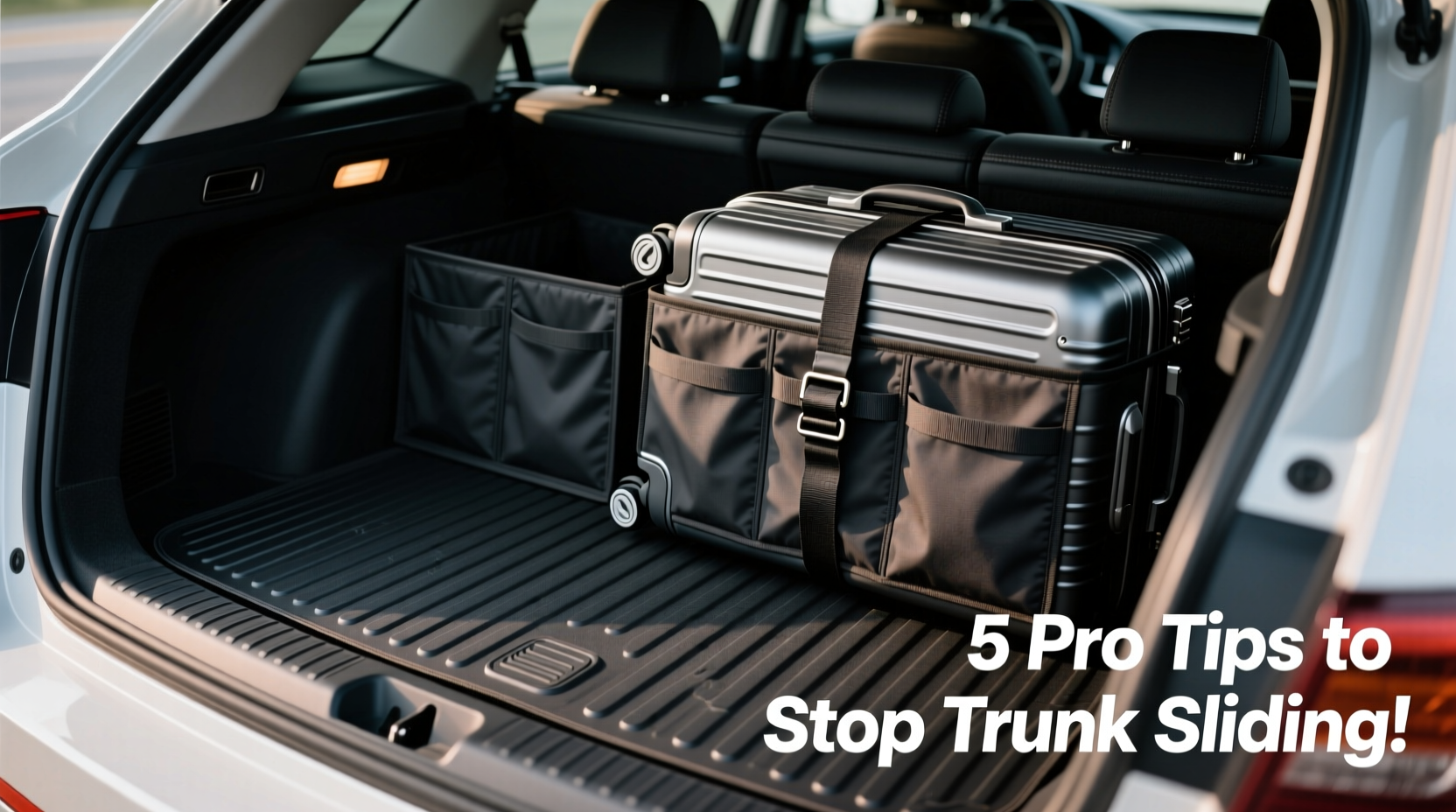
A cluttered, unstable trunk isn’t just annoying—it can compromise your driving experience. Loose objects gain momentum when the car accelerates, decelerates, or turns. In a collision or hard stop, an unsecured 10-pound item can exert over 300 pounds of force, posing serious injury risks to passengers. Additionally, constant shifting leads to scratches on electronics, broken glassware, or damaged packaging. Keeping items in place preserves their condition, maintains cabin quietness, and supports overall vehicle safety.
“Securing cargo isn’t just about neatness—it’s a critical part of vehicle safety. Unrestrained items in the trunk can become dangerous in crashes.” — Dr. Alan Torres, Automotive Safety Researcher at NHTSA
Choose the Right Storage Containers
One of the most effective ways to stop items from sliding is to contain them. Rigid, non-slip containers act as anchors and limit movement within the trunk space.
- Hard-shell bins: Durable plastic or reinforced fabric bins resist crushing and provide structure.
- Collapsible crates: Ideal for temporary use; fold flat when not needed.
- Trunk organizers: Specifically designed with compartments for tools, emergency kits, and small items.
Select containers with textured bottoms or rubberized grips to enhance friction against the trunk floor. For heavier loads, opt for models with built-in tie-down points.
Use Anti-Slip Materials and Matting
The factory trunk liner may look clean, but it often lacks grip. Upgrading to anti-slip materials dramatically improves stability.
Anti-slip mats made from rubber, silicone, or high-traction polymers create friction between items and the trunk surface. These are especially useful under boxes, suitcases, or pet carriers. Custom-fit mats cover the entire trunk floor, while universal roll-up versions can be trimmed to size.
For irregularly shaped or lightweight items, consider adhesive-backed anti-slip pads. Place them under corners of boxes or beneath frequently moved objects like toolkits or first-aid bags.
| Material Type | Best For | Lifespan |
|---|---|---|
| Rubber trunk liners | All-weather use, heavy cargo | 3–5 years |
| Silicone grip pads | Small electronics, bottles | 1–2 years |
| Foam anti-slip sheets | Lightweight packages, gift boxes | 6–12 months |
Secure Items with Tie-Downs and Cargo Nets
When containment alone isn’t enough, mechanical restraint becomes necessary. Most vehicles come equipped with built-in anchor points (often near the trunk walls or floor). Utilize these with straps or nets to lock down larger items.
Cargo nets stretch across shelves or stacked boxes, preventing forward or lateral movement. Choose elasticated nets with adjustable hooks for flexibility. For heavier loads—like luggage, coolers, or sporting equipment—use adjustable nylon straps with cam buckles. These allow precise tension control and are ideal for anchoring bulky items to fixed points.
Step-by-Step: Securing a Cooler and Suitcase
- Place the cooler at the base of the trunk, centered over the axle for balance.
- Position the suitcase beside it, ensuring both are flush against the back seat if possible.
- Attach one end of a cargo strap to a lower anchor point on the driver’s side.
- Run the strap diagonally across both items and hook the other end to the opposite anchor.
- Tighten the cam buckle until minimal movement remains.
- Overlay with a cargo net for additional top-down stabilization.
Optimize Trunk Layout and Weight Distribution
How you arrange items affects stability more than you might think. Poor weight distribution causes imbalance, increases sway, and strains suspension components.
Always place heavier items low and centered—on the trunk floor, close to the rear axle. This lowers the vehicle’s center of gravity and reduces tipping risk. Stack lighter items on top only if they’re contained or strapped down. Avoid placing anything on the spare tire well unless it’s secured, as this area tends to vibrate excessively.
If your vehicle has a cargo shelf or divider, use it to separate zones. Store fragile items behind rigid barriers, and keep sharp or pointed objects upright and shielded.
Do’s and Don’ts of Trunk Packing
| Do | Don't |
|---|---|
| Load heavy items first, near the cabin wall | Pile everything loosely without planning |
| Use bins or boxes to group similar items | Place liquids directly on fabric surfaces |
| Anchor tall or narrow items vertically | Overfill beyond the rear window line |
| Check load stability after starting the drive | Leave pets unsecured in the trunk area |
Real-World Example: A Family Road Trip Gone Smooth
Sarah, a mother of two from Colorado, used to dread packing for weekend getaways. Her SUV trunk would echo with clattering snacks, toys, and camping gear every time she turned a corner. After one trip where a juice box exploded from being crushed under a tent, she decided to reorganize.
She invested in three labeled, hard-sided bins—one for food, one for clothes, and one for outdoor gear. She lined the trunk with a custom rubber mat and installed two retractable cargo straps anchored to the side rails. On her next trip, she packed each bin separately, placed the heaviest (food cooler) at the front, and secured all three with a crisscross strap system.
The difference was immediate. No shifting noises, no spills, and the kids could safely access their toys without emptying the entire trunk. “It took 10 extra minutes to pack,” Sarah said, “but saved us an hour of cleanup and stress every day.”
Essential Checklist: Secure Your Trunk in 5 Steps
- Clear out unnecessary items to maximize usable space.
- Install an anti-slip trunk mat or liner.
- Sort belongings into sturdy, labeled containers.
- Arrange heavy items low and centered; stack light items carefully.
- Use cargo nets or tie-down straps to anchor everything in place.
Frequently Asked Questions
Can I use bungee cords instead of proper tie-down straps?
Bungee cords are convenient but not ideal for long-term security. They stretch unpredictably and degrade faster under UV exposure. For reliable hold, use adjustable webbing straps with locking mechanisms, especially for heavy or critical loads.
What if my car doesn’t have anchor points?
Many older or compact models lack built-in anchors. In such cases, use a cargo barrier, trunk organizer with weighted base, or a non-slip mat combined with interlocking containers. Alternatively, install aftermarket anchor kits designed for your vehicle model.
Are there legal requirements for securing trunk items?
While most regions don’t have specific laws for trunk cargo, general vehicle safety regulations require that all loads be secured to prevent spillage or movement that could impair control. In some states, unsecured items contributing to accidents can lead to liability.
Final Thoughts: Drive Confidently with a Secure Trunk
Preventing items from sliding in your car trunk isn’t just about tidiness—it’s about safety, efficiency, and peace of mind. With the right combination of containers, anti-slip materials, and secure fastening methods, you can transform a chaotic cargo area into a well-organized system that works for your lifestyle. Whether you're commuting daily or embarking on a cross-country journey, taking a few minutes to secure your load pays off in reliability and comfort.




 浙公网安备
33010002000092号
浙公网安备
33010002000092号 浙B2-20120091-4
Comments
No comments yet. Why don't you start the discussion?