
Waking up early to exercise is a hallmark of high performers, but if you're not naturally inclined toward sunrise routines, the idea can feel like punishment. The truth is, consistency doesn’t require loving mornings—it requires smart systems. For many, the battle isn’t motivation or fitness level; it’s the psychological resistance to getting out of bed before the sun. Yet research consistently shows that morning exercisers are more likely to stick with their routines long-term. The key lies in designing a strategy that works with your biology and psychology, not against it.
This guide outlines practical, science-backed methods to help you stay consistent with morning workouts—even if you’ve spent years hitting snooze until noon. These aren’t about forcing yourself into a routine that feels unnatural. Instead, they’re about creating conditions where showing up becomes easier than skipping.
Start Sooner Than You Think: Prepare the Night Before
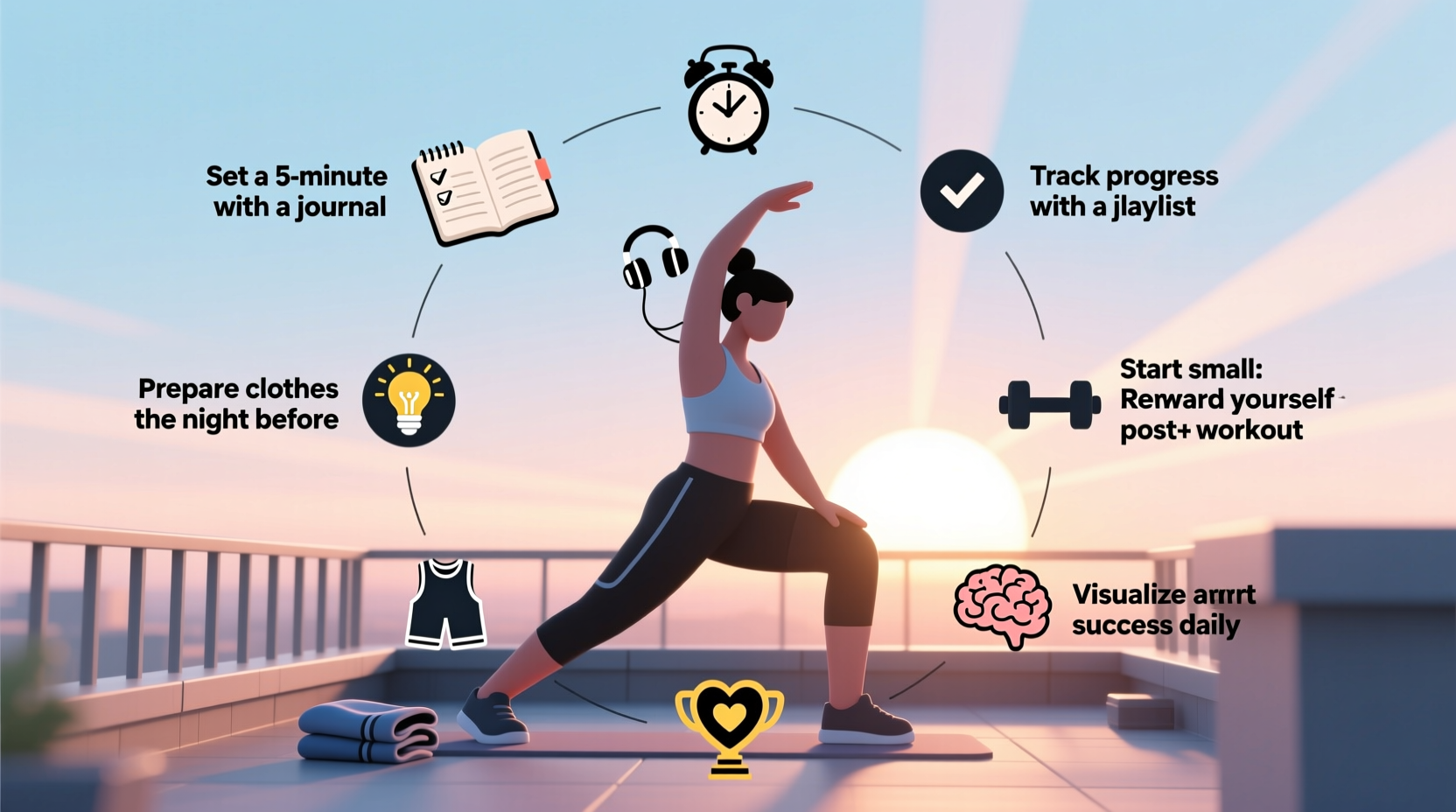
One of the biggest obstacles to morning workouts is decision fatigue. When the alarm rings, every choice—what to wear, whether to eat, where your shoes are—adds friction. Eliminate these micro-decisions by preparing everything the night before.
Studies in behavioral psychology show that willpower is a finite resource, especially in the early hours. By automating preparation, you conserve mental energy for the actual workout. This small shift removes one of the most common excuses: “I didn’t have time to get ready.”
Consider this real-life example: Sarah, a graphic designer, struggled for months to maintain a 6 a.m. run. She’d set her intentions each night but inevitably gave up when she couldn’t find her running socks or debated whether to eat first. After committing to a nightly prep ritual—including filling her water bottle and placing her headphones on the dresser—she went from missing 4 out of 5 workouts to completing 90% over six weeks.
Adjust Your Sleep Schedule Gradually, Not Abruptly
If your goal is a 6 a.m. workout but you usually fall asleep at midnight, jumping straight into an early wake-up will backfire. Sudden changes disrupt circadian rhythms and lead to burnout. Instead, shift your bedtime and wake time incrementally.
“Sleep consistency is more important than total sleep duration when building new morning habits.” — Dr. Rafael Pelayo, Stanford Center for Sleep Sciences
Begin by going to bed just 15 minutes earlier than usual and waking up 15 minutes earlier. Repeat this adjustment every three days. Within two weeks, you’ll have shifted your internal clock without feeling deprived. This method leverages chronobiology—the science of biological rhythms—to align your body with your goals.
Avoid the temptation to “make up” for lost sleep on weekends. Irregular sleep patterns confuse your circadian system, making Monday mornings especially brutal. Stick to the same wake-up time year-round, even on days off. Yes, even Sundays.
The Step-by-Step Sleep Adjustment Timeline
- Day 1–3: Go to bed 15 minutes earlier, wake up 15 minutes earlier.
- Day 4–6: Repeat the same schedule to reinforce the rhythm.
- Day 7–9: Shift another 15 minutes earlier on both ends.
- Day 10–14: Maintain the new schedule and assess energy levels.
- Day 15 onward: Add the workout immediately after waking.
This gradual progression respects your body’s need for adaptation. Rushing the process often leads to short-lived enthusiasm followed by relapse.
Redefine What “Morning Workout” Means
Many people assume a morning workout must be intense—a full HIIT session or weightlifting circuit. But consistency matters more than intensity. Starting small builds confidence and reduces dread.
Your first few weeks should focus on simply showing up. A 10-minute walk, five rounds of stretching, or a single set of bodyweight exercises count as wins. The goal is to establish the habit loop: wake → move → reward.
James Clear, author of *Atomic Habits*, emphasizes that tiny changes compound. Doing something small daily is more effective than doing something big once a week. Over time, your brain begins to associate waking up with movement, reducing internal resistance.
Once the habit is automatic—usually after 3–6 weeks—you can gradually increase duration and intensity. But never sacrifice consistency for performance in the early stages.
Create Immediate Rewards to Counteract Discomfort
Morning workouts are hard because the costs (effort, discomfort) are immediate, while benefits (energy, health) are delayed. To tip the balance, introduce instant rewards.
Link your workout to something pleasurable right after. Examples include:
- Brewing a favorite coffee only after finishing your session.
- Allowing yourself to listen to a podcast or audiobook exclusively during morning exercise.
- Taking a warm shower immediately post-workout to enhance comfort.
- Tracking progress in a journal or app to gain a sense of accomplishment.
Behavioral economists call this “temptation bundling”—pairing a desired activity with a necessary one. In one study, participants who only listened to audiobooks while exercising were significantly more consistent than those who didn’t.
| Habit Challenge | Problem | Solution: Immediate Reward |
|---|---|---|
| Waking up tired | No motivation to move | Post-workout coffee ritual |
| Dreading cold weather | Reluctance to go outside | Warm towel and hot tea waiting indoors |
| Lack of variety | Boredom kills consistency | New playlist unlocked weekly |
| Low energy | Feeling sluggish | 5-minute dance party post-workout |
The key is immediacy. The reward must follow quickly after the behavior to strengthen the neural connection. Delayed rewards, like fitting into jeans months later, don’t drive daily action.
Build Accountability That Actually Works
Willpower fades. Accountability sustains. But not all forms of accountability are equally effective. Telling a friend you’ll work out rarely creates real pressure. More powerful systems include financial stakes, public commitments, or scheduled sessions with others.
Consider using apps like StickK, where you commit money to a goal—and if you fail, the funds go to a charity you dislike. The fear of loss is a stronger motivator than the hope of gain.
Alternatively, join a morning class with a sign-up fee or partner with a workout buddy who expects you. Social obligation increases follow-through. Even better: schedule virtual check-ins with someone who texts you when you miss a day.
“We are social creatures. When we know someone is watching, our commitment deepens.” — Dr. Katy Milkman, Behavioral Scientist, University of Pennsylvania
One man, Mark, committed $20 per missed workout to his least-favorite political party. He didn’t miss a single session for four months—not because he loved mornings, but because he hated the alternative more.
Checklist: How to Stay Consistent with Morning Workouts (Even If You Hate Mornings)
- ✅ Prepare workout clothes, gear, and post-exercise routine the night before.
- ✅ Adjust bedtime and wake time in 15-minute increments over two weeks.
- ✅ Start with just 5–10 minutes of movement—focus on consistency, not intensity.
- ✅ Pair your workout with an immediate reward (coffee, music, shower).
- ✅ Use commitment devices: pay for classes, join challenges, or use financial stakes.
- ✅ Track your streak in a visible place (calendar, app, journal).
- ✅ Set your alarm across the room to force yourself out of bed.
- ✅ Avoid checking your phone first thing—reduce distractions that delay movement.
Frequently Asked Questions
What if I still feel exhausted after waking up?
Exhaustion upon waking often stems from poor sleep quality, not just quantity. Ensure your bedroom is dark, cool, and free of blue light before bed. Avoid caffeine after 2 p.m. and limit alcohol, which disrupts deep sleep. If fatigue persists, consult a healthcare provider to rule out sleep apnea or other conditions.
Can I skip my workout if I didn’t sleep well?
Yes—but redefine “skip.” Instead of abandoning the habit entirely, scale down. Do five minutes of stretching or a short walk. Maintaining the ritual matters more than intensity on rough days. Complete rest should be rare, not routine.
Is it better to work out on an empty stomach?
It depends on your goals and tolerance. Some benefit from fasted cardio for fat oxidation, but others feel dizzy or weak. If you choose to eat, opt for a small, easily digestible snack like a banana or toast with peanut butter 20–30 minutes prior. Listen to your body—consistency trumps protocol.
Conclusion: Make It Easier Than Staying in Bed
Staying consistent with morning workouts when you hate mornings isn’t about discipline—it’s about design. The most successful routines aren’t built on willpower but on reducing friction, enhancing rewards, and creating systems that make skipping harder than showing up.
You don’t need to become a morning person. You just need to make the path to movement smoother than the path back to sleep. Prepare the night before, start small, reward yourself instantly, and lock in accountability. Over time, what once felt impossible becomes automatic.




 浙公网安备
33010002000092号
浙公网安备
33010002000092号 浙B2-20120091-4
Comments
No comments yet. Why don't you start the discussion?