
Graphic t-shirts are more than just clothing—they're expressions of identity, fandom, and personal style. Whether it's a vintage band tee, a limited-edition designer print, or a meaningful slogan, preserving the look and fit of your favorite shirts matters. Yet, one common frustration undermines even the most cherished pieces: shrinkage and faded or cracked prints after just a few washes. The good news is that with the right knowledge and habits, you can significantly extend the life of your graphic tees. Understanding fabric behavior, print types, and laundering techniques makes all the difference.
Understand Fabric Composition and Its Impact on Shrinkage
The foundation of preventing shrinkage lies in knowing what your t-shirt is made of. Most graphic tees are crafted from cotton, cotton blends, or 100% synthetic fibers. Pure cotton is beloved for its softness and breathability but is highly prone to shrinking—especially when exposed to high heat. Cotton fibers tighten during washing and drying, particularly in hot water and tumble drying cycles. Blends with polyester (e.g., 60% cotton, 40% polyester) resist shrinkage better due to the synthetic component’s stability.
Check the garment label before washing. If it lists “pre-shrunk cotton,” the manufacturer has already minimized initial shrinkage, but this doesn’t make it immune. Even pre-shrunk garments can lose shape over time with improper care. Natural fibers like cotton and rayon contract when agitated by heat and motion; synthetics like polyester and spandex maintain their structure but may degrade under extreme conditions.
Washing Techniques That Protect Fit and Print
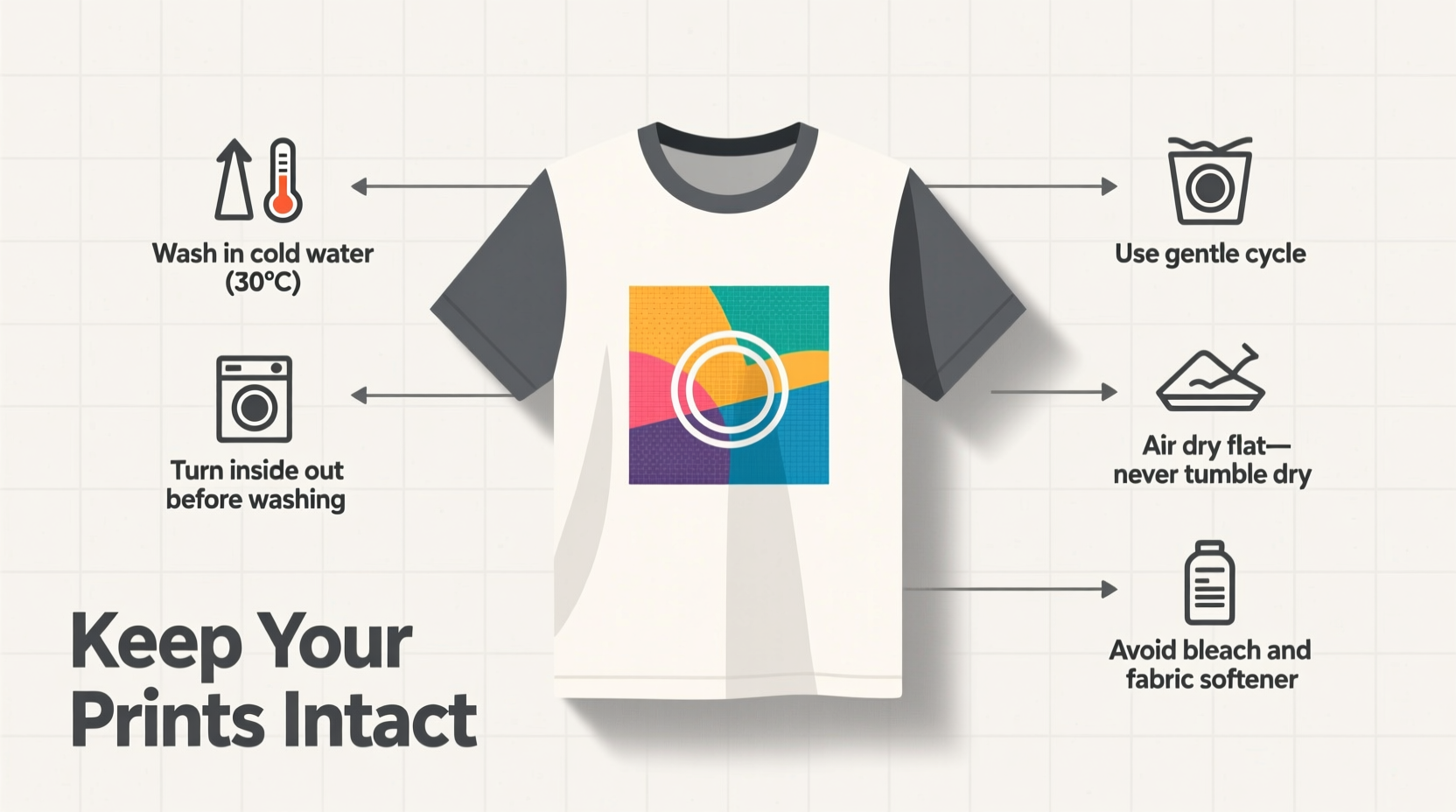
How you wash your graphic t-shirt plays a decisive role in its lifespan. Aggressive washing breaks down both fabric and print layers. To minimize damage:
- Turn shirts inside out before washing. This shields the print from direct friction with other clothes and the drum, reducing fading and cracking.
- Use cold water. Hot water causes fibers to contract and dyes to bleed. Cold water preserves color and minimizes shrinkage.
- Select a gentle cycle. High agitation stretches and weakens fabric. A delicate or hand-wash setting reduces mechanical stress.
- Limit detergent use. Excess detergent can leave residue and degrade print adhesives over time. Use a mild, dye-free formula designed for darks or delicates.
- Avoid bleach and fabric softeners. Chlorine bleach weakens fibers and fades colors. Fabric softeners coat fibers and prints, leading to stiffness and peeling.
“Turning graphic tees inside out and washing in cold water can reduce print deterioration by up to 70% over 20 washes.” — Dr. Lena Patel, Textile Preservation Specialist, University of Fashion Sciences
Step-by-Step Guide to Washing Graphic T-Shirts Safely
Follow this proven routine to maximize the lifespan of your shirts:
- Sort by color and fabric type: Wash dark graphics separately from whites to prevent dye transfer.
- Turn shirts inside out: Protects the printed side from abrasion.
- Set machine to cold water and gentle cycle: Minimizes fiber stress and shrinkage.
- Add a small amount of mild detergent: Avoid over-sudsing.
- Wash promptly after wearing: Sweat and oils can degrade fabric and print binders if left untreated.
- Remove immediately after cycle ends: Prevents wrinkles and musty odors.
- Lay flat or hang dry: Never use high heat. Air drying maintains shape and prevents print cracking.
Do’s and Don’ts: Caring for Printed Tees
| Do’s | Don’ts |
|---|---|
| Wash in cold water | Use hot water |
| Turn shirts inside out | Wash with heavy items like jeans or towels |
| Use gentle, fragrance-free detergent | Overload the washing machine |
| Air dry or use low-heat dryer setting | Tumble dry on high heat |
| Store folded in a drawer or on a shelf | Hang long-term (can stretch shoulders) |
Preserving Print Integrity: Know Your Print Type
Not all graphic prints react the same way to washing. The method used to apply the design affects how it should be cared for:
- Screen printing: Durable and long-lasting, but repeated high-heat drying can cause cracking. Avoid ironing directly on the print.
- Heat transfer vinyl (HTV): Sensitive to high heat. These prints can peel if dried too aggressively or ironed incorrectly.
- Dye-sublimation: Best for polyester blends. Resistant to fading but not suitable for 100% cotton.
- Direct-to-garment (DTG): Ink penetrates fabric, offering a soft feel. However, DTG prints benefit greatly from inside-out washing and cold cycles to preserve vibrancy.
If you're unsure about the print type, assume it's sensitive and treat it gently. When in doubt, air drying is always the safest option.
Real Example: How One Collector Preserves Vintage Tees
James Rivera, a vintage apparel collector from Portland, owns over 200 graphic tees spanning three decades. He attributes the pristine condition of his collection to strict laundry discipline. “I used to toss everything in the washer and dryer without thinking,” he says. “Within months, my favorite concert tee shrank two sizes and the print started flaking.” After researching textile care, James now follows a meticulous process: each shirt is washed inside out in cold water with a mild detergent, never mixed with rough fabrics, and laid flat on a drying rack. “My 1995 Nirvana shirt looks almost new,” he adds. “It’s been through 15 years and dozens of wears—because I treat it right.”
Frequently Asked Questions
Can I ever use a dryer for graphic t-shirts?
You can—but only on the lowest heat setting and for a short duration, ideally removing the shirt while still slightly damp and finishing with air drying. However, air drying is always preferable to eliminate heat exposure entirely.
Why do some shirts shrink even when washed in cold water?
Cold water reduces but doesn’t eliminate shrinkage. Mechanical action in the washer, combined with residual tension in the fabric from manufacturing, can still cause slight contraction. Additionally, if the shirt wasn’t fully pre-shrunk, minor shrinkage may occur over multiple washes.
How can I tell if a print will crack over time?
Rigid, plastic-like prints (common with older HTV or thick screen prints) are more prone to cracking. Flexibility is key—press the print gently. If it feels stiff and doesn’t move with the fabric, it’s more vulnerable. Newer water-based inks and soft-hand prints tend to last longer without cracking.
Checklist: How to Care for Your Graphic T-Shirts
- ✅ Turn shirts inside out before washing
- ✅ Use cold water and gentle cycle
- ✅ Choose mild, dye-free detergent
- ✅ Wash similar colors and fabrics together
- ✅ Avoid bleach and fabric softener
- ✅ Air dry or use low heat only
- ✅ Store folded, not hung
- ✅ Never iron directly on the print
- ✅ Wash soon after wearing to remove sweat and oils
- ✅ Inspect labels for fabric and care instructions
Conclusion
Your graphic t-shirts deserve more than a one-season run. With mindful handling, the right washing practices, and an understanding of fabric and print types, you can preserve both the fit and visual impact of your favorite designs for years. Shrinkage and print degradation aren’t inevitable—they’re the result of avoidable mistakes. By adopting these simple yet effective strategies, you protect not just clothing, but memories, messages, and personal expression woven into every thread.




 浙公网安备
33010002000092号
浙公网安备
33010002000092号 浙B2-20120091-4
Comments
No comments yet. Why don't you start the discussion?