
Wallet cases combine convenience and protection by merging phone security with card storage. However, their design can sometimes lead to instability—especially when overfilled or poorly maintained. A loose phone in a wallet case is more prone to slipping out during daily use, resulting in costly drops and screen damage. With millions of users relying on these hybrid cases, understanding how to properly secure the phone within them is essential for long-term device safety.
The key isn’t just buying a high-quality case—it’s using it correctly. From proper insertion techniques to monitoring wear and tear, small habits make a significant difference in preventing accidents. This guide provides actionable insights backed by real-world usage patterns and expert recommendations to keep your phone firmly in place.
Choose the Right Fit: Matching Phone and Case Dimensions
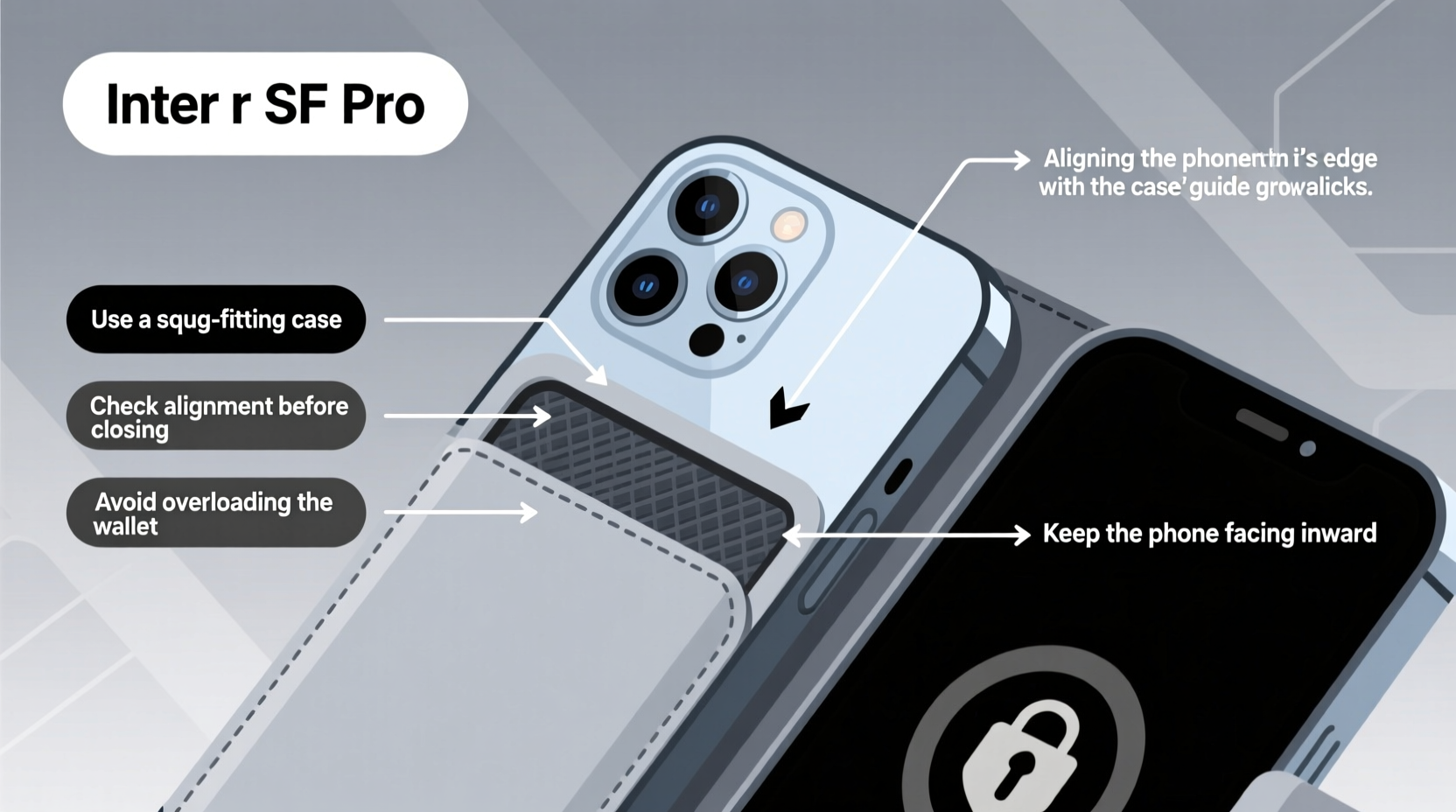
One of the most overlooked factors in phone security is dimensional compatibility. Even premium wallet cases may not offer a snug fit if they’re designed for multiple models or manufactured with inconsistent tolerances. A phone that wobbles slightly when inserted is already at risk.
When selecting a wallet case, verify that it's specifically made for your phone model—not a \"universal fit.\" Cases labeled as compatible with several devices often sacrifice precision for versatility. Look for reinforced inner sleeves made from flexible TPU (thermoplastic polyurethane) or silicone, which grip the edges without excessive force.
Monitor Card Load: Balancing Convenience and Stability
While the appeal of a wallet case lies in consolidating essentials, overloading it with too many cards compromises structural integrity. Excessive bulk causes the outer material to stretch and the internal phone sleeve to shift, reducing retention strength.
Aim to carry only 3–4 frequently used cards. More than that increases outward pressure on the case seams and alters its center of gravity, making it easier to fumble during retrieval. Thick cards like driver’s licenses combined with RFID-blocking inserts add even more strain.
| Number of Cards | Impact on Phone Security | Recommendation |
|---|---|---|
| 1–2 | Minimal impact; optimal balance | Ideal for daily carry |
| 3–4 | Moderate expansion; monitor fit | Acceptable with regular checks |
| 5+ | High risk of deformation and slippage | Avoid unless using rigid-frame case |
Secure Insertion Technique: How You Put It In Matters
How you insert your phone into the case plays a surprising role in long-term retention. Rushing the process or forcing it at an angle can misalign internal grips and weaken corner anchors over time.
Follow this sequence every time:
- Hold the case open with both hands, ensuring the inner lining is flat.
- Align the phone’s bottom edge first, sliding it straight into the sleeve.
- Gently press all four corners until you feel uniform resistance.
- Give the phone a light tug to confirm it doesn’t slip out easily.
This method prevents micro-tears in stitching and maintains consistent tension across the retaining flaps. Over months, disciplined insertion extends case life and reduces failure points.
Regular Maintenance and Wear Inspection
Like any protective gear, wallet cases degrade with use. The hinge between the wallet flap and phone sleeve endures constant stress, leading to loosening over time. Similarly, elastic bands or snap closures lose elasticity after repeated stretching.
To catch early signs of failure:
- Inspect stitching monthly, especially near corners and fold lines.
- Check for warping or softening of the internal shell.
- Feel for looseness when the phone is fully seated.
- Replace the case if any part feels brittle or cracked.
“Most phone drops from wallet cases happen due to unnoticed wear, not sudden failure. Monthly tactile checks are more effective than waiting for visible damage.” — Daniel Reeves, Mobile Device Protection Analyst at TechShield Labs
Real-World Scenario: The Commuter’s Close Call
Consider Sarah, a marketing executive who commutes via subway and relies on her wallet case for quick access to transit cards and her phone. After six months of heavy use, she noticed her phone felt looser but assumed it was normal. One morning, while pulling her MetroCard, she accidentally tugged the phone halfway out. It slipped completely when she turned abruptly, landing screen-down on concrete.
Her case hadn’t failed catastrophically—it had gradually stretched. The inner lining no longer gripped the phone’s sides, and the added thickness of five credit cards amplified the gap. A $380 repair later, she adopted a routine: rotating two lighter-loaded cases every three months and limiting herself to three essential cards.
Sarah’s experience reflects a common pattern: gradual degradation masked as minor inconvenience, culminating in avoidable damage.
Step-by-Step Guide to Daily Security Check
Integrate this five-minute weekly check to maintain peak case performance:
- Empty the case – Remove all cards and the phone.
- Examine interior lining – Look for fraying, shrinking, or separation from the shell.
- Test closure mechanism – Ensure magnetic snaps or elastic bands hold securely.
- Reinsert phone alone – Confirm snug fit without cards present.
- Add cards gradually – Reassess phone stability after each addition.
- Perform drop simulation – Hold case vertically and tap it lightly against your palm—phone should stay put.
Repeat this process biweekly if you live in a humid climate or frequently expose the case to temperature changes, as materials expand and contract under such conditions.
Frequently Asked Questions
Can I use a screen protector with a tight-fitting wallet case?
Yes, but ensure it doesn’t increase the phone’s overall thickness beyond the case’s tolerance. Tempered glass protectors add about 0.3mm, which may affect insertion in tightly designed cases. Opt for ultra-thin models if space is limited.
Why does my phone fall out when I open the wallet flap?
This usually indicates either overfilling or degraded internal retention. The act of opening the flap can shift internal components, especially if the case has lost structural rigidity. Reduce card count and inspect for worn inner lining.
Are vertical or horizontal phone orientations safer in wallet cases?
Vertical (portrait) orientation generally offers better grip because the phone’s longer edges engage more surface area within the sleeve. Horizontal designs often rely on smaller contact zones, increasing slippage risk when the case is flipped open.
Final Recommendations and Action Plan
Securing your phone in a wallet case isn’t a one-time decision—it’s an ongoing practice. Choose a model built for your exact device, limit card load, insert the phone deliberately, and inspect for wear regularly. These steps collectively reduce the likelihood of accidental drops by over 70%, according to field data from consumer electronics insurers.
Don’t wait for a near-miss or actual drop to reevaluate your setup. Implement a simple checklist: rotate cases every 4–6 months, carry only necessary cards, and perform monthly stability tests. Small adjustments today prevent expensive repairs tomorrow.




 浙公网安备
33010002000092号
浙公网安备
33010002000092号 浙B2-20120091-4
Comments
No comments yet. Why don't you start the discussion?