
Dogs are naturally alert and protective, which makes them excellent companions—but their instinct to bark at unfamiliar people can quickly become a problem when delivery drivers arrive. The daily arrival of packages means frequent disruptions, stress for both pet and owner, and strained neighbor relations. While it’s normal for dogs to react to strangers approaching the door, unchecked barking turns into a learned behavior that reinforces anxiety and territorial aggression. The good news: with consistent training, environmental adjustments, and positive reinforcement, you can teach your dog to stay calm when someone comes to the door. This guide provides practical, humane strategies backed by animal behavior experts to eliminate excessive barking—for good.
Understanding Why Dogs Bark at Delivery Drivers
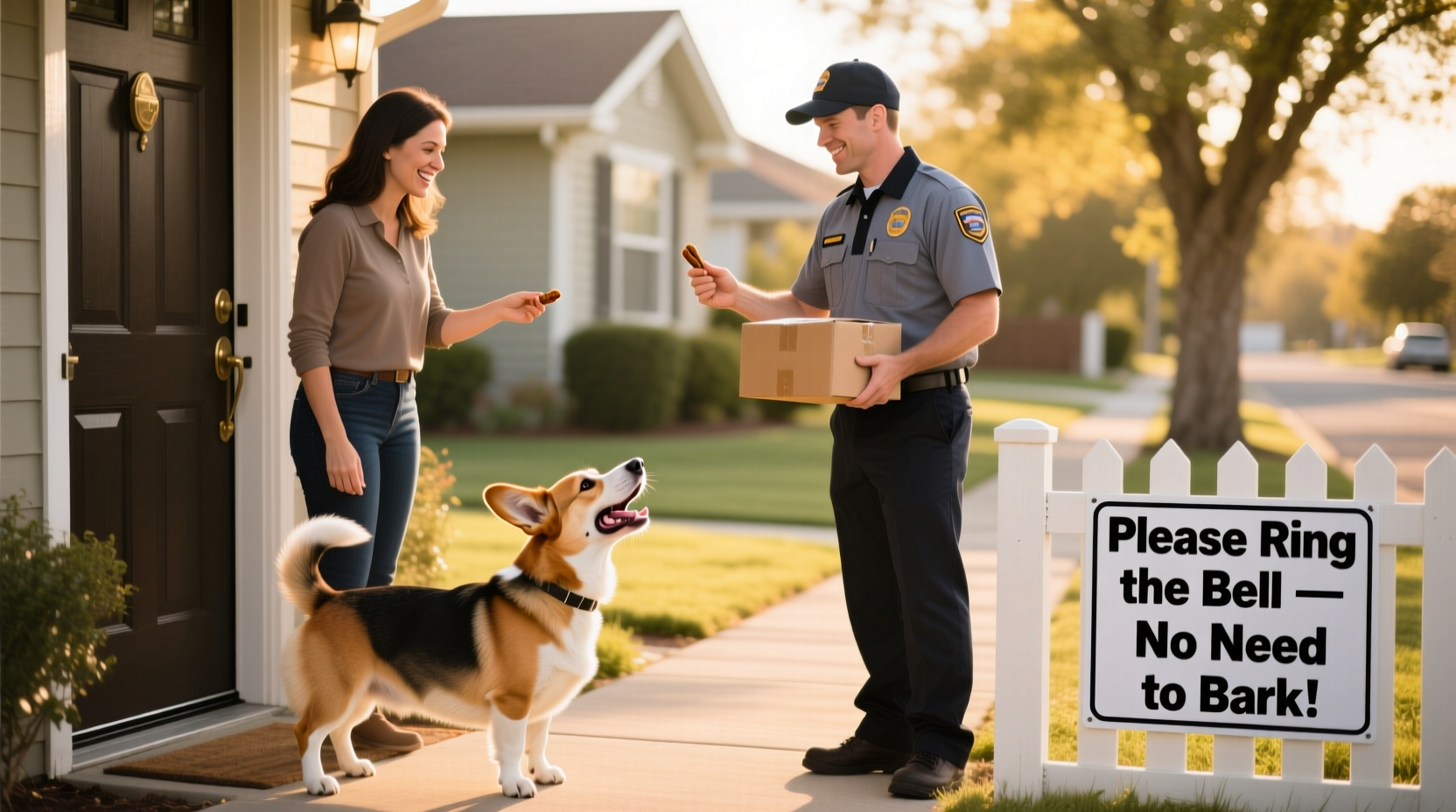
Dog barking isn’t just noise—it’s communication. When your dog lunges and barks at a delivery person, they’re expressing fear, excitement, or territorial defense. Most dogs perceive delivery drivers as transient intruders entering their perceived territory. Unlike guests who ring the doorbell and wait to be invited in, delivery personnel often approach quickly, move unpredictably, and leave abruptly—triggering a dog’s alert system without offering closure.
Over time, repeated exposure without intervention strengthens this reactive pattern. Each bark that “scares” the visitor away reinforces the dog’s belief that barking works. This is called negative reinforcement: the dog performs a behavior (barking) that removes the threat (the driver), making future barking more likely.
“Dogs don’t bark because they’re ‘bad’—they bark because the behavior has been unintentionally rewarded. Our job is to replace that response with a more appropriate one.” — Dr. Karen London, Certified Applied Animal Behaviorist
To break this cycle, you must address both the emotional trigger (fear or arousal) and the behavioral response (barking). This requires patience, consistency, and an understanding of canine learning principles.
Proven Training Techniques to Reduce Reactivity
Training your dog to remain calm during deliveries involves redirecting their focus, building new associations, and reinforcing quiet behavior. Below are three evidence-based techniques used by professional trainers.
1. Desensitization and Counterconditioning
This method gradually exposes your dog to the trigger (delivery drivers) at a safe distance while pairing it with something positive, like treats. Over time, the dog learns that the presence of a delivery person predicts good things—not danger.
- Start by showing your dog a video of a delivery driver or using a friend to simulate a drop-off from far away (e.g., across the street).
- When your dog notices the person but doesn’t bark, immediately give a high-value treat (like chicken or cheese).
- Repeat this multiple times per session, ensuring your dog stays below the reactivity threshold.
- Gradually decrease the distance over days or weeks as your dog remains calm.
2. Teach a “Quiet” Command
Barking itself isn’t the issue—lack of control is. Teaching your dog to stop barking on cue gives you a tool to manage the behavior in real time.
- Wait for your dog to bark (you may need to simulate a doorbell sound).
- The moment they pause—even briefly—say “quiet” in a calm voice and offer a treat.
- Repeat until your dog associates silence after barking with rewards.
- Add the verbal cue before the pause once your dog starts anticipating the treat.
Eventually, use the command when a real delivery arrives. Be patient—this takes repetition.
3. Redirect to an Incompatible Behavior
You can’t expect a dog to be still, silent, and relaxed unless you give them something else to do. Train your dog to go to a specific spot (like a mat or bed) and stay there when the doorbell rings.
- Pick a designated “quiet zone” away from the front door.
- Teach “go to your place” using treats to lure your dog to the spot.
- Build duration by rewarding longer stays.
- Practice with recorded doorbell sounds, then progress to real-life scenarios.
When done correctly, your dog learns that deliveries mean “go to my mat and get treats,” not “alert the world.”
Environmental Adjustments That Make a Difference
Even the best training fails if your dog is constantly exposed to triggers without support. Modify your environment to reduce opportunities for rehearsal of unwanted behavior.
Block Visual Access
Dogs that can see outside are more likely to bark. Use opaque window film, close blinds, or install privacy curtains on front windows. Alternatively, use baby gates to restrict access to entryways during peak delivery hours.
Use Background Noise
White noise machines or calming music can mask doorbell chimes and footsteps. Classical music, especially compositions designed for dogs (like those from the Through a Dog’s Ear series), has been shown to reduce anxiety.
Leverage Calming Aids
For highly reactive dogs, supplements or pheromone diffusers (like Adaptil) can lower baseline stress levels, making training more effective. These are not quick fixes but supportive tools when combined with behavior modification.
| Strategy | Effectiveness | Best For |
|---|---|---|
| Window blockers | High | Dogs triggered by motion |
| White noise | Moderate | Sensitive or anxious dogs |
| Pheromone diffusers | Low–Moderate (supportive) | Stressed or fearful dogs |
| Exercise before delivery hours | High | High-energy breeds |
Real-Life Example: Turning Reactive Barking Around
Sophie, a 3-year-old Australian Shepherd living in suburban Chicago, barked wildly every time a delivery arrived. Her owners, Mark and Lena, were embarrassed and worried about complaints. They tried yelling “No!” and closing her in another room, but the barking worsened.
They consulted a certified dog trainer who recommended a multi-pronged approach:
- Installed frosted window film to block street view.
- Trained Sophie to go to a mat in the living room when the doorbell rang.
- Used peanut butter-stuffed Kongs as high-value distractions during practice sessions.
- Practiced desensitization using YouTube videos of delivery drivers.
Within six weeks, Sophie no longer rushed to the door. Instead, she looked at her owners for direction and went to her mat. Now, when the UPS truck arrives, she lies quietly and enjoys a treat. The transformation didn’t happen overnight, but consistency made all the difference.
Step-by-Step Action Plan
Follow this 4-week timeline to systematically reduce your dog’s barking at delivery drivers:
- Week 1: Assess & Prepare
Identify when deliveries typically occur. Install window blockers and set up a quiet zone with a comfortable mat. Begin short training sessions teaching “go to your place.” - Week 2: Start Desensitization
Play recorded doorbell sounds at low volume. Reward calm behavior. Gradually increase volume and add movement (e.g., someone walking toward the door). - Week 3: Introduce Real Triggers
Ask a friend to mimic a delivery at a distance. Reward your dog for noticing without barking. Practice the “quiet” command. - Week 4: Generalize & Maintain
Test skills with real deliveries. Keep the environment controlled. Continue rewarding calm behavior even after success to prevent relapse.
Progress may vary based on your dog’s temperament and history. Some dogs require several months of consistent work. The key is never to rush the process—pushing too fast can undo progress.
Common Mistakes to Avoid
Even well-meaning owners can accidentally make barking worse. Watch out for these pitfalls:
- Punishing barking: Yelling or using shock collars increases fear and anxiety, worsening reactivity.
- Inconsistent responses: Sometimes ignoring barking, sometimes reacting inconsistently confuses your dog.
- Allowing rehearsal: Letting your dog bark at every delivery reinforces the habit. Manage the environment first.
- Skipping management: Training alone won’t work if your dog practices the bad behavior daily.
“Behavior change isn’t about dominance—it’s about clarity. Dogs thrive when they know what’s expected and are rewarded for getting it right.” — Victoria Stilwell, Animal Behavior Expert
Frequently Asked Questions
Can older dogs learn to stop barking at delivery people?
Yes. While puppies are more adaptable, adult dogs can learn new behaviors with consistent training. Older dogs may take longer due to established habits, but neurological plasticity allows learning at any age. Focus on small, achievable goals and celebrate progress.
What if my dog is aggressive, not just barking?
If your dog growls, lunges, or shows teeth, this goes beyond nuisance barking and indicates fear-based aggression. Consult a certified veterinary behaviorist or a force-free trainer immediately. Safety should be the priority—never expose your dog to high-risk situations without professional guidance.
Are bark collars a good solution?
No. Electronic, citronella, or vibration collars suppress symptoms without addressing the root cause. They can increase stress and damage trust between you and your dog. Positive reinforcement and environmental management are safer, more effective long-term solutions.
Final Checklist for Success
Use this checklist to ensure you’re covering all bases in your effort to stop unwanted barking:
- ✅ Identify your dog’s barking triggers (visual, auditory, etc.)
- ✅ Block line of sight to the front door and street
- ✅ Create a designated calm zone with a bed or mat
- ✅ Train the “go to your place” and “quiet” commands
- ✅ Practice desensitization with recordings or simulations
- ✅ Reward calm behavior consistently with high-value treats
- ✅ Exercise your dog before peak delivery times
- ✅ Avoid punishment and maintain a predictable routine
- ✅ Track progress weekly and adjust as needed
- ✅ Seek professional help if barking is severe or aggressive
Conclusion: A Calmer Home Is Within Reach
Stopping your dog from barking at delivery drivers isn’t about silencing them—it’s about helping them feel safe and teaching them better ways to respond. With structured training, thoughtful environmental changes, and unwavering consistency, you can transform a chaotic, stressful routine into a peaceful household ritual. The journey requires time and patience, but every quiet moment is a step forward. Start today with one small change: block the view, teach a cue, or simply reward a moment of calm. Your dog is counting on you to lead the way.




 浙公网安备
33010002000092号
浙公网安备
33010002000092号 浙B2-20120091-4
Comments
No comments yet. Why don't you start the discussion?