
As temperatures rise during summer months, many homeowners look for affordable, energy-efficient alternatives to air conditioning. While AC units offer immediate relief, they come with high electricity bills, environmental impact, and maintenance costs. Fortunately, there are proven, practical methods to maintain a comfortable indoor climate without relying on mechanical cooling. From strategic ventilation to passive design principles, these techniques have been used for centuries—and when applied correctly today, they remain remarkably effective.
Optimize Natural Ventilation with Cross-Breeze Design
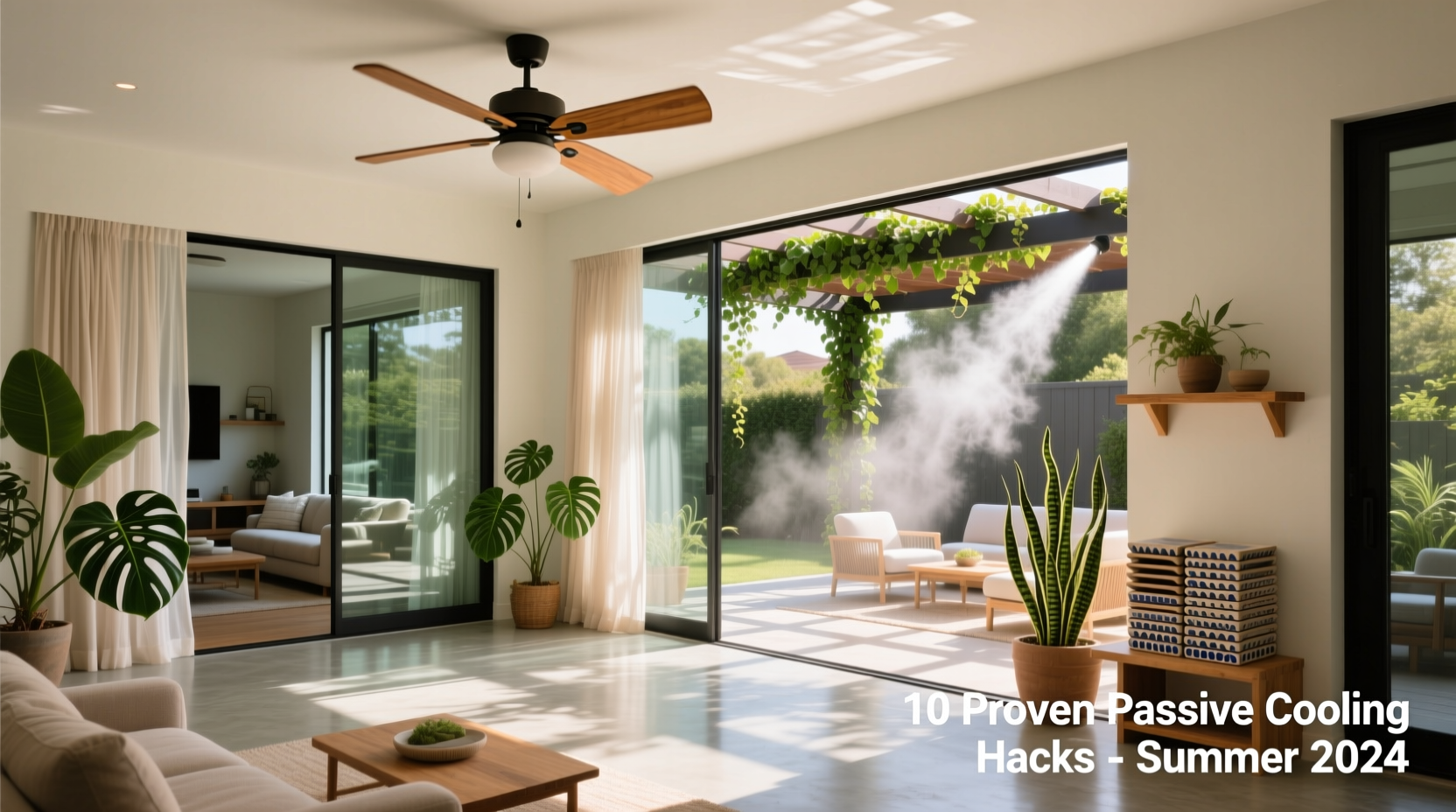
One of the most powerful tools for cooling a home is natural airflow. When outdoor temperatures drop—especially at night and early morning—opening windows strategically can flush out hot indoor air and replace it with cooler air from outside.
To maximize this effect, create a cross-breeze by opening windows on opposite sides of the house. This allows air to flow through rooms rather than stagnate. For best results, ensure that openings are unobstructed by furniture or window treatments.
Use wind direction to your advantage. If prevailing breezes come from the east, prioritize opening eastern-facing windows in the morning. At night, open all accessible windows while closing them again by mid-morning before outdoor heat builds up.
Block Heat Before It Enters: Window and Exterior Management
Up to 76% of sunlight that strikes standard windows can turn into heat inside your home, according to the U.S. Department of Energy. Preventing solar gain is more effective than trying to remove heat after it accumulates.
Closing blinds, shades, or curtains during daylight hours—especially on south- and west-facing windows—can reduce indoor temperatures by as much as 20°F. Use light-colored or reflective window coverings to bounce sunlight away instead of absorbing it.
- White or reflective blinds: Reflect sunlight before it penetrates glass.
- Blackout curtains: Provide insulation against both heat and cold.
- Exterior shutters or awnings: Block sunlight before it reaches the window surface.
“Shading devices like awnings can cut solar heat gain through windows by up to 65% on southern exposures and 77% on eastern and western ones.” — U.S. Department of Energy, Building Technologies Office
Do’s and Don’ts of Window Heat Control
| Do | Avoid |
|---|---|
| Close windows and coverings by 9 a.m. | Leaving blinds open during peak sun (10 a.m.–4 p.m.) |
| Install reflective film on large windows | Using dark-colored curtains that absorb heat |
| Add exterior shading (trees, awnings) | Relying only on interior blinds for sun-heavy rooms |
| Use insulated cellular shades at night | Forgetting to re-open windows when temps drop |
Use Fans Strategically for Air Movement and Evaporative Cooling
Fans don’t lower room temperature, but they enhance comfort by increasing air movement across the skin, accelerating sweat evaporation. A ceiling fan, for example, can make a room feel 4°F cooler—without dropping the thermostat.
Run fans only in occupied rooms. Since they cool people, not spaces, leaving them on in empty rooms wastes energy. Pair fans with open windows at night to pull in cool air. During the day, use them with closed windows to circulate conditioned air.
For enhanced cooling, try evaporative techniques. Place a shallow bowl of ice in front of a fan, or dampen a cloth and hang it near airflow. As water evaporates, it absorbs heat from the air. This method works best in dry climates where humidity is low.
Passive Cooling Through Home Design and Materials
Long-term comfort begins with how your home is built and maintained. Thermal mass, insulation, roofing color, and landscaping all influence indoor temperatures.
Homes with high thermal mass—such as those made with concrete, brick, or stone—absorb heat during the day and release it slowly at night. When combined with nighttime ventilation, this stabilizes indoor temperatures.
Light-colored or “cool” roofs reflect more sunlight and absorb less heat than dark roofs. The Lawrence Berkeley National Laboratory found that cool roofs can stay up to 50–60°F cooler than traditional black roofs under direct sun.
Insulation in walls and attics prevents outdoor heat from penetrating living spaces. Inadequate attic insulation can allow radiant heat to seep down into rooms, even with closed windows.
Step-by-Step Evening Cooling Routine
- 6 p.m. – Open all windows and doors on opposite sides of the house to initiate cross-ventilation.
- 7 p.m. – Turn on ceiling and floor fans to increase air movement.
- 8 p.m. – Close curtains on any sun-exposed windows still receiving indirect light.
- 10 p.m. – Place bowls of ice in front of fans for evaporative cooling in bedrooms.
- 6 a.m. – Close windows and coverings before outdoor temperatures begin to climb.
Real-World Example: How a Tucson Family Stays Cool Without AC
In Tucson, Arizona, where summer highs regularly exceed 105°F, the Martinez family maintains a comfortable home year-round without air conditioning. Their strategy combines traditional Southwestern architecture with modern habits.
Their adobe-style home has thick walls that absorb daytime heat and release it slowly. They planted mesquite trees on the west side of the house to shade afternoon sun. Inside, they use heavy cotton curtains lined with aluminum foil facing outward. At night, they open all ground-floor windows and run two box fans in exhaust mode—one pulling air in from the north, another pushing hot air out the south.
They also avoid heat-generating appliances during the day. Cooking is done on a solar oven or outdoor grill. Laundry is washed in cold water and hung outside at dusk. By integrating behavioral changes with passive design, they keep indoor temperatures around 82°F—even when it's over 110°F outside.
Essential Cooling Checklist
- ✅ Close windows and blinds by 9 a.m.
- ✅ Open windows for cross-ventilation at night
- ✅ Use ceiling fans counterclockwise in summer
- ✅ Install reflective window film or shades
- ✅ Plant shade trees on sun-facing sides of home
- ✅ Switch to LED bulbs to reduce indoor heat output
- ✅ Avoid using oven, dryer, or dishwasher during peak heat
- ✅ Seal gaps around windows and doors to prevent hot air infiltration
Frequently Asked Questions
Can I cool my home without AC in a humid climate?
Yes, though effectiveness varies. In humid areas, evaporative cooling is less efficient because air is already saturated with moisture. Focus instead on blocking solar gain, improving airflow, and reducing internal heat sources. Use dehumidifiers if necessary to improve perceived comfort.
Are blackout curtains really effective for cooling?
Yes. Studies show that tightly woven, multi-layer blackout curtains can reduce heat transfer through windows by up to 33%. Opt for white or light-colored versions with thermal backing for maximum reflectivity and insulation.
How much can fans reduce my need for AC?
A well-placed fan can create a perceived cooling effect of 4–6°F, allowing you to raise your thermostat setting or eliminate AC use entirely in moderate climates. Used with open windows at night, fans significantly enhance natural cooling cycles.
Conclusion: Stay Cool, Save Energy, Live Smarter
Keeping a house cool without air conditioning isn't about sacrifice—it's about working with nature, not against it. By understanding airflow, solar patterns, and material behavior, you can maintain a comfortable home using minimal energy and cost. These strategies are not temporary fixes; they're sustainable habits that reduce environmental impact and long-term expenses.




 浙公网安备
33010002000092号
浙公网安备
33010002000092号 浙B2-20120091-4
Comments
No comments yet. Why don't you start the discussion?