
Electricity costs are rising across the country, and many households are feeling the pinch each month when the utility bill arrives. While energy prices may be outside your control, how you use electricity isn’t. With strategic decisions and small lifestyle adjustments, it’s entirely possible to significantly lower your electric bill—without sacrificing comfort. From upgrading appliances to shifting daily habits, the most effective savings come from consistent, informed choices.
Upgrade to Energy-Efficient Appliances
One of the most impactful steps toward reducing your electric bill is replacing outdated appliances with ENERGY STAR-certified models. Older refrigerators, washing machines, and HVAC systems can consume two to three times more power than modern equivalents.
For example, a refrigerator manufactured before 2000 may use over 1,500 kWh per year, while a new ENERGY STAR model uses closer to 400–500 kWh. That difference can save $100 or more annually on just one appliance.
Consider prioritizing upgrades based on usage:
- Refrigerator: Runs 24/7; even modest efficiency gains yield big savings.
- Heating and Cooling Systems: Account for nearly half of household energy use.
- Water Heater: Switching to a heat pump water heater can cut water heating costs by up to 60%.
Optimize Heating and Cooling Efficiency
Heating and cooling make up the largest portion of residential electricity consumption—typically around 40–50%. Small improvements here deliver outsized results.
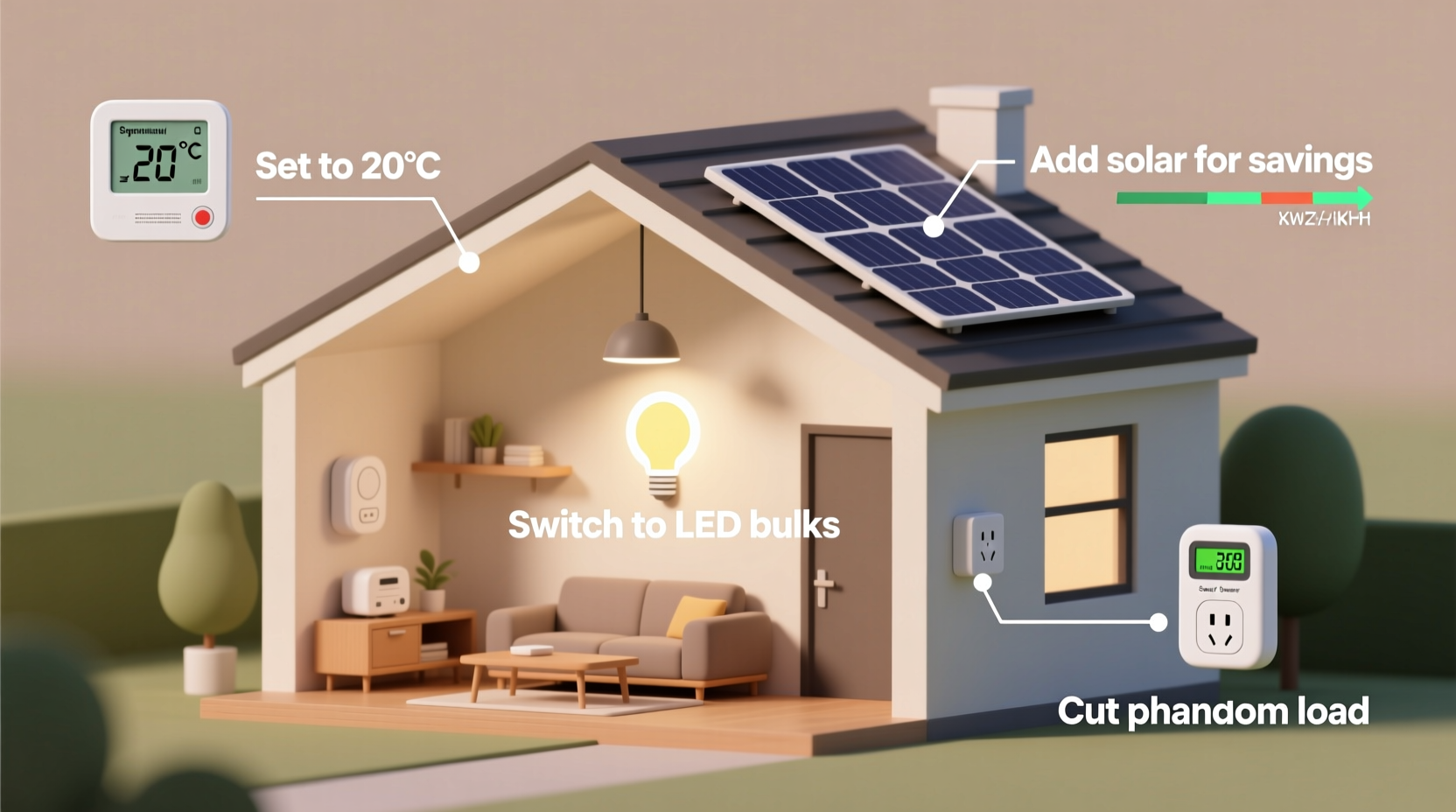
Set your thermostat wisely: raising it by just 7–10°F for eight hours a day (e.g., during work hours) can reduce cooling costs by up to 10% annually. Smart thermostats learn your schedule and adjust automatically, eliminating wasted energy.
“Smart thermostats pay for themselves in under two years through reduced HVAC runtime.” — Dr. Laura Simmons, Energy Efficiency Researcher at the National Renewable Energy Lab
Additional strategies include:
- Sealing air leaks around windows, doors, and ducts.
- Using ceiling fans to create a wind-chill effect, allowing higher thermostat settings in summer.
- Maintaining clean HVAC filters—dirty filters force systems to work harder and consume more power.
Do’s and Don’ts for Seasonal Temperature Control
| Season | Recommended Thermostat Setting | What to Do | What to Avoid |
|---|---|---|---|
| Winter | 68°F when home, lower when away | Use programmable schedules, seal drafts | Setting above 72°F constantly |
| Summer | 78°F when home, higher when out | Use fans, close blinds during peak sun | Cooling empty homes below 74°F |
Switch to LED Lighting and Smart Controls
Lighting accounts for about 10% of the average home’s electricity use. Replacing incandescent bulbs with LEDs cuts that cost by at least 75%. LEDs last 15–25 times longer and emit far less heat, reducing cooling load in summer.
But simply changing bulbs isn’t enough. Pair LEDs with motion sensors, timers, or smart switches to ensure lights aren’t left on unnecessarily.
Focus first on high-usage areas: kitchens, living rooms, outdoor lighting, and hallways. Outdoor security lights with motion detection provide safety without running all night.
Adopt Energy-Smart Daily Habits
Technology helps, but behavior drives lasting change. Many homeowners overlook how routine actions affect their bills. Simple shifts add up quickly.
For instance, running full loads in the dishwasher and washing machine maximizes efficiency. Using cold water for laundry reduces energy use by 75% per load. Air-drying clothes—even part-time—eliminates dryer dependency, which ranks among the top five household energy users.
Step-by-Step Guide to Lower Daily Consumption
- Unplug devices not in use: Chargers, coffee makers, and entertainment systems draw “phantom load” even when off.
- Use power strips: Turn off entire groups of electronics with one switch.
- Cook efficiently: Use microwaves, toaster ovens, or pressure cookers instead of the full oven when possible.
- Close curtains during hot days: Block solar heat gain to reduce AC strain.
- Shift high-energy tasks: Run dishwashers or dryers after 8 PM if your utility offers time-of-use rates.
“We saved $180 in six months just by doing laundry at night and turning off game consoles completely.” — The Rivera Family, Austin, TX
This real-life example illustrates how behavioral changes require no upfront investment but deliver measurable returns. The Riveras also started using a Kill-A-Watt meter to identify hidden energy hogs—like an old mini-fridge in the garage consuming 200 kWh/month.
Invest in Long-Term Solutions
Beyond immediate fixes, consider structural investments that compound savings over time:
- Solar panels: Depending on location and incentives, solar can eliminate 70–100% of your electric bill. Federal tax credits cover 30% of installation costs through 2032.
- Home insulation: Proper attic and wall insulation reduces HVAC workload year-round.
- Energy audit: Many utilities offer free or low-cost audits that pinpoint inefficiencies with infrared cameras and blower-door tests.
These options have higher initial costs but deliver long-term ROI. A well-insulated home might see a $200 annual savings from reduced heating and cooling—paying back insulation upgrades in under seven years.
Checklist: 10 Actions to Reduce Your Electric Bill
- Replace five most-used bulbs with LEDs
- Install a smart thermostat
- Seal visible air leaks with weatherstripping
- Wash clothes in cold water
- Unplug unused electronics or use smart power strips
- Set water heater to 120°F
- Schedule HVAC maintenance annually
- Run large appliances during off-peak hours
- Conduct a home energy audit
- Explore local rebates for efficient appliances
Frequently Asked Questions
How much can I realistically save on my electric bill?
Most households can reduce their electric bills by 15–30% through a combination of efficiency upgrades and behavioral changes. Homes with older appliances or poor insulation may see even greater savings—up to 40%—after targeted improvements.
Are smart home devices worth the cost?
Yes, if used strategically. Smart thermostats typically pay for themselves within 1–2 years. Smart plugs and energy monitors help identify waste and prevent phantom loads. Focus on devices that automate savings rather than just add convenience.
Does turning lights on and off really save energy?
With LED bulbs, yes—there’s no significant energy surge when turning them on. Unlike older fluorescent lights, LEDs are designed for frequent switching. Turning off lights when leaving a room always saves energy, especially in frequently used spaces.
Start Saving Today—Small Steps, Big Impact
Reducing your electric bill doesn’t require drastic lifestyle changes or massive spending. It starts with awareness, followed by consistent, smart decisions. Whether you begin with switching bulbs, adjusting your thermostat, or unplugging idle electronics, every action contributes to a leaner energy footprint and a lighter financial burden.
The most successful savers combine technology, maintenance, and mindful habits into a sustainable routine. Begin with one or two changes this week. Track your next bill. Then build from there. Over time, these choices compound—not just in dollars saved, but in environmental impact and home comfort.




 浙公网安备
33010002000092号
浙公网安备
33010002000092号 浙B2-20120091-4
Comments
No comments yet. Why don't you start the discussion?