
Tipp-Ex, or correction fluid, is a common office supply used to cover mistakes on paper. But when it ends up on your clothes—whether from an accidental spill, a child’s homework mishap, or a workplace accident—it can leave behind a stubborn, chalky residue that seems nearly impossible to remove. The good news? With the right approach, you can eliminate Tipp-Ex stains without harming your garments. Unlike ink or oil-based stains, Tipp-Ex is primarily composed of titanium dioxide, resins, and solvents, which behave differently on fabric. Immediate action and careful treatment are key to preserving both the material and color of your clothing.
Understanding Tipp-Ex Stains
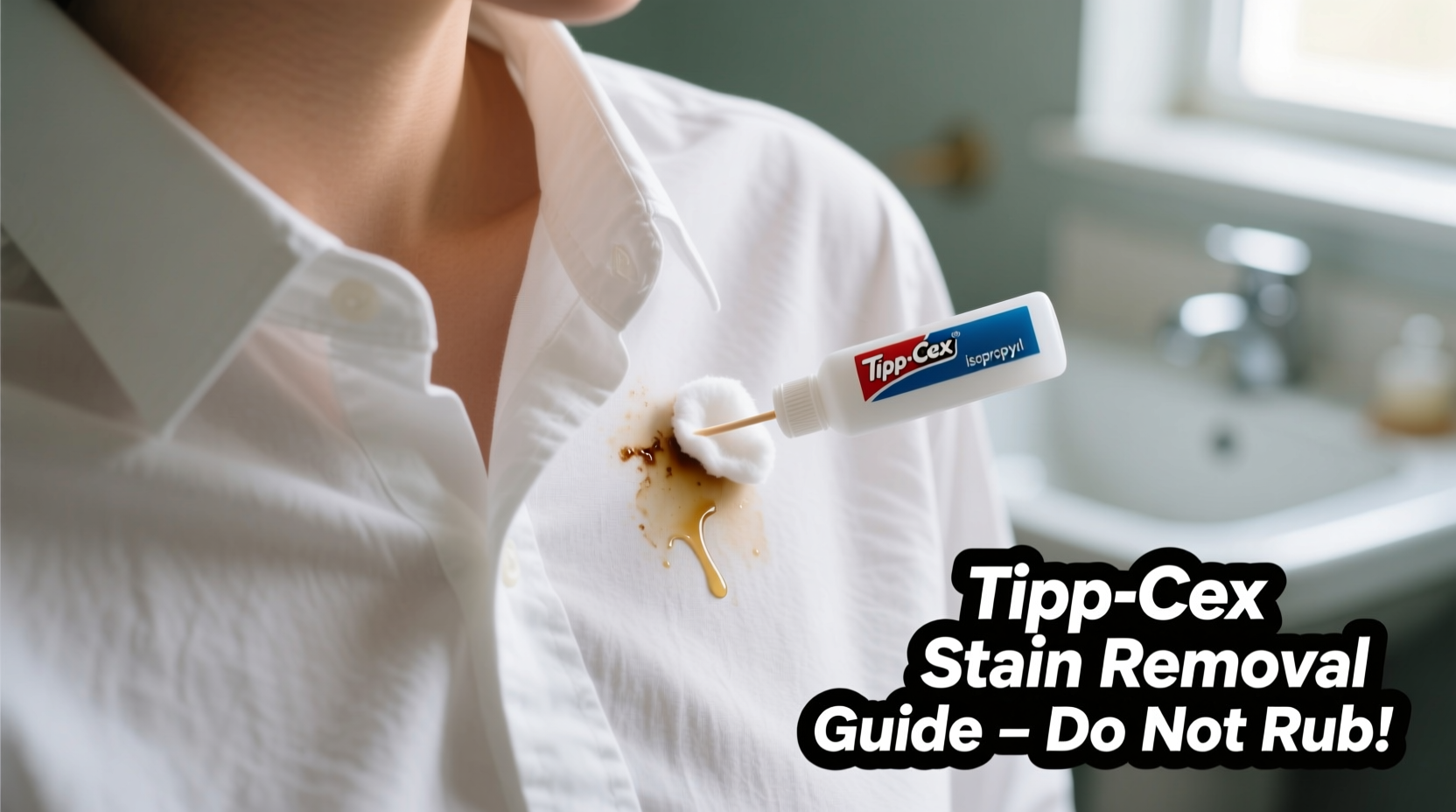
Tipp-Ex isn’t just paint; it’s a complex mixture designed to dry quickly and adhere to paper. When it lands on fabric, it forms a film that can set into fibers, especially after washing or drying. The longer it sits, the harder it becomes to lift. The composition typically includes:
- Titanium dioxide – provides opacity and white color
- Solvents like heptane or toluene – help it spread and dry fast
- Resins – bind the formula together and create a durable finish
These components mean standard laundry detergents often fail. Worse, aggressive scrubbing or heat can permanently bond the stain to the fabric. Delicate materials like silk, wool, or rayon are especially vulnerable. Understanding what you’re dealing with helps you choose a removal method that dissolves the resin without degrading the textile.
Step-by-Step Guide to Removing Tipp-Ex Stains
Removing Tipp-Ex requires patience and precision. Follow this timeline for the best results, ideally within 24 hours of the stain occurring.
- Blot, don’t rub: Use a clean cloth or spoon to gently scrape off excess dried Tipp-Ex. Avoid pressing hard to prevent spreading or embedding particles deeper.
- Test first: Pick an inconspicuous area (like an inside seam) and test any solvent to ensure it won’t discolor or weaken the fabric.
- Apply a solvent: Dampen a cotton ball with rubbing alcohol (isopropyl alcohol), nail polish remover (acetone-free), or a specialized stain remover. Gently dab around the stain’s edge, working inward.
- Let it sit: Allow the solvent to penetrate for 5–10 minutes. This softens the resin binding the Tipp-Ex to the fibers.
- Blot again: Use a clean cloth to absorb the dissolved residue. Do not rinse yet.
- Wash normally: Launder the garment according to its care label using the warmest water safe for the fabric. Add a stain-fighting detergent.
- Inspect before drying: Check if the stain is gone. If traces remain, repeat the process. Only dry once the stain is fully removed.
This method works best on cotton, polyester, and blends. For delicate fabrics, proceed with extra caution and consider gentler alternatives.
Do’s and Don’ts: A Quick Reference Table
| Do’s | Don’ts |
|---|---|
| Scrape off excess with a dull knife or spoon | Rub or scrub aggressively |
| Use isopropyl alcohol on synthetic fabrics | Use acetone on acetate, triacetate, or spandex |
| Test solvents on hidden areas first | Apply heat (ironing or drying) before the stain is gone |
| Wash immediately after treatment | Soak delicate fabrics in strong solvents |
Alternative Methods for Sensitive Fabrics
Not all garments can withstand alcohol or chemical solvents. For silk, wool, or vintage pieces, gentler approaches are essential.
For Silk: Mix one part white vinegar with two parts cold water. Dab lightly with a microfiber cloth. Rinse with cold water and air dry flat. Vinegar helps break down the resin without stripping natural fibers.
For Wool: Use a small amount of dish soap (like Dawn) mixed with cool water. Apply with a soft toothbrush using minimal pressure. Blot dry and lay flat to avoid stretching.
For Children’s Clothing: Stick to baby-safe wipes containing water and mild surfactants. Gently wipe the area, then launder as usual. While less potent, repeated applications may gradually lift the stain.
“Tipp-Ex contains volatile organic compounds that can degrade protein fibers like silk and wool. Always opt for pH-neutral, low-impact treatments on delicate textiles.” — Dr. Lena Patel, Textile Chemist & Stain Remediation Specialist
Real-Life Example: Office Shirt Rescue
Mark, a project manager, spilled Tipp-Ex on his favorite white dress shirt during a late-night report edit. He noticed the stain the next morning but resisted tossing it. Following a cautious approach, he scraped off the bulk with a butter knife, applied 90% isopropyl alcohol to a cotton pad, and dabbed the area for 8 minutes. After blotting with a towel, he washed the shirt in warm water with enzyme-based detergent. To his relief, the stain vanished. He now keeps a travel-sized alcohol wipe in his work bag for emergencies.
This case highlights how prompt, informed action can save a garment. Mark avoided the dryer until confirming the stain was gone—a critical step many overlook.
Checklist: Remove Tipp-Ex Stains Safely
- □ Scrape off visible Tipp-Ex gently
- □ Identify fabric type and check care label
- □ Test solvent on a hidden area
- □ Apply isopropyl alcohol or suitable remover with a cotton ball
- □ Wait 5–10 minutes for penetration
- □ Blot away dissolved residue
- □ Wash garment according to fabric instructions
- □ Inspect before drying—if stain remains, repeat
Frequently Asked Questions
Can I use nail polish remover to remove Tipp-Ex?
Yes, but only if it’s acetone-free. Acetone can dissolve synthetic fibers like acetate or nylon. Opt for ethyl acetate-based removers labeled “gentle” or “for nails.” Always test first.
What if the Tipp-Ex has already been washed and dried?
Heat makes removal harder, but not impossible. Try soaking the area in a mixture of warm water and dish soap for 30 minutes. Then apply rubbing alcohol and gently agitate with a soft brush. Repeat if needed before rewashing.
Will Tipp-Ex stains bleach or discolor my clothes?
Unlikely. Tipp-Ex is opaque but not a bleaching agent. However, solvents used to remove it (like strong alcohols or acetone) may affect dyes, especially on dark or vibrant fabrics. Always patch-test first.
Final Thoughts and Action Steps
Removing Tipp-Ex from clothing doesn’t require expensive products or professional cleaning—just the right technique and timely action. Whether it’s a child’s school blouse or a professional’s dress shirt, most stains can be resolved at home with common household items. The key is to act quickly, avoid heat, and treat the fabric with respect. By understanding the chemistry behind the stain and following a structured approach, you preserve both the garment and your peace of mind.




 浙公网安备
33010002000092号
浙公网安备
33010002000092号 浙B2-20120091-4
Comments
No comments yet. Why don't you start the discussion?