
In an age where digital privacy is increasingly fragile, the ability to communicate discreetly has become more than just a convenience—it’s a necessity for many. Whether you’re protecting your identity, managing professional boundaries, or navigating sensitive personal situations, sending texts from a different number can offer crucial layers of separation between your private life and public presence. However, doing so safely requires more than just masking your digits. It demands thoughtful tools, secure practices, and awareness of potential risks.
This guide explores practical, ethical, and legally sound methods to send messages from alternate numbers while preserving anonymity and avoiding digital footprints that could compromise your safety.
Why Send Texts Anonymously?
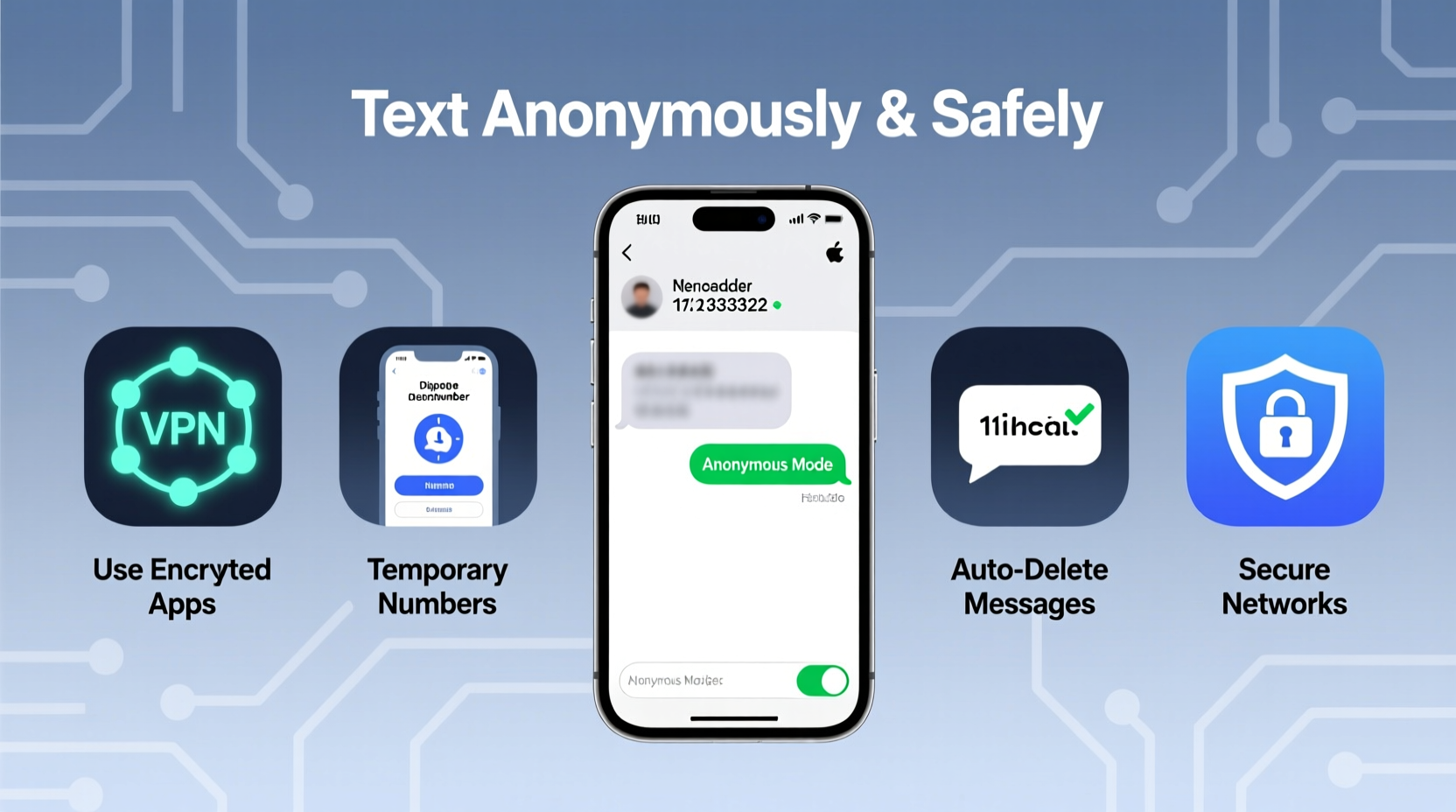
Anonymity in texting isn’t inherently suspicious. Legitimate reasons include:
- Contacting service providers or landlords without revealing personal contact details.
- Reporting misconduct or abuse without fear of retaliation.
- Running side businesses or freelance work without mixing personal communications.
- Testing customer support responsiveness under controlled conditions.
- Maintaining mental health boundaries in difficult relationships.
The goal isn't deception—it's control over who accesses your real identity and when.
Secure Methods to Text from Another Number
Not all anonymous texting tools are created equal. Some expose metadata, store logs, or rely on unencrypted servers. The safest options combine number masking with end-to-end encryption and minimal data retention.
1. Dedicated Messaging Apps with Burner Numbers
Apps like TextNow, Burner, and Hushed provide virtual phone numbers tied to your device—no SIM required. These numbers function like real mobile lines, allowing SMS, MMS, and calling through Wi-Fi or data.
Benefits:
- No contract or credit check needed.
- Numbers can be deleted after use (“burned”).
- Cross-platform sync (iOS, Android, web).
Limitations:
- Free versions may display ads or recycle numbers.
- Some services log IP addresses unless used with a VPN.
- Not fully anonymous if linked to email or payment info.
2. Web-Based SMS Gateways
Sites such as SendAnonymousSMS, TextEm, or AnonSMS allow one-time message delivery without registration. You enter a recipient number, compose a message, and send it through their system.
These platforms often mask your origin but vary widely in reliability and privacy standards. Always verify whether they:
- Store sent messages or IPs.
- Encrypt traffic (look for HTTPS).
- Allow character limits and media support.
“Web-based gateways can be useful for quick, non-critical messages, but they rarely meet enterprise-grade security.” — Lena Patel, Cybersecurity Analyst at SecureLine Labs
3. Encrypted Messaging with Secondary Identity
Signal and Threema support secondary installations using temporary numbers. By registering Signal with a disposable number (e.g., from a prepaid SIM), you create a verifiable yet unlinkable identity.
This method ensures:
- End-to-end encryption by default.
- No cloud backups unless manually enabled.
- Minimal metadata collection compared to mainstream apps.
Note: Avoid linking this installation to your primary contacts unless necessary.
Step-by-Step Guide to Sending Anonymous Texts Safely
Follow this sequence to maximize privacy and minimize exposure:
- Choose Your Tool: Decide between app-based solutions (for recurring use) or web gateways (for one-offs).
- Use a Temporary Email: If registration is required, create a new ProtonMail or Tutanota account via Tor Browser.
- Mask Your IP Address: Connect to a trusted no-log VPN before downloading or accessing any service.
- Acquire a Virtual Number: Use a burner app or purchase a prepaid SIM card with cash.
- Register Without Personal Data: Never use your real name, birthday, or linked social accounts.
- Send the Message: Compose and transmit only what’s necessary—avoid identifiable language.
- Dispose of Traces: Delete the app, clear browser history, or deactivate the number after use.
Do’s and Don’ts of Anonymous Texting
| Do’s | Don’ts |
|---|---|
| Use encrypted apps whenever possible | Send threats, harassment, or illegal content |
| Route connections through a reputable VPN | Link anonymous accounts to personal profiles |
| Delete messages and accounts post-use | Assume total invisibility—metadata leaks happen |
| Verify recipient number accuracy | Use public Wi-Fi without protection |
| Test the setup with a known contact first | Share location or time-specific details |
Real-World Scenario: Protecting Whistleblower Communications
Jamal, a mid-level employee at a logistics firm, noticed systemic safety violations being ignored by management. Fearing job loss, he wanted to alert regulators without exposing himself.
He followed these steps:
- Purchased a $20 prepaid Android phone with cash.
- Activated a local SIM card not tied to his ID.
- Installed Signal and registered using the new number.
- Connected to a library Wi-Fi via a no-log VPN.
- Sent encrypted messages to a government tip line, including photos redacted of identifying marks.
The report was investigated, policy changes were implemented, and Jamal remained unidentified. His approach balanced effectiveness with operational security.
Checklist: Preparing for Anonymous Communication
- ✅ Acquire a clean device or isolate environment (e.g., guest mode)
- ✅ Install a trustworthy no-log VPN (e.g., Mullvad, IVPN)
- ✅ Obtain a virtual or prepaid number unlinked to your identity
- ✅ Use end-to-end encrypted messaging (Signal, Threema, Wire)
- ✅ Disable location services and auto-backup features
- ✅ Avoid logging into personal accounts during session
- ✅ Wipe device or uninstall app after mission completion
Frequently Asked Questions
Can someone trace an anonymous text back to me?
It depends on your method. Free web gateways may keep server logs accessible to authorities. App-based services with strong encryption and no KYC (Know Your Customer) policies reduce traceability significantly—especially when combined with a VPN and temporary credentials.
Are there legal risks in texting from a fake number?
Using a different number isn’t illegal, but intent matters. Sending threatening, fraudulent, or harassing messages—even anonymously—can result in criminal charges under telecommunications laws. Always act within legal and ethical boundaries.
What’s the most private way to send a text?
The gold standard: a dedicated device with a prepaid SIM, connected via a no-log VPN, running Signal or similar E2EE app. After use, physically destroy the SIM and reset the device. This minimizes both digital and physical traces.
Final Thoughts: Privacy Is a Practice, Not a Product
No tool guarantees perfect anonymity. True privacy comes from consistent habits—layered defenses, disciplined behavior, and informed choices. While technology enables safer communication, human error remains the weakest link. By combining secure tools with cautious procedures, you can confidently send messages from alternate numbers without sacrificing safety or integrity.
Whether you're shielding yourself from unwanted attention or maintaining professional discretion, the power lies in preparation. Start small: test one method, refine your process, and build confidence over time.




 浙公网安备
33010002000092号
浙公网安备
33010002000092号 浙B2-20120091-4
Comments
No comments yet. Why don't you start the discussion?