
Commuting efficiently in today’s fast-paced urban environments means moving quickly, lightly, and with purpose. Yet many professionals still struggle with the balance between carrying what they need and staying agile. The solution? A well-chosen small bag that combines function, durability, and personal style. Contrary to popular belief, going small doesn’t mean compromising on essentials—it means being intentional. With smart organization, strategic packing, and thoughtful design choices, a compact bag can carry everything you truly need while enhancing your daily aesthetic.
Why Small Bags Win in Daily Commuting
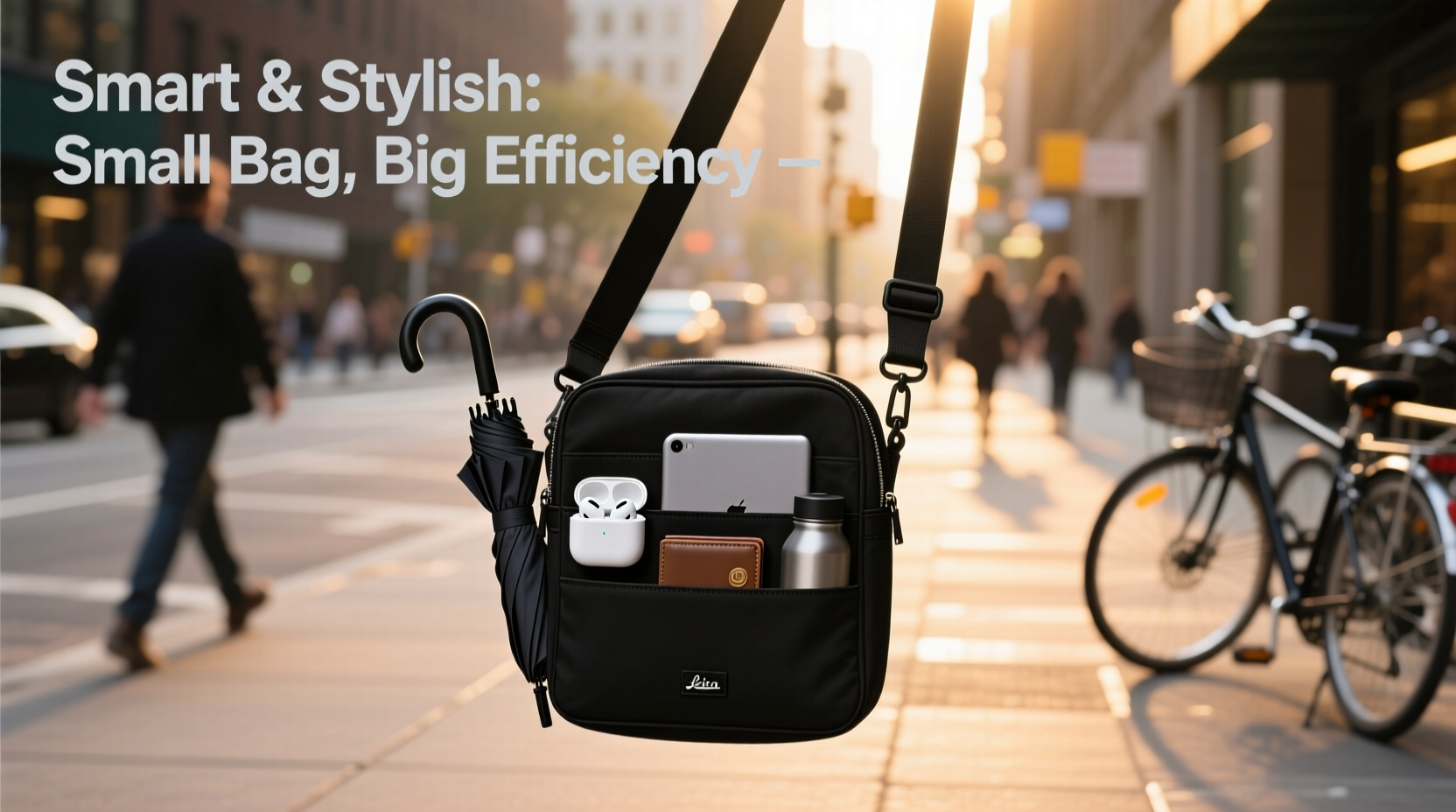
Small bags—whether crossbody satchels, minimalist backpacks, or structured totes—offer distinct advantages over larger alternatives. They reduce physical strain, improve mobility through crowded spaces, and often project a more polished, put-together image. According to urban mobility researcher Dr. Lena Torres, “The average commuter spends 73 hours per year waiting in transit lines or navigating congested stations. In those moments, every ounce matters.” A lightweight, streamlined bag minimizes fatigue and streamlines movement.
Moreover, smaller capacity forces prioritization. You’re less likely to carry unnecessary items like extra shoes, multiple snacks, or outdated paperwork when space is limited. This leads to cleaner routines, fewer forgotten belongings, and reduced mental clutter.
“Carrying less isn’t about deprivation—it’s about clarity. A small bag becomes a filter for what’s essential.” — Marcus Reed, Urban Lifestyle Designer
Choosing the Right Small Bag for Your Routine
Not all small bags are created equal. The ideal choice depends on your commute type, work environment, and personal style. Consider these factors before purchasing:
- Material durability: Water-resistant nylon, waxed canvas, or full-grain leather withstand daily wear better than delicate fabrics.
- Access points: Top zips offer security; front panels allow quick access; magnetic closures strike a balance.
- Strap comfort: Padded shoulder straps or adjustable crossbody designs prevent digging and chafing during long walks.
- Internal structure: Look for defined compartments—laptop sleeves, zip pockets, and pen loops keep contents organized.
Comparison: Bag Types by Commute Style
| Bag Type | Best For | Capacity Range | Style Flexibility | Durability Rating |
|---|---|---|---|---|
| Crossbody Sling | Short urban commutes, bike riders | 5–8L | High – pairs with casual to smart-casual | ★★★★☆ |
| Minimalist Backpack | Transit-heavy routes, cyclists | 10–14L | Moderate – leans tech or streetwear | ★★★★★ |
| Structured Shoulder Bag | Office commuters, hybrid workers | 9–12L | Very High – works with suits or jeans | ★★★☆☆ |
| Waist Pack (Fanny Pack) | Walking, train transfers, hands-free needs | 3–6L | High – now fashion-forward | ★★★☆☆ |
Maximizing Space Without Overstuffing
The key to using a small bag effectively lies in intelligent packing. Think of your bag as a capsule wardrobe: every item must earn its place. Begin by defining your non-negotiables—items you use daily—and eliminate redundancies.
Step-by-Step: Optimize Your Daily Load
- Audit your current bag contents. Empty everything and lay items out. Ask: “Did I use this yesterday?” If not, reconsider its necessity.
- Consolidate tools. Replace multiple pens with one multi-function stylus. Use digital notes instead of paper notebooks unless absolutely needed.
- Downsize accessories. Carry a credit-card-sized power bank instead of a bulky one. Use slim wallets or cardholders.
- Use modular inserts. A small pouch for cables, another for hygiene items—these maintain order without wasting space.
- Rotate seasonal items. Don’t carry winter gloves in July. Store extras at work or home.
“Every item in your bag should serve a purpose or bring joy. If it does neither, it’s dead weight.” — Clara Nguyen, Productivity Consultant
Styling a Small Bag with Intention
Many assume small bags limit style options. On the contrary, they often elevate an outfit by acting as a deliberate focal point. A sleek black crossbody adds polish to a neutral ensemble; a rust-colored sling introduces warmth to a monochrome look. Because small bags occupy less visual space, their design details—stitching, hardware, texture—become more noticeable.
Choose a color that complements your most-worn outfits. Neutrals like charcoal, navy, or tan offer maximum versatility. For bolder personalities, consider rich burgundy, olive green, or even a subtle metallic finish.
Real Example: Maria’s Morning Routine
Maria, a graphic designer in Portland, used to carry a large tote filled with sketchbooks, chargers, and spare clothes. After switching to a 10-liter minimalist backpack, she reevaluated her needs. She digitized her sketches, kept only one notebook, and stored a backup sweater at her studio. Now, her bag holds just her tablet, headphones, wallet, lip balm, and reusable water bottle (carried externally). “I walk faster, feel lighter, and get more compliments,” she says. “It’s proof that less really can be more.”
Essential Checklist for Small Bag Success
- ✅ Define your daily essentials (limit to 6–8 core items)
- ✅ Choose a bag with secure closure and comfortable carry
- ✅ Use slim, multi-functional electronics (e.g., foldable keyboard, mini charger)
- ✅ Organize with internal pouches or dividers
- ✅ Rotate items seasonally or based on schedule
- ✅ Clean and air out your bag weekly
- ✅ Store at home in a breathable cloth bag when not in use
Frequently Asked Questions
Can I fit a laptop in a small bag?
Yes—many small bags now include padded sleeves for 13-inch laptops or tablets. Measure your device and check manufacturer dimensions before buying. Avoid forcing a larger laptop into a tight space, as this strains zippers and fabric.
How do I prevent my bag from looking messy?
Keep external straps tucked, avoid overloading, and wipe down surfaces regularly. Never hang items like scarves or mugs from the exterior—they disrupt clean lines and risk damage.
What if my job requires carrying more items?
Consider a dual-bag strategy: a small everyday bag for essentials, and a foldable tote packed only on high-load days. Alternatively, store non-essentials (extra shoes, files) at your workplace.
Final Thoughts: Efficiency Meets Elegance
Efficient commuting isn’t about speed alone—it’s about intentionality. Using a small bag challenges you to refine your habits, reduce excess, and move through the world with greater ease. When chosen wisely and packed thoughtfully, a compact bag doesn’t limit you; it liberates you. It encourages mindfulness, enhances mobility, and subtly communicates confidence.
Start today: empty your current bag, identify what truly serves you, and experiment with a smaller alternative. You might find that shedding bulk doesn’t mean losing function—but gaining freedom.




 浙公网安备
33010002000092号
浙公网安备
33010002000092号 浙B2-20120091-4
Comments
No comments yet. Why don't you start the discussion?