
A hobo bag is more than a fashion statement—it’s a functional companion for work, errands, travel, or weekend outings. But its soft structure and spacious interior can quickly turn into a black hole of loose receipts, tangled cords, and forgotten lipsticks. Without a smart organization system, even the most stylish bag becomes a burden. The solution isn’t buying more accessories; it’s adopting smarter habits. With a few intentional adjustments, you can transform your hobo bag into a streamlined, efficient extension of your daily routine.
Why Organization Matters for Hobo Bags
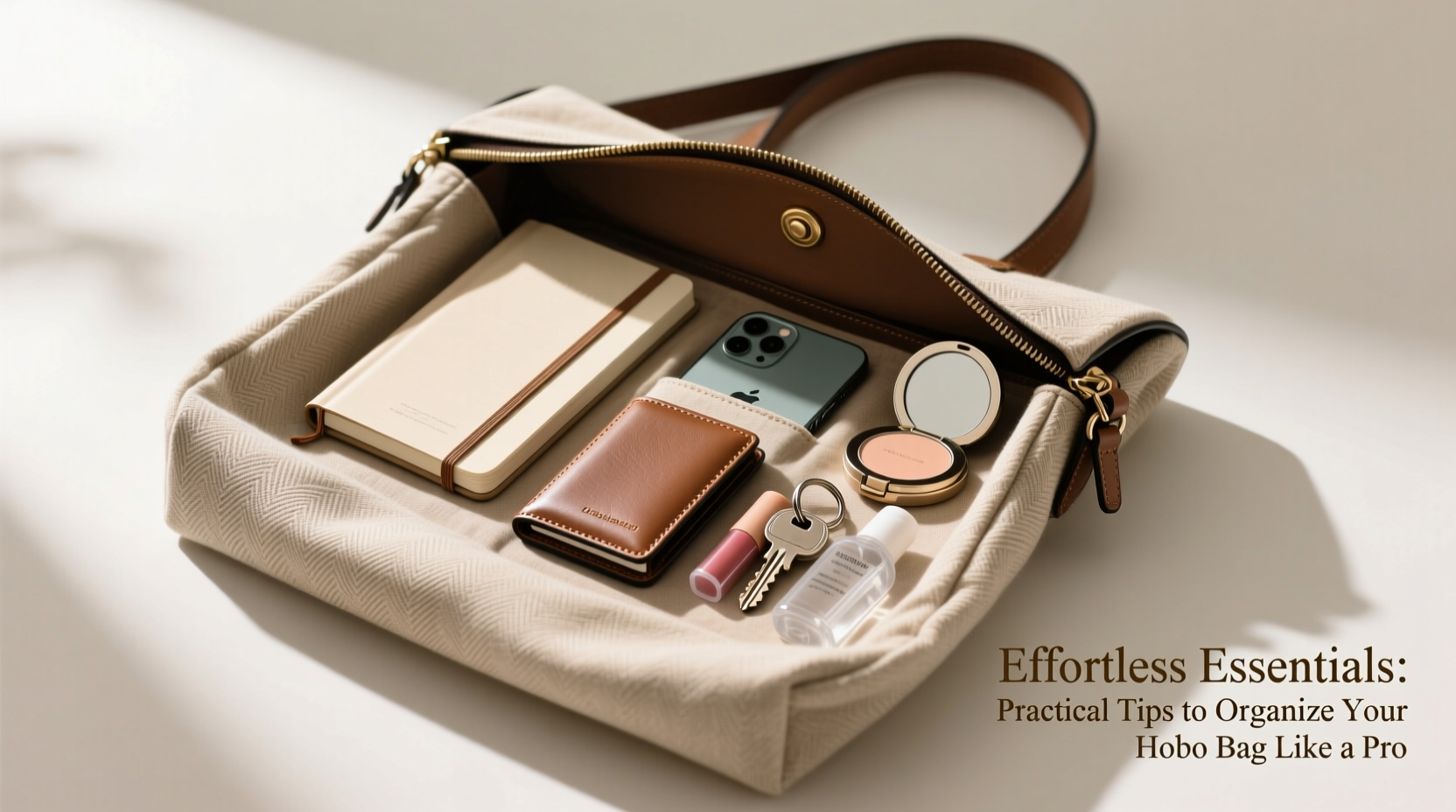
Hobo bags differ from structured totes or crossbodies in their slouchy silhouette and open shape. While this gives them a relaxed, effortless appeal, it also means items shift easily and disappear into corners. Unlike compartmentalized satchels, hobo bags rely on the user to create order. Without internal pockets or dividers, everything rests together—keys at the bottom, wallet lost under notebooks, hand sanitizer leaking in an unmarked pouch.
Proper organization prevents frustration, saves time, and protects your belongings. It also preserves the integrity of your bag by reducing strain from overstuffing and minimizing wear caused by constant digging. A well-organized hobo bag reflects a clear mind and an intentional lifestyle.
The Essential 5-Step System to Organize Your Hobo Bag
Organization isn’t about perfection—it’s about consistency and functionality. Follow this five-step process weekly to maintain control over your bag’s contents.
- Empty completely. Once a week, remove every item. This allows you to assess what you actually use versus what’s just taking up space.
- Clean the interior. Wipe down fabric linings with a dry microfiber cloth. For leather interiors, use a gentle cleaner suitable for the material.
- Categorize your essentials. Group items into logical clusters: personal (wallet, ID), tech (charger, earbuds), hygiene (hand sanitizer, tissues), and situational (umbrella, notebook).
- Assign zones. Designate areas within the bag for each category. For example, left side for tech, center for wallet and phone, right for hygiene.
- Reassemble with purpose. Place items back using small pouches or organizers to maintain separation.
Recommended Daily Carry Checklist
Stick to a core set of essentials to avoid clutter. Customize based on your routine, but aim for simplicity.
- Wallet or cardholder
- Smartphone + portable charger
- Keys with compact keychain
- Hand sanitizer (travel-sized)
- Lip balm or lipstick
- Folded tissue pack or mini handkerchief
- Reusable shopping bag (rolled)
- Earbuds in a protective case
Choosing the Right Organizers for Soft-Sided Bags
Because hobo bags lack rigid compartments, internal organizers are crucial. However, not all organizers work equally well. The goal is to enhance function without compromising the bag’s natural drape.
| Organizer Type | Best For | Limitations |
|---|---|---|
| Zippered clutch with multiple pockets | Storing small items like cards, coins, and pens | Takes up space; may slip if not anchored |
| Open-top fabric tray | Keeping larger items upright and accessible | Items can fall out when bag is tipped |
| Magnetic snap pouch | Securing frequently used items (e.g., phone, keys) | Limited capacity; best for flat items |
| Roll-up toiletry case | Hygiene products and cosmetics | Bulky if overfilled; needs dedicated corner |
Select one or two organizers that match your lifestyle. A minimalist might only need a slim cardholder and a phone sleeve, while a parent on the go benefits from a multi-compartment tote insert.
“Functionality should never be sacrificed for aesthetics. The best bags serve both.” — Lena Patel, Accessory Designer & Organizer Consultant
Real-Life Example: From Chaos to Clarity
Sophie, a freelance graphic designer in Portland, carried a large canvas hobo bag daily. Her bag held her tablet, sketchbook, snacks, water bottle, makeup, and various charging cables. She often arrived late to client meetings because she couldn’t find her AirPods or business cards. After spilling coffee inside the bag—which soaked her sketchbook—she decided to reevaluate.
She implemented the 5-step system: emptied the bag, cleaned the lining, categorized items, and purchased a lightweight nylon organizer tray with elastic loops. She placed her tablet in the back, tech in the center tray, wallet and cards in a front zip clutch, and kept snacks in a reusable silicone pouch at the bottom. Within days, she reduced her average “bag search” time from three minutes to under thirty seconds. More importantly, her bag stayed cleaner, and her confidence improved knowing everything had a place.
Do’s and Don’ts of Hobo Bag Maintenance
Avoid common pitfalls that undermine even the best organization efforts. Refer to this quick-reference table to stay on track.
| Do’s | Don’ts |
|---|---|
| Use a removable liner for easy cleaning | Overfill the bag beyond 80% capacity |
| Rotate seasonal items monthly | Store pens or leak-prone liquids without caps |
| Label small pouches with tags or colors | Leave old receipts or expired coupons |
| Check bag weight—shouldn’t exceed 7 lbs when full | Carry heavy books or bottles without support |
Frequently Asked Questions
How do I prevent my hobo bag from sagging?
Sagging occurs when the bag is overstuffed or lacks internal structure. Use a lightweight insert or organizer tray to provide subtle support. Avoid placing heavy items like laptops or water bottles unless the bag is specifically designed for them.
What’s the best way to store a hobo bag when not in use?
Store it in a cool, dry place away from direct sunlight. Stuff the interior loosely with acid-free tissue paper to maintain shape, and cover it with a breathable cotton dust bag. Never use plastic, as it traps moisture and promotes mildew.
Can I machine-wash the interior lining?
Most hobo bags have non-removable linings. Spot-clean with a damp cloth and mild soap instead. For stubborn stains, use a fabric-safe cleaning pen. Always test any cleaner on a hidden area first.
Final Thoughts: Make Organization Effortless
Organizing your hobo bag doesn’t require expensive tools or hours of sorting. It starts with awareness—knowing what you carry, why you carry it, and where it belongs. By applying simple systems consistently, you turn chaos into calm. The goal isn’t minimalism for its own sake, but intentionality: carrying only what serves you, arranged in a way that supports your rhythm.
A well-organized hobo bag saves time, reduces stress, and enhances your overall experience. Whether you’re dashing to a meeting or strolling through a farmers’ market, you’ll move with confidence, knowing everything you need is right where it should be.




 浙公网安备
33010002000092号
浙公网安备
33010002000092号 浙B2-20120091-4
Comments
No comments yet. Why don't you start the discussion?