
Signing out of Twitter on your mobile device might seem like a simple task, but doing it correctly ensures your personal data stays protected—especially if you're using a shared or public phone. Whether you're switching accounts, troubleshooting app issues, or enhancing your digital privacy, knowing the right steps makes all the difference. This guide walks you through the exact process for both iOS and Android, highlights key security considerations, and provides practical advice to keep your account safe.
Why Signing Out Matters More Than You Think
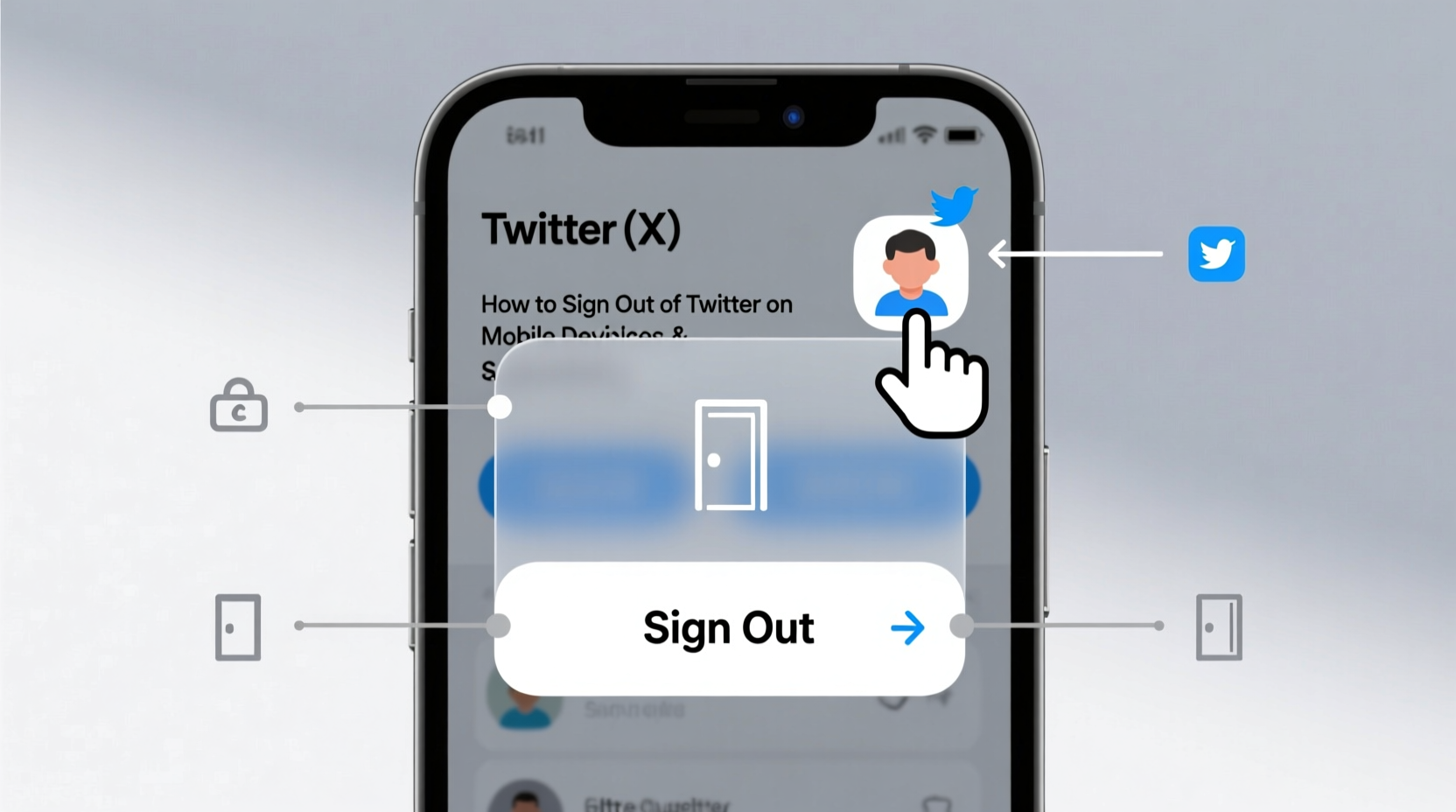
Many users assume that closing the Twitter app is enough to secure their session. However, unless you manually sign out, your account remains active in the background. This can pose risks, especially on devices used by multiple people or when lending your phone to a friend. An active session means someone could access your direct messages, post tweets, or even change your settings without needing your password.
Additionally, signing out regularly helps clear cached data, which can improve app performance and reduce storage usage over time. It's also a smart habit if you frequently switch between personal and professional accounts.
Step-by-Step: How to Sign Out of Twitter on iOS and Android
The process varies slightly depending on your device’s operating system. Below are detailed, up-to-date instructions as of 2024 for the latest version of the Twitter (now X) app.
For iPhone (iOS)
- Open the Twitter app on your iPhone.
- Tap your profile icon in the top-left corner to open the side menu.
- Scroll down and tap Settings and privacy.
- Select Log out at the bottom of the screen.
- Confirm by tapping Log out again in the pop-up dialog.
Once completed, you’ll be returned to the login screen, and all local account data will be cleared from the app.
For Android Devices
- Launch the Twitter app.
- Tap your profile picture in the upper-left to access the navigation drawer.
- Go to Settings and privacy.
- Scroll to the bottom and select Log out.
- Tap Log out once more to confirm.
Note: The interface may vary slightly based on your Android skin (e.g., Samsung One UI, Pixel UI), but the option will always appear under “Settings and privacy” at the bottom of the menu.
“Signing out isn’t just about convenience—it’s a basic layer of digital hygiene. Just like locking your front door, it should be second nature.” — Lena Patel, Cybersecurity Awareness Advocate
Common Mistakes That Compromise Account Security
Even with the correct steps, users often make small errors that leave their accounts vulnerable. Avoid these common pitfalls:
- Mistaking app closure for logout: Swiping the app away from recent apps doesn’t log you out. Your session remains active.
- Ignoring multi-account setups: If you’ve added multiple accounts, logging out from one doesn’t automatically sign you out of others.
- Not clearing browser sessions: If you've accessed Twitter via a mobile browser, signing out of the app won't affect your web session.
- Skipping two-factor authentication (2FA): Without 2FA enabled, unauthorized access becomes easier if someone gains physical access to your device.
| Action | Do | Don’t |
|---|---|---|
| Leaving device unattended | Sign out before handing over your phone | Assume the locked screen is enough protection |
| Using public Wi-Fi | Enable 2FA and sign out after use | Stay logged in across sessions |
| Switching accounts | Log out fully before adding a new account | Keep both accounts active simultaneously without monitoring |
Real-World Scenario: A Close Call at the Coffee Shop
James, a freelance designer, often works from cafes. One afternoon, he let a colleague borrow his phone to check directions. Unbeknownst to him, the colleague opened Twitter, saw James’s active session, and jokingly tweeted from his account—posting an embarrassing meme that went viral within minutes.
Although the tweet was deleted quickly, it damaged James’s professional reputation among clients who follow him. After this incident, he implemented a strict rule: he logs out of all social apps immediately after use, especially when working in public spaces. He now uses Twitter’s account switcher only when necessary and always signs out afterward.
This example underscores how easily a moment of carelessness can lead to long-term consequences.
Security Best Practices After Signing Out
Logging out is just one part of maintaining strong digital security. Follow these additional steps to ensure your Twitter account stays protected:
Check Active Sessions Regularly
Twitter allows you to view all active sessions across devices. To do so:
- Log back into your account.
- Go to Settings and privacy → Security and account access → Sessions.
- Review the list of logged-in devices.
- Tap Log out next to any unfamiliar or outdated sessions.
Enable Two-Factor Authentication (2FA)
Use either SMS verification, an authenticator app, or a security key. Authenticator apps like Google Authenticator or Authy are more secure than SMS due to the risk of SIM swapping.
Clear App Cache Periodically
On Android: Go to Settings > Apps > Twitter > Storage > Clear Cache.
On iOS: Offloading the app clears cache. Go to Settings > General > iPhone Storage > Twitter > Offload App.
Frequently Asked Questions
Can I stay signed in safely on my personal phone?
Yes, if your device is secured with a strong passcode, biometric lock (Face ID or fingerprint), and remote wipe capabilities enabled. However, consider signing out temporarily if you’re updating your OS or letting someone else use your phone.
Does signing out delete my drafts or bookmarks?
No. Drafts and bookmarks are saved to your account in the cloud. Signing out only clears locally stored data like notifications and temporary files. Your content will reappear once you log back in.
What if I don’t see the ‘Log out’ option?
If the option is missing, try updating the app from the App Store or Google Play. Outdated versions sometimes hide certain features. If the issue persists, uninstall and reinstall the app after backing up important data.
Final Checklist: Secure Your Twitter Logout Routine
- ✅ Open the Twitter app and go to Settings and privacy
- ✅ Scroll to the bottom and tap Log out
- ✅ Confirm the action in the confirmation dialog
- ✅ Verify you’re on the login screen
- ✅ Check active sessions online via twitter.com if concerned about other devices
- ✅ Enable 2FA for added protection
- ✅ Repeat the process for each added account if managing multiple profiles
Take Control of Your Digital Footprint Today
Signing out of Twitter on your mobile device is a quick, effortless action—but its impact on your privacy and security is significant. In a world where digital breaches and accidental exposures are increasingly common, taking a few seconds to log out properly is a small price to pay for peace of mind.
Make it a habit. Teach others to do the same. And remember: true digital safety isn’t found in complex tools alone—it starts with simple, consistent actions.




 浙公网安备
33010002000092号
浙公网安备
33010002000092号 浙B2-20120091-4
Comments
No comments yet. Why don't you start the discussion?