
A polished yet relaxed hairstyle can elevate your look without demanding hours in front of the mirror. The hair ring bun—also known as a donut bun or sock bun—is one of the most versatile updos you can master. Whether you're rushing to work, attending a wedding, or simply want to keep your hair off your neck on a hot day, this style delivers elegance with minimal effort. Unlike intricate braids or precision styling, the ring bun is forgiving, quick, and works across hair types and lengths. With just a few tools and the right technique, you can achieve a sleek, voluminous bun that looks professionally done.
Why the Ring Bun Works for Everyone
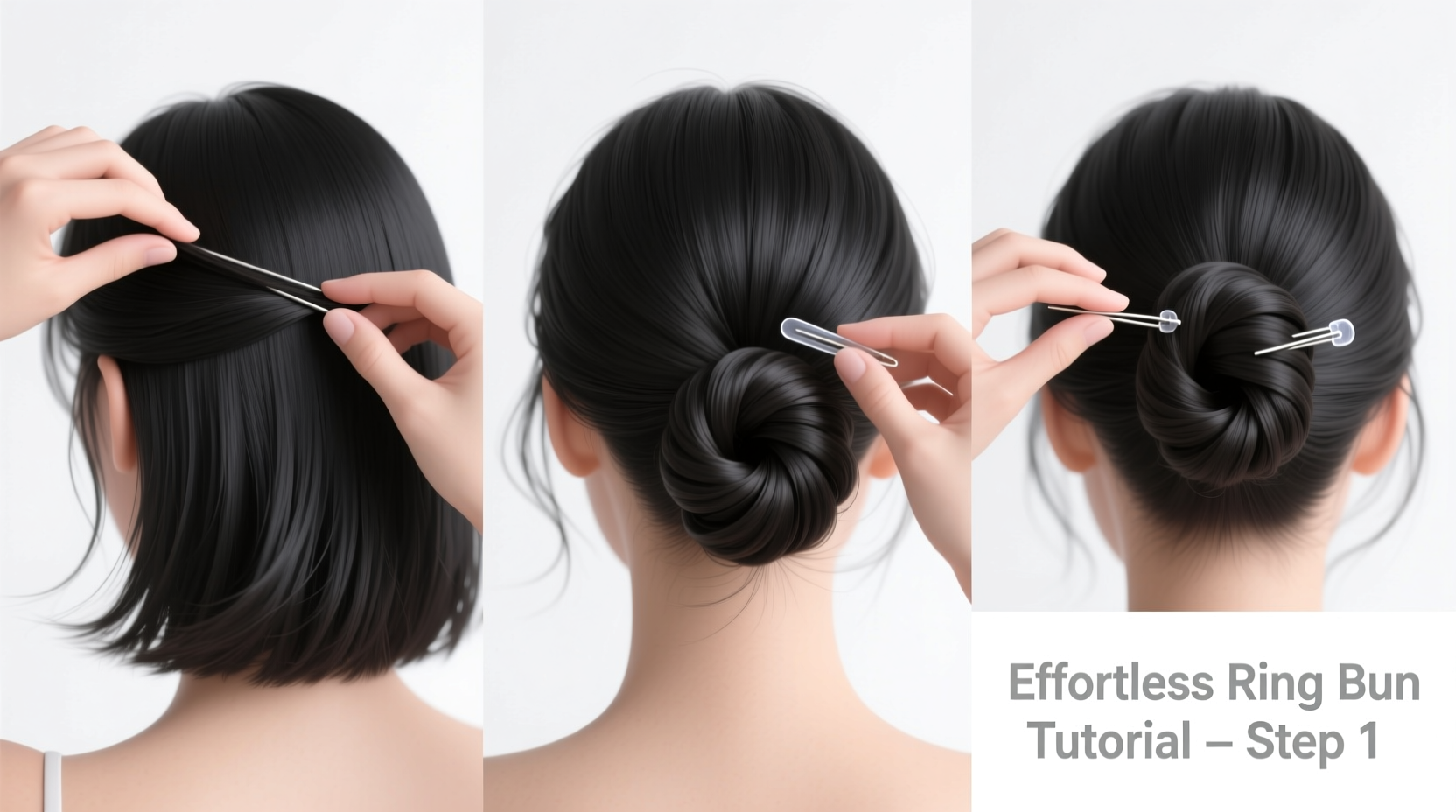
The beauty of the ring bun lies in its simplicity and adaptability. It adds volume instantly, especially for those with fine or thin hair, and creates a structured shape that holds throughout the day. Unlike twisting your hair into a messy knot—which can fall flat or look uneven—the ring provides consistent form. It also eliminates the need for excessive bobby pins or hairspray to maintain structure.
Hair stylists often recommend the ring bun for clients who want a “done” look without heat styling. Celebrities like Meghan Markle and Alexa Chung have been spotted wearing variations of this style on red carpets and casual outings alike, proving its timeless appeal.
“An effortless bun isn’t about perfection—it’s about balance. The ring gives you instant polish while allowing for natural texture.” — Lila Torres, Celebrity Hairstylist
What You’ll Need: Tools and Prep
Before diving into the steps, gather your essentials. Most items are likely already in your bathroom drawer or makeup bag.
- Hair ring (donut): Available in foam or fabric, choose a size that matches your desired bun volume. Smaller rings create neat buns; larger ones add drama.
- Elastic hair tie: A strong, snag-free band is essential for securing the base.
- Bobby pins: Match them to your hair color for a seamless finish.
- Comb or brush: To smooth hair and eliminate tangles.
- Light-hold hairspray or texturizing spray: For finishing and control.
- Optional: Hair net: Ideal for formal events to keep every strand in place.
Step-by-Step Guide to the Perfect Ring Bun
Follow these clear, sequential steps to create a flawless ring bun in under five minutes.
- Prep your hair: Brush thoroughly to remove knots. For better grip, slightly dirty hair (day-old wash) works best. If your hair is too clean and slippery, apply a light texturizing spray at the roots.
- Gather a high or low ponytail: Decide on placement. A high ponytail offers a youthful, ballerina vibe; a low one feels more romantic and sophisticated. Secure tightly with an elastic.
- Slide the ring over the ponytail: Position the ring at the base of the ponytail, just below the hair tie. Hold it in place with one hand.
- Spread your hair evenly around the ring: Use your fingers to distribute the hair so it fully covers the ring. Start from the outside and work inward, tucking sections smoothly.
- Secure the bun: Once all hair is wrapped around the ring, use bobby pins to anchor the bun to your scalp. Insert pins in an X-shape for maximum hold.
- Smooth and shape: Gently tug on the edges to adjust fullness. For a looser, lived-in look, pull out a few face-framing strands.
- Finish with spray: Lightly mist with hairspray to tame flyaways without making the bun stiff.
Variations to Try
Once you’ve mastered the classic version, experiment with subtle twists:
- Braided ring bun: Braid your ponytail before wrapping it around the ring for added detail.
- Twisted wrap: Instead of spreading hair evenly, twist sections as you wrap for texture.
- Double bun: Create two smaller buns on either side for a playful, kawaii-inspired look.
Do’s and Don’ts: Common Mistakes and How to Avoid Them
| Do’s | Don’ts |
|---|---|
| Use a ring that matches your hair volume—too big will look bulky, too small won’t cover properly. | Don’t skip brushing. Tangles make wrapping difficult and create lumps in the bun. |
| Pin through both the bun and the scalp layer for lasting hold. | Don’t pull hair too tight if going for a soft, romantic style—it can cause tension headaches. |
| Leave out a few strands for a natural, effortless effect. | Don’t over-spray. A light touch preserves movement and avoids a helmet-like finish. |
| Adjust the bun’s position based on your outfit neckline. | Don’t use a mismatched ring color—opt for neutral tones like black, brown, or beige. |
Real-Life Example: From Rushed Morning to Office Ready
Sophie, a 29-year-old project manager, used to spend 20 minutes blow-drying and straightening her shoulder-length hair each morning. After watching a colleague sport a neat ring bun during a client meeting, she decided to try it herself. Using a small foam ring she found in a travel kit, Sophie followed the steps during her first attempt—messy but wearable. By the third try, she perfected it in under four minutes. Now, it’s her go-to style three times a week. “It makes me feel put together even when I’m running late,” she says. “And my coworkers always compliment it.”
Pro Tips for Long-Lasting Results
- If your hair is short, use a smaller ring and focus on back and side sections. Top layers can be pinned over the base.
- To prevent slippage, lightly backcomb the ponytail before wrapping.
- For formal events, cover the bun with a matching hair net for a sleek, vintage finish.
- Wear the bun slightly off-center for a modern, asymmetrical edge.
Frequently Asked Questions
Can I do a ring bun with short hair?
Absolutely. While long hair wraps more easily, those with shoulder-length or shorter hair can still achieve the look. Use a small ring and focus on gathering the back sections. Pin stray ends neatly underneath. Adding a clip-in extension temporarily can also help build volume if needed.
How do I stop my bun from looking too perfect or stiff?
Intentionally loosen a few strands around your face and nape. Gently pull outward on the sides of the bun to create softness. Avoid over-pinning and opt for flexible-hold products instead of heavy gels.
Is the ring bun suitable for thick or curly hair?
Yes, but consider using a fabric-covered ring for better grip. Thick hair may require more bobby pins to secure, and curly hair benefits from a light oil or serum applied before styling to reduce frizz and enhance definition.
Final Checklist: Your Quick-Reference Guide
- Prep
- Brush hair, choose bun position, select matching ring.
- Secure
- Create a tight ponytail with an elastic.
- Wrap
- Slide ring onto ponytail, spread hair evenly around it.
- Fix
- Pin securely into scalp, tuck loose ends, adjust shape.
- Finish
- Loosen strategically, spray lightly, style face-framing pieces.
Making the Effortless Bun a Staple in Your Routine
The ring bun is more than just a hairstyle—it’s a time-saving strategy, a confidence booster, and a symbol of smart self-care. In a world where we juggle responsibilities and crave simplicity, mastering a look that’s both chic and achievable matters. It doesn’t demand salon visits or expensive tools. All it requires is practice and the willingness to embrace ease.
Start by trying it once a week. Wear it to brunch, the gym, or a Zoom call. Notice how a little structure in your hair can shift your entire demeanor. Soon, reaching for that hair ring will become second nature—a small ritual that brings order to busy days.




 浙公网安备
33010002000092号
浙公网安备
33010002000092号 浙B2-20120091-4
Comments
No comments yet. Why don't you start the discussion?