
Color coordination between your lipstick and outfit isn’t just about matching shades—it’s about creating harmony, enhancing your natural features, and projecting confidence. When done well, the right lipstick can elevate an entire look, making it appear intentional, polished, and effortlessly stylish. Yet, many women struggle with choosing lip colors that complement their clothing without clashing or appearing overly coordinated.
The key lies in understanding undertones, seasonal palettes, and the psychological impact of color. This guide breaks down the art of pairing lipstick with your wardrobe using practical strategies, real-life examples, and expert insights—so you can achieve cohesive, head-turning looks with minimal effort.
Understanding Undertones: The Foundation of Coordination
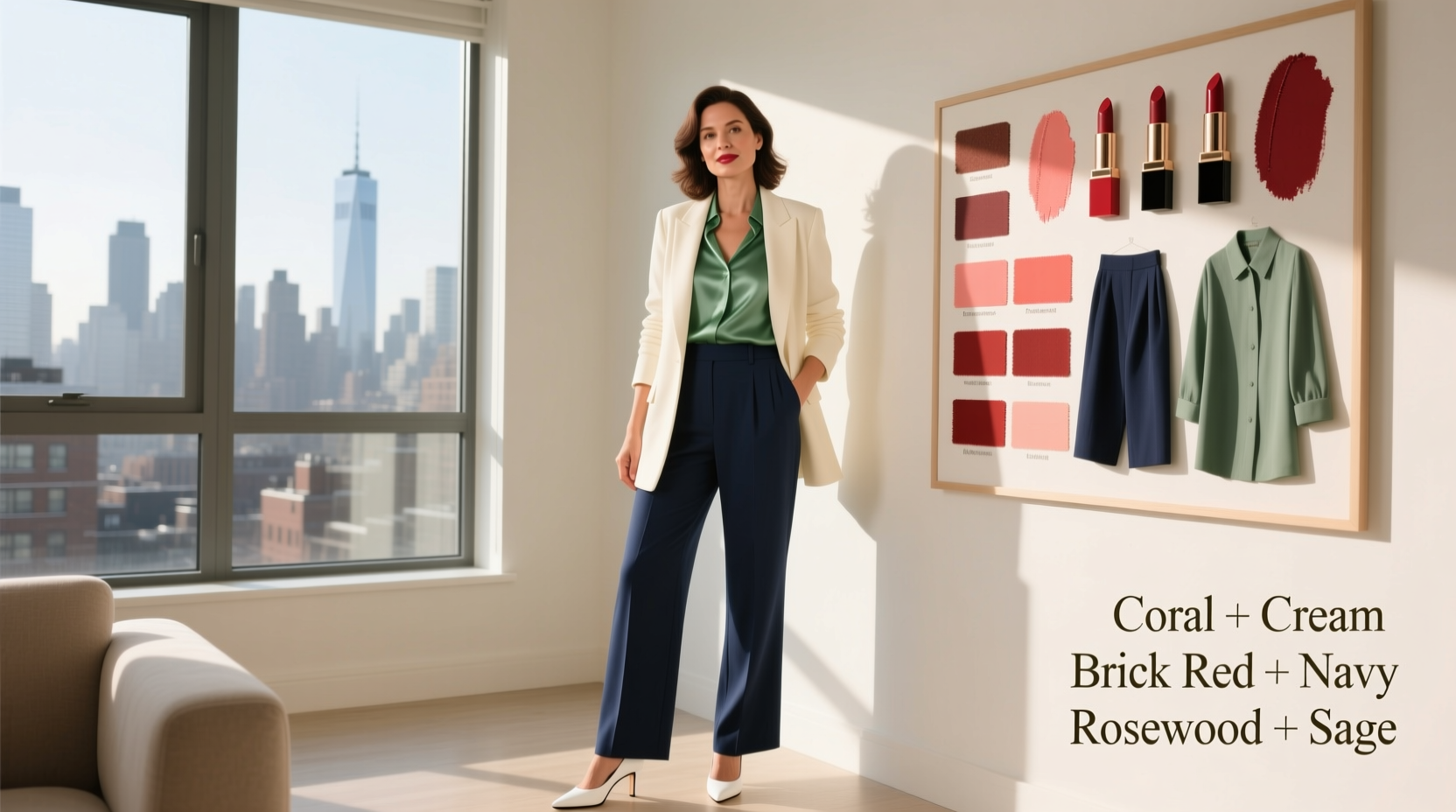
Your skin’s undertone plays a critical role in how both clothing and lipstick appear on you. Misjudging this can result in a washed-out complexion or jarring contrasts. There are three primary undertones: warm (yellow/golden), cool (pink/blue), and neutral (a balance of both).
To determine your undertone, examine the veins on your wrist under natural light:
- If they appear greenish, you likely have warm undertones.
- If they look bluish, you’re probably cool-toned.
- If it's hard to tell, you may be neutral.
Lipsticks with blue-based reds flatter cool undertones, while orange-based reds enhance warm complexions. A coral pink might pop beautifully on someone warm-toned but dull on a cool-toned individual. The same principle applies to clothing: navy complements cool tones, while olive green enhances warm ones.
Building a Coordinated Color Strategy
Instead of matching lipstick exactly to your outfit—a common mistake—aim for complementary contrast or tonal harmony. Think of your makeup as an accessory, not a mirror.
Consider these approaches:
- Analogous Pairing: Choose lipstick in a neighboring hue on the color wheel. For example, a dusty rose lip with a mauve dress creates a soft, monochromatic effect.
- Complementary Contrast: Use opposite colors for visual interest. A deep berry lip with a golden-yellow blouse draws attention to the face.
- Neutral Anchoring: Pair bold outfits with neutral lips (nudes, taupes) or vice versa—red lips with a black dress—to keep focus balanced.
Real-Life Example: The Office Meeting Makeover
Sophia wore a tailored emerald green blazer to a client presentation. Her instinct was to wear a matching green tinted balm, but she opted instead for a warm terracotta lipstick with subtle copper shimmer. The earthy orange-brown tone contrasted beautifully with the cool green fabric, warming up her complexion and making her eyes stand out. Clients later complimented her “put-together yet approachable” presence—an outcome directly tied to thoughtful color coordination.
“Makeup should enhance, not compete. The most polished looks use lipstick to frame the face, not echo the outfit.” — Lena Torres, Celebrity Makeup Artist and Color Consultant
Seasonal Palettes and Wardrobe Synergy
Your seasonal wardrobe shifts should inform your lipstick choices. Aligning with seasonal color trends ensures your look feels current and naturally harmonized.
| Season | Wardrobe Colors | Recommended Lipstick Shades | Why It Works |
|---|---|---|---|
| Spring | Pastel pink, mint, lemon, sky blue | Peach, sheer coral, pink-nude | Light, fresh lip tones echo spring’s vibrancy without overpowering delicate fabrics. |
| Summer | White, navy, aqua, bright floral prints | Rosy mauve, sheer raspberry, cool pink | Cool-toned lips balance sun-kissed skin and crisp summer whites. |
| Autumn | Burgundy, mustard, olive, chocolate brown | Brick red, burnt sienna, spiced plum | Rich, warm lip colors mirror autumn’s depth and earthiness. |
| Winter | Black, charcoal, jewel tones, metallics | Blue-based red, deep wine, fuchsia | High-contrast lips cut through dark fabrics and amplify drama. |
Step-by-Step Guide: Crafting Your Daily Combination
Follow this five-step process each morning to ensure your lipstick and outfit work in tandem:
- Assess Your Outfit’s Dominant Hue: Identify the main color and its undertone (e.g., is your gray sweater warm charcoal or cool steel?)
- Determine Your Skin’s Reaction: Does the outfit make you look vibrant or drained? Adjust accordingly—dullness means you need a lip boost.
- Select Lipstick Temperature: Match the lipstick’s undertone to either harmonize (warm with warm) or contrast (cool lip with warm outfit).
- Adjust Saturation: Light outfits pair well with medium to bold lips; dark or busy patterns call for softer, more neutral lip colors.
- Test in Natural Light: Step outside or near a window. If your face looks balanced and radiant, you’ve achieved cohesion.
Checklist: Before You Leave the House
- ✅ Is my lipstick shade aligned with my outfit’s mood (soft vs. bold)?
- ✅ Does the lip color enhance my skin tone rather than wash me out?
- ✅ Am I avoiding exact matches unless going for a monochrome trend?
- ✅ Have I considered the setting? (e.g., muted lips for daytime, bold for evening)
- ✅ Is my lip line defined to prevent bleeding, especially with dark shades?
Frequently Asked Questions
Can I wear red lipstick with a red dress?
Yes, but avoid matching the exact shade. Instead, differentiate them—one cool and one warm. For instance, pair a blue-based red dress with an orange-toned red lipstick, or vice versa. Alternatively, let the dress dominate and opt for a nude lip with a red dress for a modern twist.
What if my outfit has multiple colors?
Identify the dominant or most prominent color, then choose a lipstick that complements that hue. Alternatively, go neutral. A printed floral dress with pinks, greens, and yellows works best with a soft peach or beige lip to avoid visual clutter.
How do I handle metallic or shiny fabrics?
Metallics reflect light and can distort lip color perception. Stick to creamy or satin-finish lipsticks—not matte, which may look too flat, nor high-gloss, which could create excessive shine. Rose gold outfits pair well with warm mauves; silver tones suit cooler pinks.
Conclusion: Make Coordination Second Nature
Flawless lipstick and outfit coordination doesn’t require advanced fashion training—it requires awareness, intention, and a few guiding principles. Once you understand undertones, embrace contrast over matchy-matchy styling, and align with seasonal shifts, pairing becomes intuitive. Over time, you’ll develop a personal formula that makes getting dressed faster, easier, and more enjoyable.




 浙公网安备
33010002000092号
浙公网安备
33010002000092号 浙B2-20120091-4
Comments
No comments yet. Why don't you start the discussion?