
Setting Google as your default homepage is one of the simplest ways to streamline your browsing experience. Whether you're using Chrome, Firefox, Safari, or Microsoft Edge, having Google load automatically when you open your browser saves time and keeps your search habits consistent. This guide walks you through the process for every major browser across desktop and mobile devices, ensuring a seamless setup regardless of your platform.
Why Set Google as Your Homepage?
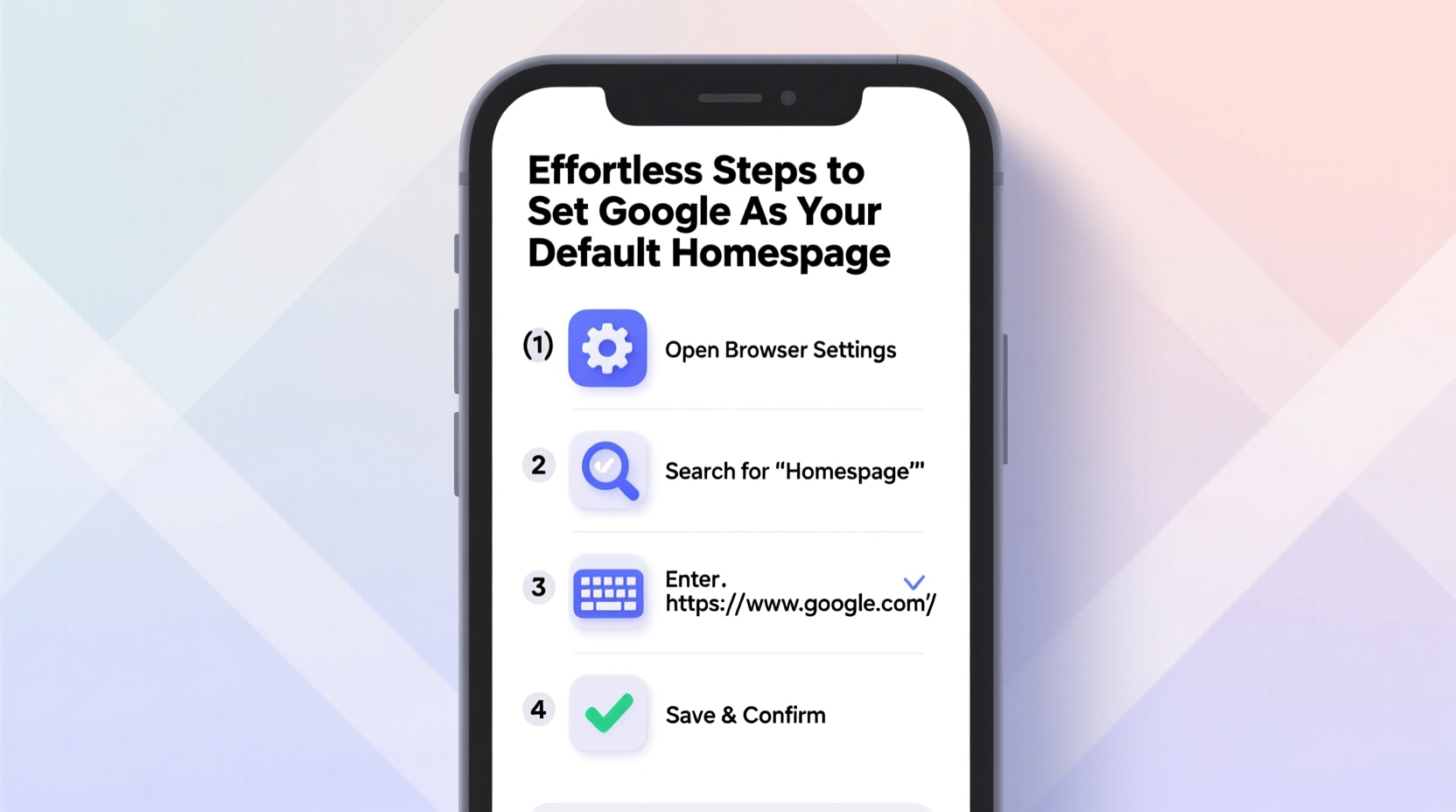
Your homepage is the first page that loads when you open a new browser window or tab. While many users rely on their search engine through the address bar, setting Google as your homepage ensures instant access without typing anything. It’s especially helpful if you perform frequent searches, manage multiple tabs, or want a clean, distraction-free starting point.
Google's minimalist interface reduces loading time and supports quick navigation to Gmail, Images, Maps, and other services via the top-right menu. Over 90% of global internet searches happen on Google, making it the most intuitive choice for a homepage.
“Having a reliable homepage like Google reduces decision fatigue and increases browsing efficiency.” — Dr. Alan Reyes, Digital Productivity Researcher at TechFlow Institute
Step-by-Step Setup Across Major Browsers
The process varies slightly depending on your browser and operating system. Below are detailed, tested instructions for each major platform.
1. Google Chrome (Windows & macOS)
Chrome is the most widely used browser, and setting Google as your homepage takes less than a minute.
- Open Google Chrome.
- Click the three vertical dots in the top-right corner to open the menu.
- Select Settings.
- Under the “Appearance” section, toggle on Show Home button.
- Next to it, click Change.
- Enter
https://www.google.comin the input field. - Close settings. Now, clicking the home button (a house icon) will take you directly to Google.
https://www.google.com.
2. Mozilla Firefox
Firefox offers flexible homepage customization, including multi-panel layouts, but you can easily default to Google.
- Launch Firefox.
- Click the menu button (three horizontal lines) in the top-right.
- Choose Settings.
- Scroll down to the Home section.
- In the dropdown labeled “Homepage and new windows,” select Custom URLs.
- Delete any existing URL and enter
https://www.google.com. - Close the tab. The next time you open a new window or click the home button, Google will load.
3. Microsoft Edge
Edge, built on Chromium, shares similarities with Chrome but has its own settings interface.
- Open Microsoft Edge.
- Click the three horizontal dots in the upper-right corner.
- Navigate to Settings > Appearance.
- Turn on Show Home button.
- Click Change next to the home button option.
- Enter
https://www.google.comand save. - To make Google appear at startup, go to Startup and home page under “Startup” and set the home page URL to Google.
4. Apple Safari (macOS)
Safari integrates tightly with macOS, and setting a homepage requires visiting preferences.
- Open Safari from your Dock or Applications folder.
- Click Safari in the top-left menu bar, then select Settings (or Preferences).
- Go to the General tab.
- Find “Homepage” and enter
https://www.google.com. - Ensure the option “New windows open with” is also set to Homepage.
- Close settings. Now, every new window opens directly to Google.
5. Mobile Browsers (iOS & Android)
While mobile browsers don’t support traditional homepages in the same way, you can achieve similar results by adjusting startup behavior and using bookmarks.
- Chrome on Android: Go to Settings > On startup > Open specific page(s), then add
https://www.google.com. - Safari on iPhone: iOS doesn’t allow custom homepages, but you can add a Google bookmark to your Favorites Bar for one-tap access.
- Firefox Mobile: In Settings > Home, choose “Custom” and enter Google’s URL.
Browser Comparison: Homepage Features at a Glance
| Browser | Supports Custom Homepage? | Startup Page Control? | Mobile Option Available? |
|---|---|---|---|
| Google Chrome | Yes (via Home button) | Yes | Yes (Android only) |
| Mozilla Firefox | Yes | Yes | Yes |
| Microsoft Edge | Yes | Yes | Limited (Android) |
| Apple Safari (Desktop) | Yes | Yes | No (iOS restriction) |
| Safari (iOS) | No | No | N/A |
Troubleshooting Common Issues
Even with clear steps, some users encounter issues due to extensions, policies, or outdated software.
- Homepage resets after restart: Check for malware or unwanted extensions. Use browser cleanup tools (e.g., Chrome Cleanup Tool) to remove hijackers.
- Can’t edit homepage field: You may be using a managed device (common in workplaces or schools). Contact your administrator.
- Google redirects to local version: This is normal based on your region. To force
google.com, use the full URL and avoid regional domains likegoogle.co.uk.
Checklist: Confirming Your Homepage Is Set Correctly
- ✅ Open a new browser window — does Google load?
- ✅ Click the home button (if visible) — does it redirect to Google?
- ✅ Restart the browser — does the setting persist?
- ✅ Test on startup — does Google appear when you launch the browser?
- ✅ Verify no extensions are overriding your homepage.
Real-World Example: Sarah’s Productivity Upgrade
Sarah, a freelance writer, used to spend the first few minutes of her workday navigating to Google to check emails, news, and research topics. After reading about homepage optimization, she set https://www.google.com as her default in Chrome. Within a week, she noticed she was starting her sessions faster and with fewer distractions. “It sounds minor, but eliminating those extra clicks made my mornings smoother,” she said. “Now I open the browser and jump straight into work.”
Frequently Asked Questions
Will setting Google as my homepage slow down my browser?
No. Google’s homepage is lightweight and loads quickly. It typically enhances performance by reducing the need to type or navigate manually.
Can I set Google as my homepage without showing the home button?
Yes. The home button is optional. As long as your startup settings direct to Google, the button isn’t necessary. However, keeping it visible provides easy access during browsing sessions.
Is it safe to set a homepage? Could it expose me to tracking?
Setting a homepage is completely safe. It doesn’t increase data collection. Google already tracks searches if you’re logged in, regardless of how you access it. For privacy, consider using incognito mode or adjusting Google’s ad personalization settings separately.
Final Thoughts and Action Steps
Configuring Google as your default homepage is a small change with measurable benefits. It reduces friction, supports consistent workflows, and leverages one of the most efficient entry points to the web. Whether you're a student, professional, or casual user, this simple adjustment can enhance your daily digital experience.
Take two minutes today to review your browser settings. Follow the steps relevant to your device, test the result, and enjoy the convenience of instant access to the world’s most powerful search engine.




 浙公网安备
33010002000092号
浙公网安备
33010002000092号 浙B2-20120091-4
Comments
No comments yet. Why don't you start the discussion?