
Style isn’t about owning the most expensive pieces—it’s about knowing how to bring them together with intention and ease. When it comes to designer clothing, especially separates like tops and skirts, the real power lies in your ability to combine them thoughtfully. A silk blouse from last season can feel brand new when paired with a structured midi skirt. The key is balance, proportion, and a clear understanding of your personal aesthetic. With the right approach, you can create looks that are cohesive, elevated, and uniquely yours—without relying on full sets or matching ensembles.
Understand Proportion and Silhouette
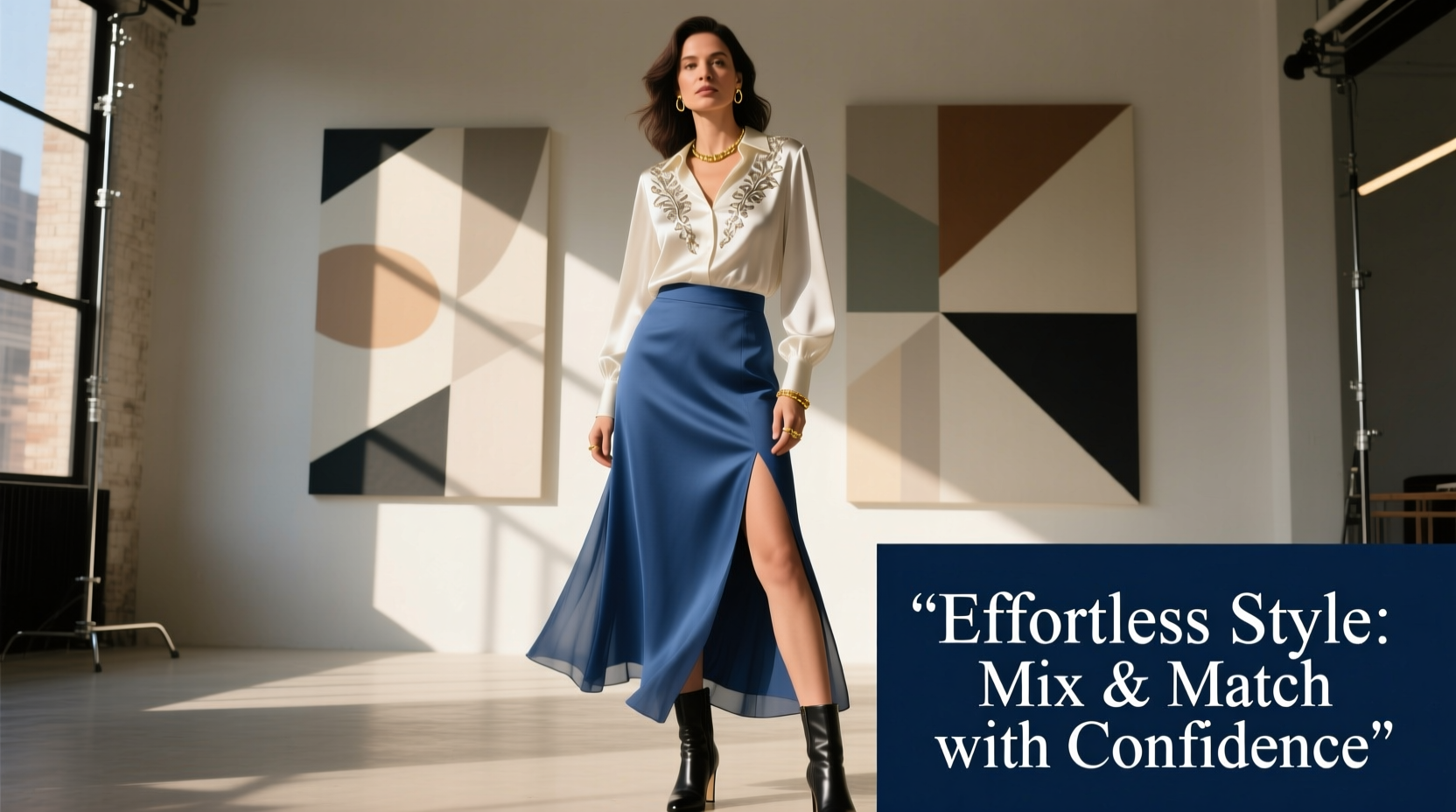
The foundation of any successful outfit is silhouette harmony. Designer pieces often come with strong shapes—a voluminous ruffled top, a sleek pencil skirt, an oversized blazer-style blouse, or a flared tulle hem. When mixing these, contrast works best: pair a loose top with a tailored bottom, or a fitted crop with a high-waisted, flowing skirt.
For example, a structured Balmain blazer-top gains softness when worn with a fluid Max Mara pleated skirt. Conversely, a tight bandage top should be balanced with a relaxed A-line or wrap skirt to avoid overwhelming the frame.
Build Around a Color Anchor
One of the most effective ways to mix designer separates is to build around a dominant color. Choose one piece as your anchor—say, a cobalt Roland Mouret skirt—and select a top in a complementary or neutral shade. Neutrals like ivory, black, camel, or charcoal provide flexibility, while bold hues can be matched using the color wheel.
Consider this: a fiery red Alberta Ferretti top pairs surprisingly well with a deep forest green skirt if both share a matte finish and similar fabric weight. The trick is consistency in tone and texture, not just hue.
“Color confidence comes from repetition and exposure. Wear a combination once, then again. Soon, you’ll trust your instincts.” — Lena Torres, Stylist & Creative Director at Atelier Edit
Texture Pairing: The Secret to Elevated Looks
Designer garments often shine through their materials—think satin, tweed, leather, lace, or bouclé. Mixing textures adds depth without needing multiple patterns or colors. A matte crepe top contrasts beautifully with a glossy patent leather skirt. A chunky knit pairs unexpectedly well with a sleek vinyl pencil skirt for a modern juxtaposition.
Avoid pairing too many high-texture items at once. One standout fabric should lead; the other supports.
| Top Texture | Suitable Skirt Pairings | Pairing Tip |
|---|---|---|
| Silk Chiffon | Cotton Poplin, Wool Crepe | Add structure underneath to prevent sheer mishaps |
| Bouclé Knit | Leather, Satin | Keep the skirt simple to let the texture shine |
| Structured Cotton | Tulle, Jersey Wrap | Create contrast between rigidity and movement |
| Lace Overlay | Midi Pencil, High-Waisted Denim | Balance delicacy with formality or casual edge |
Follow a Step-by-Step Styling Process
Confidence in mixing designer pieces doesn’t happen overnight. It grows from a repeatable process. Use this timeline to refine your combinations before stepping out.
- Start with one statement piece – Choose either the top or skirt that feels most compelling that day.
- Assess its attributes – Note the color, fabric, volume, and neckline or waistline details.
- Select a counterpoint – Pick the other half of the outfit that balances or complements those traits.
- Check cohesion in the mirror – Turn side-to-side. Does one piece overpower the other? Is the waistline aligned?
- Add accessories deliberately – A belt might define the waist; earrings could echo the top’s embellishment.
- Test for comfort and movement – Sit down, walk across the room. Style must serve function.
Real-Life Example: The Weekday-to-Evening Transition
Claire, a creative director in London, owns a cream Saint Laurent asymmetric top and a navy Theory column skirt. For work, she wears them with a sharp blazer and loafers. After hours, she swaps the blazer for a cropped gold lamé jacket, changes into pointed stilettos, and adds layered necklaces. The same two designer pieces transform completely based on styling context.
Her secret? She treats her separates like modular building blocks. The top’s clean lines make it adaptable; the skirt’s dark tone grounds the look regardless of what’s layered above. By keeping accessories changeable, she maximizes versatility without buying more.
Essential Checklist for Mixing Designer Tops and Skirts
Before finalizing your outfit, run through this checklist to ensure cohesion and confidence:
- ✅ Is the waistline of the skirt aligned with the natural waist or hip line of the top?
- ✅ Do the colors belong to the same tonal family (e.g., warm neutrals, cool pastels)?
- ✅ Are fabrics compatible in weight and drape?
- ✅ Does the neckline complement the skirt’s formality (e.g., boat neck + ballerina skirt = elegant; off-shoulder + mini = playful)?
- ✅ Have I considered footwear and outerwear impact?
- ✅ Would this combination feel at home in my intended setting (office, dinner, event)?
Avoid Common Styling Pitfalls
Even experienced dressers fall into traps when combining high-end separates. Here are frequent missteps and how to correct them:
| Do’s | Don’ts |
|---|---|
| Do mix vintage designer pieces with contemporary ones for curated eclecticism | Don’t pair two competing logos or prominent branding (e.g., Gucci GG top with Louis Vuitton monogram skirt) |
| Do use belts to unify mismatched proportions | Don’t wear overly sheer tops without proper lining or layering |
| Do repeat successful combinations to build a signature style | Don’t ignore fit—designer doesn’t mean automatic flattery |
Frequently Asked Questions
Can I mix luxury brands freely, or should I stick to one label?
Absolutely mix brands. In fact, fashion insiders rarely wear head-to-toe labels. The mark of true style is curation, not conformity. A Prada top with a Simone Rocha skirt signals individuality and discernment—not brand loyalty.
How do I know if a top and skirt “go” together when they’re from different seasons?
Focus on continuity in design language rather than seasonality. If both pieces share a minimalist aesthetic, romantic detailing, or architectural cut, they’ll likely harmonize. Seasonal collections often reuse silhouettes and palettes anyway—so a fall wool top can pair seamlessly with a spring wool-blend skirt.
What if I love a combination but feel self-conscious wearing it?
Wear it at home first. Walk around your apartment, take photos, observe how it moves. Familiarity breeds confidence. Also, start by wearing bold combinations in low-pressure environments—like a coffee run or casual meeting. Gradual exposure reduces hesitation.
Final Thoughts: Style as a Practice, Not a Performance
Mixing designer tops and skirts with confidence isn’t about following rules—it’s about developing judgment. Every combination teaches you something: how a fabric drapes, how a color affects your mood, how a silhouette shifts your posture. Over time, you’ll stop second-guessing and start trusting your eye.
True effortless style emerges when dressing becomes intuitive. You reach for pieces not because they’re trendy or expensive, but because they speak to who you are—and how you want to move through the world today.




 浙公网安备
33010002000092号
浙公网安备
33010002000092号 浙B2-20120091-4
Comments
No comments yet. Why don't you start the discussion?