
Selecting the right pendant isn’t just about personal taste—it’s an art of balance, proportion, and intention. A well-chosen pendant can transform a simple ensemble into something memorable, adding depth, personality, and elegance without overwhelming the look. Whether you're dressing up for a formal event or enhancing a casual weekday outfit, the right pendant acts as a silent statement of who you are.
The key to effortless style lies in making intentional choices that feel natural. It’s not about stacking on jewelry until you shine brighter than a chandelier—it’s about precision, harmony, and knowing when less is more. This guide breaks down the essentials of selecting pendants that complement your wardrobe, suit your body type, and reflect your lifestyle—all while maintaining timeless appeal.
Understand Pendant Types and Their Impact
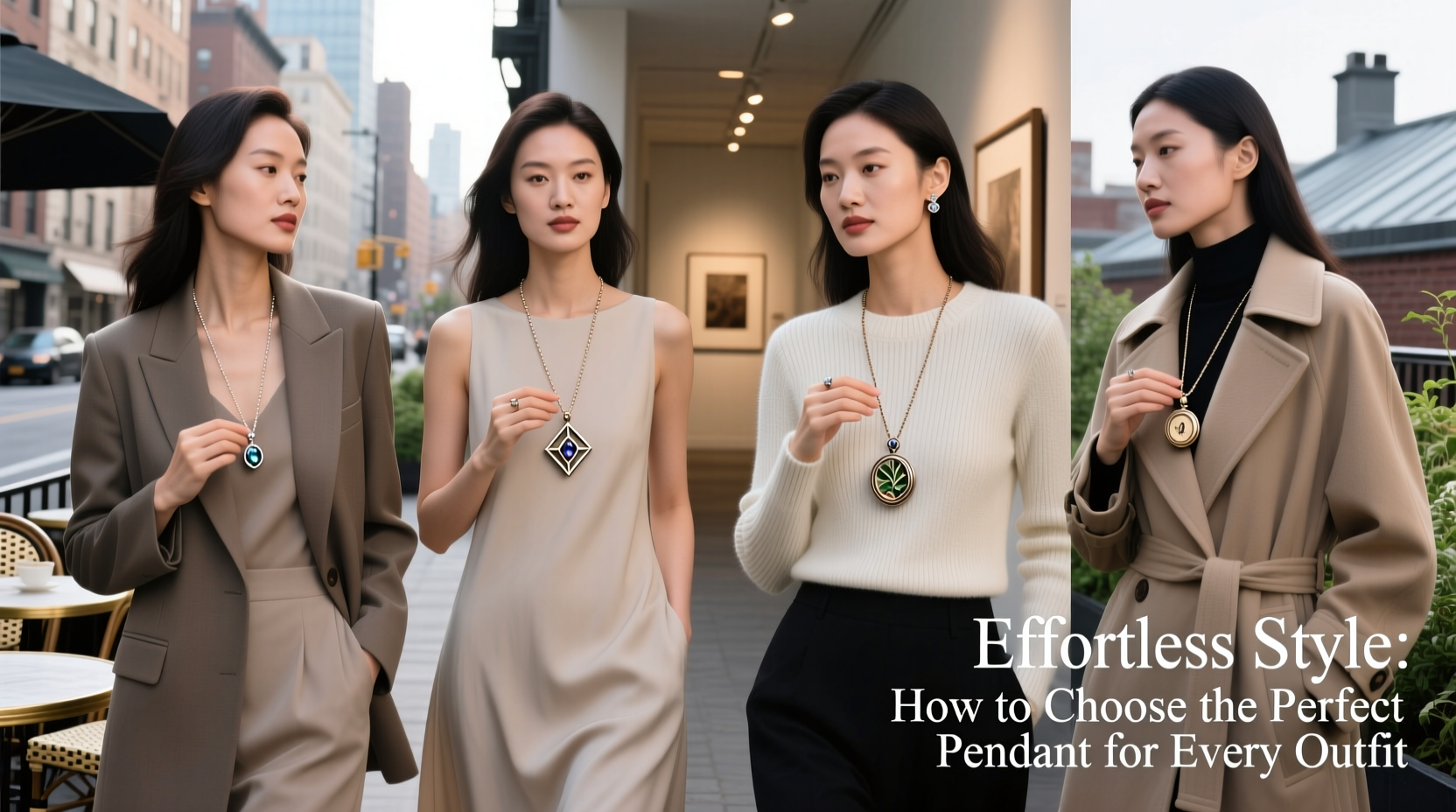
Pendants come in countless shapes, sizes, and materials, each carrying its own visual weight and emotional resonance. Recognizing the differences helps you match them appropriately to your attire and occasion.
- Solitaire Pendants: Often a single gemstone or minimalist design, ideal for everyday wear and professional settings.
- Symbolic Pendants: Crosses, hearts, initials, or zodiac signs—these carry personal meaning and work well with both casual and sentimental looks.
- Dramatic Statement Pendants: Bold designs with intricate detailing or large stones; best reserved for evening events or standout moments.
- Nature-Inspired Designs: Leaves, flowers, animals—these soften structured outfits and add organic charm.
- Layered Pendants: Multiple chains with varying lengths and small pendants create dimension and modern flair.
Match Your Pendant to Neckline and Outfit Style
The neckline of your clothing plays a crucial role in determining which pendant will shine most effectively. The wrong choice can get lost in fabric folds or clash with the overall silhouette.
| Neckline | Best Pendant Style | Avoid |
|---|---|---|
| V-neck | Longer pendants (18–22\") that follow the line downward | Short, high-hanging pendants that float above the V |
| Scoop neck | Medium-length pendants (16–18\") with moderate width | Overly long drops that disappear into the neckline |
| Turtleneck | Short, delicate pendants or chokers | Long chains that tangle in fabric layers |
| Off-the-shoulder | Dainty drop pendants or layered styles | Bulky pieces that compete with bare shoulders |
| Collared shirts | Simple lockets or short bar pendants under the collar | Chokers that ride up over shirt collars |
“Your necklace should enhance the architecture of your outfit, not fight against it.” — Lena Torres, Jewelry Stylist & Contributor, *Vogue Accessories*
Consider Proportion, Length, and Body Shape
Jewelry interacts with your physical frame. A petite woman might be overwhelmed by a massive pendant, just as someone tall may find a tiny charm gets lost at the center of a long torso.
Chain length determines where the pendant rests and how much attention it draws:
- 14–16 inches: Choker or princess length—ideal for highlighting the collarbone and pairing with open necklines.
- 18 inches: Standard princess length—versatile for most body types and outfits.
- 20–24 inches: Matinee or opera length—great for layering or drawing the eye downward to elongate the torso.
- 30+ inches: Rope length—best doubled or knotted for dramatic effect.
For those with shorter necks, avoid very short chokers; instead, choose mid-length chains that create vertical lines. Taller individuals can experiment with longer drops to maintain balance.
Step-by-Step Guide: Choosing the Right Pendant for Any Occasion
Follow this five-step process to ensure your pendant enhances—not distracts from—your overall appearance.
- Evaluate the occasion. Is it a board meeting, brunch, or black-tie gala? Formal settings call for refined elegance; casual ones allow playful expression.
- Analyze your neckline. Use the table above as a reference to determine optimal pendant length and style.
- Assess your outfit’s color and texture. Metallic pendants should match other hardware (e.g., belt buckles, watch). Matte fabrics pair well with softer finishes like brushed gold or oxidized silver.
- Limit competing accessories. If wearing statement earrings or bold bracelets, keep the pendant subtle. Let one piece lead the look.
- Check movement and comfort. Ensure the pendant doesn’t swing excessively or catch on fabric. It should feel secure and sit naturally.
Mini Case Study: Olivia’s Work-to-Evening Transition
Olivia wears a tailored white blouse and navy blazer to work. She pairs it with a 17-inch rose gold solitaire pendant—minimalist yet polished. After hours, she swaps her blazer for a sleek black wrap dress with a deep V-neck. She changes to a 20-inch geometric pendant with subtle sparkle. The new piece catches candlelight during dinner without overpowering her face. By adjusting only her pendant, Olivia shifts her entire vibe—from authoritative to alluring—without changing her core wardrobe.
Material Matters: Metals, Stones, and Skin Tone Harmony
Your skin’s undertone influences how metals appear against your complexion.
- Cool undertones (pink, blue veins): Shine in white gold, platinum, and silver. Gemstones like sapphires, emeralds, and amethyst enhance contrast.
- Warm undertones (yellow, green veins): Glow in yellow or rose gold. Citrine, topaz, and garnet bring out warmth.
- Neutral undertones: Have flexibility—mix metals confidently, especially in layered designs.
Durability also factors in. For daily wear, choose harder stones like diamonds, sapphires, or moissanite. Softer gems like opals or pearls require gentle handling and occasional rotation.
“Matching jewelry to your skin tone isn’t about rules—it’s about resonance. You’ll know it’s right when you feel lit from within.” — Adrian Cho, Master Jeweler, Atelier Lumière
Frequently Asked Questions
Can I wear multiple pendants at once?
Yes, but curate carefully. Layer 2–3 chains of varying lengths (e.g., 16\", 18\", 20\") with lightweight pendants. Avoid clutter by sticking to a theme—such as birthstones, nature motifs, or uniform metal tones.
How do I clean and care for my pendant?
Use a soft cloth and mild soapy water for routine cleaning. Store separately to prevent scratching. For gemstone or antique pieces, professional cleaning every 6–12 months is recommended.
Should my pendant match my wedding band?
It doesn’t have to exactly match, but harmonizing metals creates cohesion. A white gold pendant pairs beautifully with a platinum engagement ring. Mixing metals works if done intentionally—for example, a two-tone pendant linking both shades.
Essential Checklist: Before You Buy a Pendant
- ✔ Determine the primary use (everyday, special events, work)
- ✔ Confirm chain length suits your common necklines
- ✔ Verify metal complements your skin tone and existing jewelry
- ✔ Check clasp security and chain thickness (1.5–2mm is durable for daily wear)
- ✔ Ensure the pendant has personal significance or aesthetic alignment with your style
Conclusion: Elevate Your Everyday Style with Intention
Effortless style isn’t accidental—it’s cultivated through mindful choices. The perfect pendant doesn’t shout for attention; it whispers sophistication, confidence, and self-awareness. By aligning your jewelry with your outfit’s structure, your body’s proportions, and your personal narrative, you create looks that feel authentic and polished.
Start small. Reassess one or two key outfits in your wardrobe and test different pendants. Notice what draws compliments, what feels comfortable, and what makes you stand a little taller. Over time, you’ll develop an instinctive sense of what works—and that’s when true style becomes second nature.




 浙公网安备
33010002000092号
浙公网安备
33010002000092号 浙B2-20120091-4
Comments
No comments yet. Why don't you start the discussion?