
A sleek, polished ponytail secured with a claw clip is one of the most versatile hairstyles in modern grooming. Whether you're rushing to work, heading to the gym, or stepping into an evening event, it offers elegance and practicality in one motion. But too often, this go-to style fails midday—slipping, sagging, or unraveling entirely. The secret isn’t just in the clip; it’s in the technique. With the right approach, you can achieve a secure, comfortable, and stylish ponytail that lasts from morning coffee to midnight wind-down.
Why Claw Clips Outperform Traditional Hair Ties
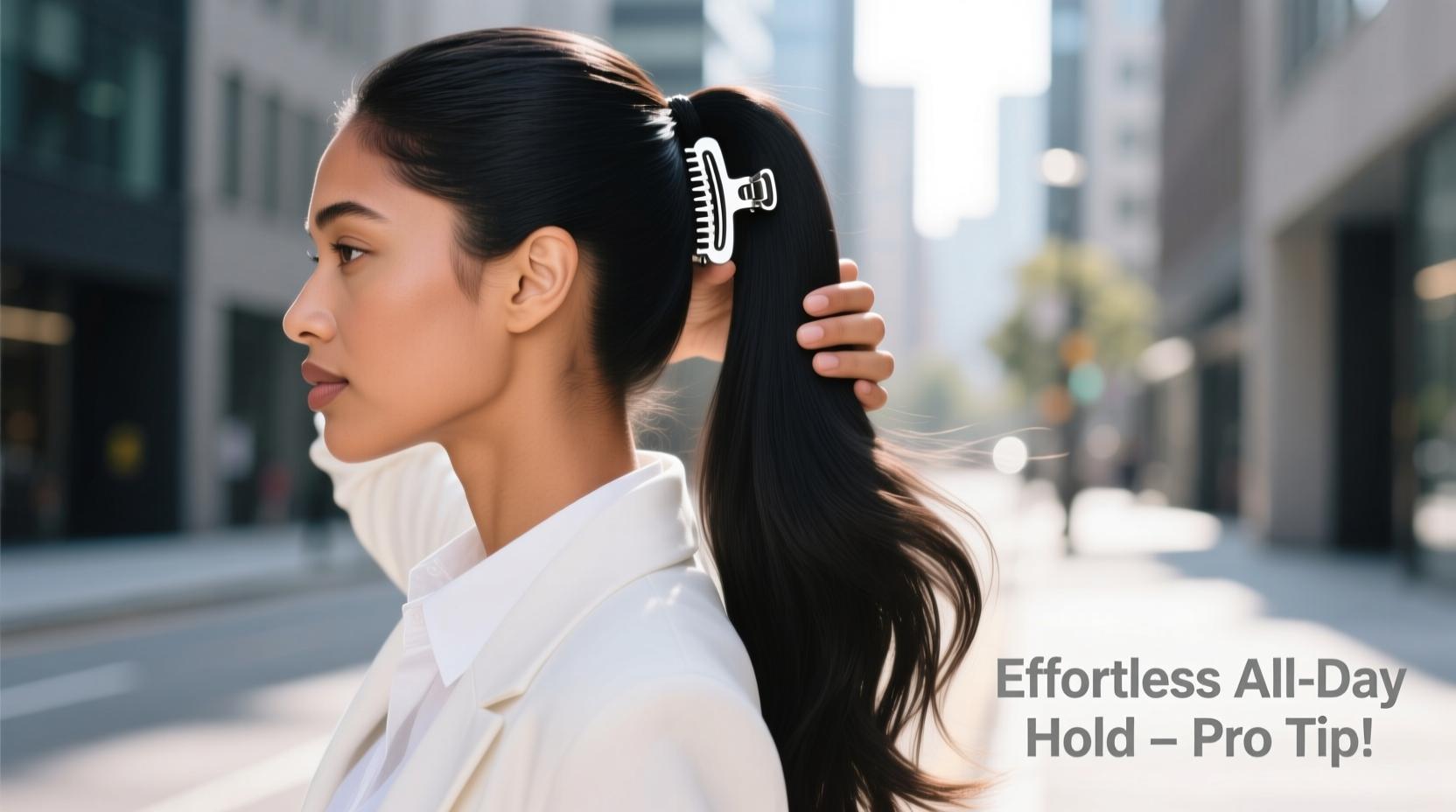
While elastic bands have long dominated hair management, they come with drawbacks: creasing, breakage, and tension on delicate roots. Claw clips, especially modern ergonomic designs, distribute pressure evenly across the hair shaft and scalp. They grip securely without pulling, making them ideal for thick, fine, curly, or textured hair types. According to hairstylist Lila Monroe, “Claw clips are not just trendy—they’re functional upgrades. When used correctly, they offer superior hold with less damage.”
“Claw clips are not just trendy—they’re functional upgrades. When used correctly, they offer superior hold with less damage.” — Lila Monroe, Professional Hairstylist & Texture Specialist
The key lies in choosing the right size and tension. Small clips may look cute but lack holding power. Medium to large clips (at least 2 inches wide) with spring-loaded hinges provide optimal grip for medium to thick hair.
Step-by-Step Guide to a Secure Ponytail Using a Claw Clip
Creating a lasting ponytail with a claw clip isn’t about brute force—it’s about precision and placement. Follow these steps for maximum hold and comfort:
- Prep your hair: Start with day-old hair if possible. Slightly dirty or textured hair has more grip than freshly washed, silky strands. If your hair is clean, apply a light texturizing spray or dry shampoo at the roots.
- Gather into a high or mid ponytail: Use a boar bristle brush to smooth hair back, then secure temporarily with a fabric-covered elastic. This base adds stability before introducing the clip.
- Twist and fold: Loosen the ponytail slightly for volume, then twist the length once. Fold the twisted section back onto itself to create a compact loop near the scalp.
- Open and position the claw clip: Hold the clip vertically, squeeze the handles to open it, and place it over the folded base so the teeth grip both the elastic and the folded tail.
- Release and adjust: Let go slowly to ensure even pressure. Gently tug upward on the crown for lift, or smooth sides for polish.
Do’s and Don’ts: Claw Clip Best Practices
Mistakes in placement or product choice can undermine even the best intentions. Refer to this table to refine your routine.
| Do’s | Don’ts |
|---|---|
| Use a clip with ridged inner teeth for better grip | Force a closed clip onto hair—it reduces spring tension |
| Choose matte-finish clips—they resist slipping more than glossy ones | Pull hair too tight; it causes headaches and traction alopecia |
| Add texture with sea salt spray before styling | Use small clips for thick or long hair—they won’t hold |
| Store clips in a dry area to prevent hinge corrosion | Leave clips in overnight regularly—they can kink hair |
Real Example: From Slipping to Seamless All-Day Style
Sophia, a nurse working 12-hour shifts, struggled daily with her ponytail falling out by mid-morning. Her uniform cap tugged at loose strands, and re-styling wasn’t feasible during rounds. After trying multiple elastics and pins, she switched to a large black matte claw clip and adopted the twist-and-fold method. She now preps her hair with a spritz of texturizing mist and secures her ponytail at the crown. “It’s been three months,” she says, “and I haven’t had to fix my hair once during a shift. My coworkers keep asking what changed.”
Tips for Different Hair Types
One-size-fits-all doesn’t apply when it comes to hair. Adjust your technique based on your texture:
- Fine or slippery hair: Backcomb gently at the crown before gathering. Use a strong-hold mousse or texturizer to increase friction.
- Thick or heavy hair: Opt for oversized, industrial-strength clips with reinforced hinges. Divide the ponytail in half and clip each section separately if needed.
- Curly or coily hair: Work with damp hair or use a leave-in conditioner. Avoid over-smoothing—clips hold better when curls retain their natural shape.
- Short layers or bangs: Pin shorter face-framing pieces away first. Use mini claw clips or clear pins to control flyaways without disrupting the main hold.
Essential Checklist for a Foolproof Claw Clip Ponytail
Before leaving the mirror, run through this quick checklist to ensure durability and style:
- ✅ Hair has some texture—either second-day or lightly sprayed
- ✅ Chosen a clip appropriate for hair thickness and length
- ✅ Ponytail is twisted and folded for compact volume
- ✅ Clip is centered and fully engaged with even pressure
- ✅ No visible gaps between clip and scalp where hair could escape
- ✅ Optional: Reinforced with one or two discreet bobby pins
Frequently Asked Questions
Can I sleep with a claw clip in my hair?
Occasional use is fine, but regular overnight wear can cause creasing, breakage, or tension on the scalp. For bedtime, opt for a silk scrunchie or loose braid instead.
Why does my claw clip keep popping open?
This usually means the clip is overloaded or misaligned. Ensure you’re not forcing too much hair into a small clip. Also, check that the hinge mechanism isn’t worn out—replace clips every 6–12 months with frequent use.
Are metal claw clips better than plastic?
Not necessarily. High-quality plastic or acetate clips often provide smoother grip and less slippage than metal, which can be too slick. Look for durable materials with internal ridges regardless of composition.
Final Thoughts: Elevate Your Everyday Style with Confidence
A perfect ponytail shouldn’t require constant maintenance. By mastering the mechanics of the claw clip—choosing the right tool, preparing your hair, and applying thoughtful technique—you gain more than just a hairstyle. You gain time, confidence, and a polished presence that holds up under pressure. Whether you’re navigating back-to-back meetings or chasing kids around the park, your hair stays exactly where you put it.




 浙公网安备
33010002000092号
浙公网安备
33010002000092号 浙B2-20120091-4
Comments
No comments yet. Why don't you start the discussion?