
When winter winds bite and temperatures drop, staying warm doesn’t have to mean bulky coats or sacrificing personal style. One of the most effective and versatile solutions lies in mastering the art of layering—particularly with a cardigan and jacket combination. This pairing offers both functional insulation and fashion-forward appeal, allowing you to adapt to fluctuating indoor and outdoor climates with ease. The key is not just wearing more clothes, but layering them intelligently. With the right materials, fit, and sequence, a cardigan-jacket ensemble can deliver effortless warmth while maintaining breathability, mobility, and aesthetic harmony.
Why Layering Works: The Science Behind Thermal Efficiency
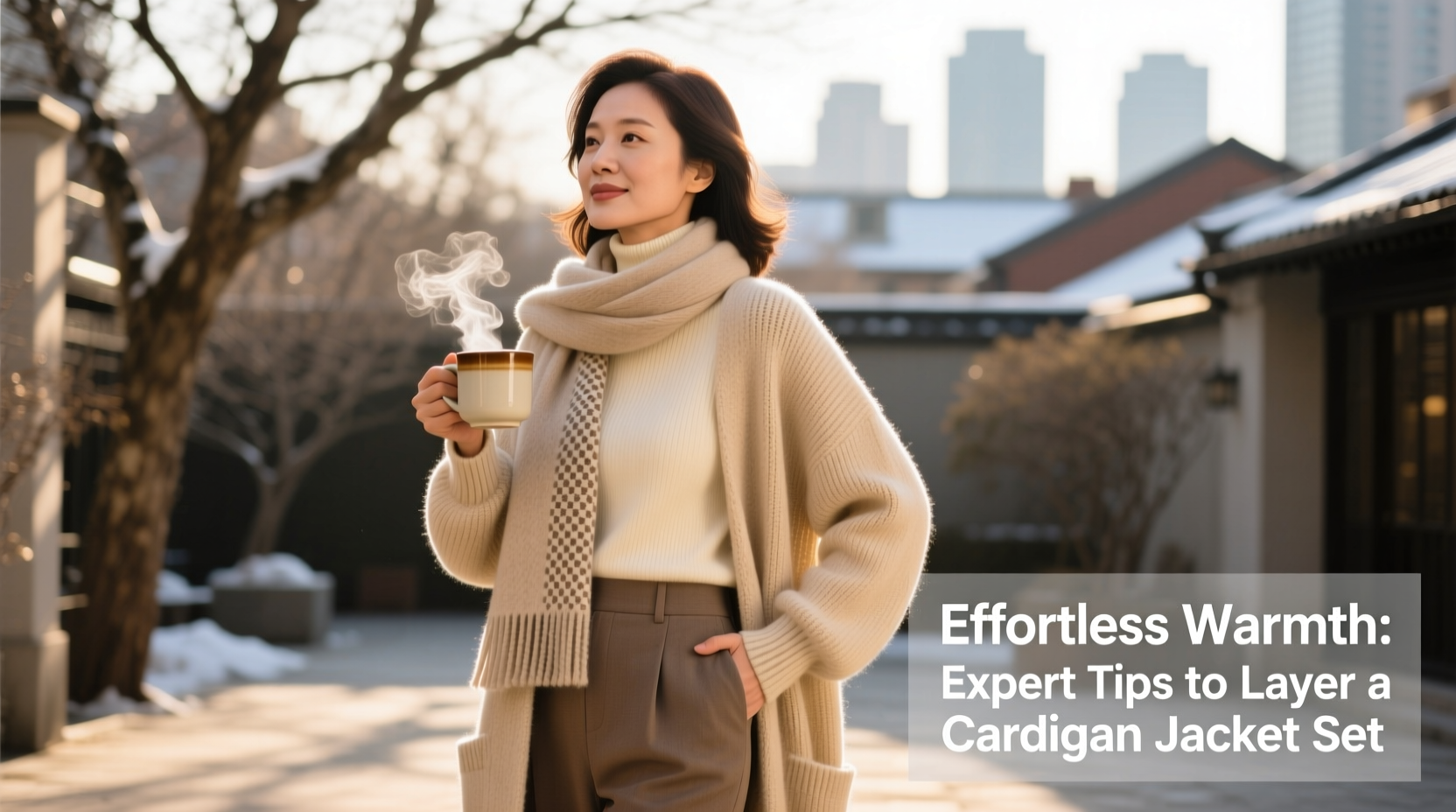
Layering traps air between garments, creating insulating pockets that retain body heat. Each layer plays a distinct role: base layers wick moisture, mid-layers provide insulation, and outer layers shield against wind and moisture. A cardigan functions perfectly as a mid-layer due to its knit construction, which naturally retains heat while allowing some airflow. When paired with a structured outer jacket—such as a wool coat, puffer, or trench—it forms a dynamic thermal barrier that adapts to changing conditions.
Unlike rigid outerwear alone, the flexibility of a cardigan allows for micro-adjustments. Rolling up sleeves indoors or unbuttoning slightly during activity prevents overheating, making it ideal for urban commutes or transitioning between environments.
“Proper layering isn’t about bulk—it’s about strategic fabric placement. A well-chosen cardigan adds 5–8 degrees of perceived warmth when combined with the right outer shell.” — Dr. Lena Park, Textile Scientist & Cold Weather Apparel Consultant
Selecting the Right Materials for Maximum Warmth
The performance of your layered outfit hinges on fabric choice. Not all knits are created equal, and mismatched materials can lead to discomfort, overheating, or inadequate protection.
| Fabric Type | Warmth Level | Breathability | Best For |
|---|---|---|---|
| Mohair Blend | High | Medium | Cold, dry climates; stylish outer-mid layer |
| Merino Wool | Very High | High | All-day wear; excellent moisture management |
| Cashmere | High | Low-Medium | Indoor-heavy days; luxury feel |
| Acrylic Blend | Medium | Low | Budget-friendly; less durable in wet conditions |
| Alpaca | Very High | Medium | Sensitive skin; superior insulation to wool |
For optimal results, pair natural fibers like merino or alpaca with breathable outer jackets made from wool blends or technical fabrics such as Gore-Tex. Avoid cotton as a base layer—it absorbs moisture and loses insulating properties when damp.
Step-by-Step Guide to Perfect Layering
Follow this five-step process to build a balanced, comfortable, and adaptable cardigan-jacket system:
- Start with a moisture-wicking base layer. Opt for a fitted long-sleeve top made from merino wool or synthetic performance fabric. It should sit snugly against the skin without constriction.
- Add the cardigan as your mid-layer. Select a medium-gauge knit that zips, buttons, or slips over the head easily. Ensure shoulder seams align with your natural shoulders to avoid bunching under the jacket.
- Choose a jacket with room to accommodate layers. Try on your full ensemble before purchasing. There should be no tight pulling across the chest or back when both pieces are worn together.
- Adjust sleeve length strategically. Ideally, the cardigan sleeves should extend slightly beyond the base layer but remain under the jacket sleeves. This creates a thermal seal while preserving clean lines.
- Finish with accessories. Add a scarf around the neck gap and gloves to complete the defense against cold infiltration.
This method ensures continuous coverage without compromising movement or comfort, especially during activities like walking, cycling, or navigating public transit.
Avoiding Common Layering Mistakes
Even experienced dressers fall into pitfalls that undermine warmth and comfort. Awareness of these errors can dramatically improve your cold-weather experience.
- Over-layering too early. Adding too many garments at once leads to sweating, which cools rapidly upon stopping. Instead, start lighter and add layers as needed.
- Ignoring collar compatibility. A high-neck jacket paired with a crewneck cardigan can create uncomfortable pressure. Match collar heights or opt for V-necks to maintain airflow and comfort.
- Using non-breathable outer shells. Non-porous materials trap sweat, leading to dampness and chill. Look for jackets with pit zips or venting options.
- Neglecting fit proportions. An oversized cardigan under a tailored jacket will wrinkle and compress, reducing insulation efficiency.
Real-World Example: Commuting in Chicago Winters
Sophie, a marketing professional in downtown Chicago, faces daily temperature swings—from sub-zero mornings to overheated office buildings. Her solution? A lightweight merino base, a charcoal-gray zip-up cashmere-blend cardigan, and a double-breasted wool-cotton trench coat.
Each morning, she leaves her apartment fully buttoned, scarf tucked close. Upon entering her office, she unzips the cardigan and removes the jacket, leaving a polished mid-layer that transitions seamlessly into her workday. During lunch walks, she re-engages both layers. This system keeps her core warm without requiring wardrobe changes or excessive bundling.
“I used to carry sweaters in my bag,” she says. “Now I rely on one smart combination that works all day. It’s efficient, elegant, and actually keeps me warmer than my old puffer ever did.”
Checklist: Your Cold-Weather Layering Essentials
Before stepping outside, run through this quick checklist to ensure maximum comfort and effectiveness:
- ✅ Base layer is moisture-wicking and fits snugly
- ✅ Cardigan is made from warm, breathable material (e.g., merino, alpaca)
- ✅ Jacket has enough internal volume to fit over the cardigan comfortably
- ✅ Sleeve lengths are staggered to prevent gaps
- ✅ Neckline alignment prevents chafing or cold exposure
- ✅ Outer jacket provides wind or water resistance as needed
- ✅ Accessories (scarf, gloves) are ready for added protection
Frequently Asked Questions
Can I wear a cardigan under a puffer jacket?
Yes, but choose a slim-fitting cardigan made from lightweight wool or blend. Thick knits may compress the puffer’s insulation, reducing its effectiveness. Ensure the puffer has a relaxed cut to allow room for layering without strain.
Is it okay to mix textures, like a cable-knit cardigan with a sleek leather jacket?
Absolutely. Texture contrast adds visual interest and depth to an outfit. Just ensure the silhouettes complement each other—avoid pairing an oversized chunky knit with a cropped leather jacket unless intentional for fashion effect.
How do I care for layered knitwear to maintain longevity?
Hand wash or use a delicate cycle with cold water and mild detergent. Lay flat to dry to preserve shape. Store folded—not hung—to prevent shoulder stretching. Rotate usage to reduce fiber fatigue.
Final Thoughts: Embrace Warmth Without Compromise
Mastering the cardigan-jacket layering technique transforms how you experience winter. No longer must you choose between warmth and style, mobility and protection. With thoughtful fabric selection, proper fit, and intelligent sequencing, this simple combination delivers adaptable comfort for any cold-weather scenario. Whether navigating city streets, working remotely in a chilly home office, or enjoying outdoor gatherings, the right layers keep you consistently comfortable.




 浙公网安备
33010002000092号
浙公网安备
33010002000092号 浙B2-20120091-4
Comments
No comments yet. Why don't you start the discussion?