
Finding the perfect ring—whether for an engagement, wedding band, or a meaningful gift—should be exciting, not stressful. But one common hurdle can derail the entire experience: getting the right size. Too tight, and it’s uncomfortable; too loose, and it could slip off unnoticed. While visiting a jeweler is always an option, it’s not always convenient. The good news? You can accurately measure your ring size at home with everyday items and a few reliable methods. With precision and care, you can avoid returns, resizing fees, and disappointment.
Why Accurate Ring Sizing Matters
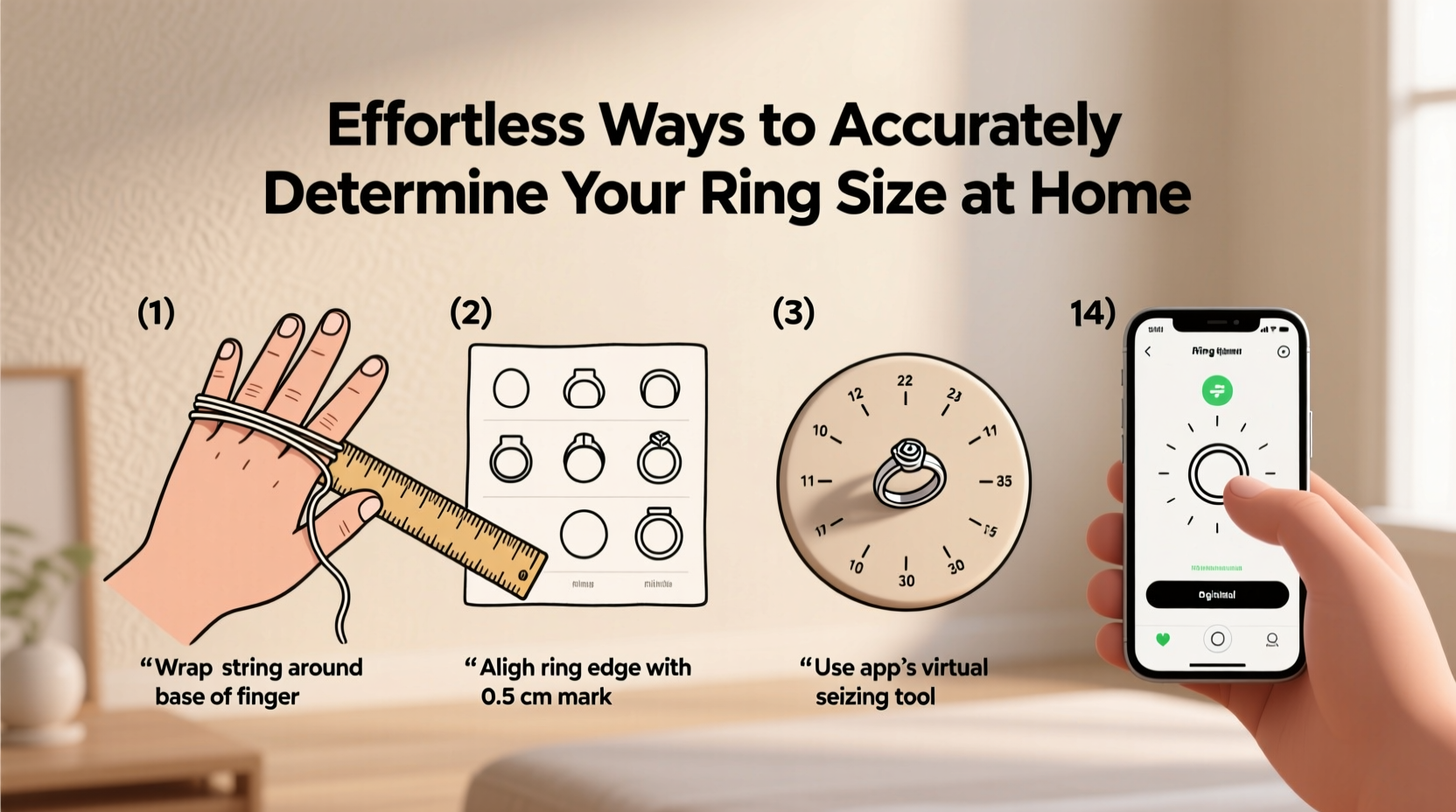
A ring that fits correctly enhances comfort, security, and aesthetics. An ill-fitting ring doesn’t just look awkward—it can cause swelling, restrict circulation, or even get lost during daily activities. According to the American Gem Society, over 30% of online ring purchases require resizing due to inaccurate measurements. This not only adds cost but delays sentimental moments. Whether you're buying for yourself or surprising someone special, taking the time to measure properly ensures long-term satisfaction.
“Even a half-size difference can impact how a ring feels throughout the day. Precision in sizing is as important as the design itself.” — Daniel Ruiz, Master Jeweler & GIA Certified Appraiser
Best Times to Measure Your Finger
Finger size isn’t static. It fluctuates based on temperature, time of day, and activity level. For the most accurate reading:
- Measure at the end of the day when fingers are slightly swollen from normal use.
- Avoid measuring when hands are cold, as fingers shrink in lower temperatures.
- Don’t measure immediately after exercise or exposure to heat, which can cause temporary swelling.
- Ensure your hands are dry and at room temperature.
Step-by-Step Guide: How to Measure Ring Size at Home
You don’t need professional tools to get precise results. Here’s a proven method using items commonly found around the house:
- Gather Supplies: A flexible measuring tape (or a strip of paper/string), a ruler, a pen, and a known well-fitting ring (optional).
- Wrap Around the Knuckle: Wrap the paper or string snugly around the base of the finger where you plan to wear the ring. Make sure it slides over the knuckle easily but isn’t loose.
- Mark the Overlap: Use the pen to mark where the ends meet.
- Measure the Length: Lay the strip flat and measure the distance in millimeters from the start to the mark.
- Convert to Ring Size: Use a standard conversion chart (see table below) to find your corresponding ring size.
This circumference method is widely used by jewelers and offers accuracy within 0.1 mm when done carefully.
Alternative Method: Using a Well-Fitting Ring
If you already own a ring that fits perfectly, you can trace its inner diameter:
- Place the ring on a piece of paper.
- Trace the inside edge with a sharp pencil.
- Measure the diameter of the circle in millimeters using a ruler.
- Refer to a size chart to match the diameter to your ring size.
This method eliminates finger swelling variables and is ideal for matching existing jewelry.
Ring Size Conversion Table
| US Size | Inner Diameter (mm) | Circumference (mm) | UK/AU Size |
|---|---|---|---|
| 4 | 14.9 | 46.8 | H |
| 5 | 15.7 | 49.3 | J |
| 6 | 16.5 | 51.9 | M |
| 7 | 17.3 | 54.4 | N |
| 8 | 18.1 | 56.9 | P |
| 9 | 18.9 | 59.5 | R |
| 10 | 19.8 | 62.1 | T |
Note: Sizes may vary slightly between manufacturers, especially with wider bands, which often require a half-size larger for comfort.
Common Mistakes to Avoid
Even small errors can lead to incorrect sizing. Be mindful of these pitfalls:
- Measuring a different finger: Ring sizes vary across fingers—even between left and right hands.
- Using thick string: Thick materials add bulk and skew results. Use thin, non-stretchy paper or thread.
- Ignoring band width: Wider rings (over 6mm) should be sized up by half to ensure comfort.
- Forgetting seasonal changes: Fingers tend to be smaller in winter and swell in summer.
Mini Case Study: Getting It Right Before the Proposal
James wanted to propose with a custom-designed engagement ring but didn’t know his partner’s size. Instead of guessing, he borrowed her favorite ring one evening while she was out, traced the inside diameter, and measured it precisely at 17.3 mm. Cross-referencing the chart confirmed a US size 7. He ordered the ring and included a resize guarantee just in case. On the big day, the ring fit perfectly. “I was nervous the whole week,” James said later, “but taking the time to measure properly made all the difference.”
Checklist: How to Accurately Determine Ring Size at Home
- ✅ Measure at the end of the day when fingers are largest.
- ✅ Use a thin, non-stretchy material like paper or thread.
- ✅ Mark the overlap point clearly and measure in millimeters.
- ✅ Repeat the process 2–3 times for consistency.
- ✅ Compare results with a standard size chart.
- ✅ Account for band width—size up for wider rings.
- ✅ Consider ordering with a free resize option for peace of mind.
Frequently Asked Questions
Can I use a ruler instead of a measuring tape?
Yes. Wrap a strip of paper around your finger, mark the overlap, then lay it flat and measure the length with a ruler. Just ensure the paper lies straight and taut.
What if my knuckle is larger than the base of my finger?
This is common. Measure both the knuckle and the base. Choose a size that allows the ring to slide over the knuckle comfortably but stay snug at the base. Some opt for spring-loaded rings or adjustable bands in such cases.
Do ring sizes differ between countries?
Yes. The US, UK, Europe, and Australia use different numbering systems. Always verify the sizing standard used by the retailer. Our table above provides key conversions to help avoid confusion.
Final Thoughts
Determining your ring size at home doesn’t require special tools or expertise—just attention to detail and a few minutes of effort. By following accurate measurement techniques, avoiding common mistakes, and double-checking your results, you can confidently select a ring that fits perfectly from day one. Whether it's a symbol of love, commitment, or personal achievement, a well-fitted ring enhances both comfort and meaning.




 浙公网安备
33010002000092号
浙公网安备
33010002000092号 浙B2-20120091-4
Comments
No comments yet. Why don't you start the discussion?