
Large tote bags are a staple for professionals, students, travelers, and busy parents. Their spacious interiors make them ideal for carrying laptops, books, water bottles, and daily essentials. But overloading them often leads to shoulder pain, neck tension, and long-term postural issues. The good news: you don’t have to sacrifice utility for comfort. With thoughtful organization and body-aware habits, it’s entirely possible to carry heavy loads safely and effortlessly. This guide reveals practical, science-backed strategies to help you use your tote efficiently—without the ache.
Choose the Right Tote for Your Load
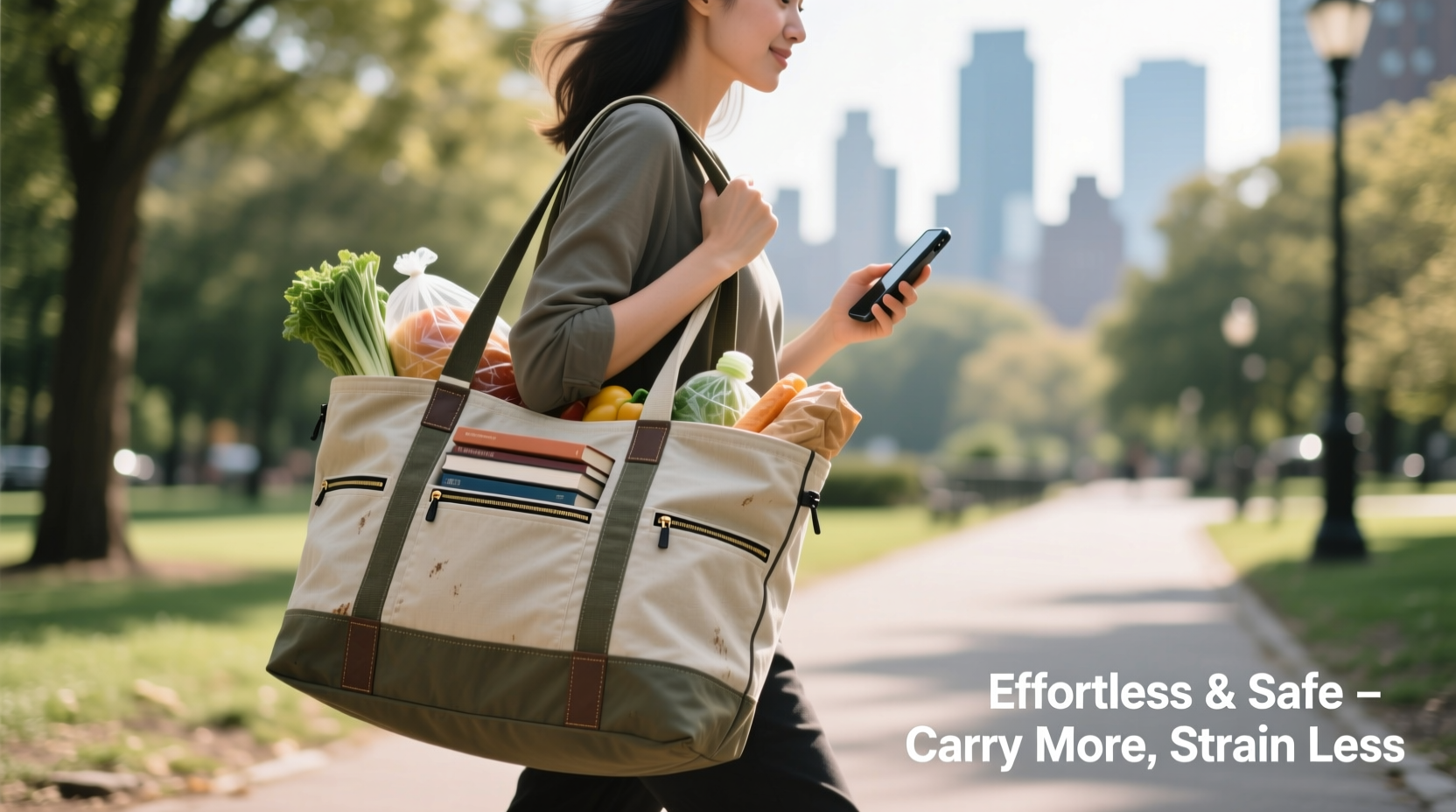
Not all tote bags are built to handle weight. Many stylish designs prioritize aesthetics over ergonomics, using thin straps or flimsy materials that dig into shoulders or stretch under pressure. A well-constructed tote should support both your belongings and your body.
Look for these features when selecting a tote meant for heavier loads:
- Wide, padded straps – At least 1.5 inches wide to distribute weight evenly across the shoulder.
- Durable material – Canvas, nylon, or reinforced leather holds shape better than soft fabrics.
- Structured base – A firm bottom prevents sagging and keeps contents stable.
- Balanced design – Symmetrical compartments help maintain even weight distribution.
Organize Strategically to Reduce Strain
How you pack matters just as much as how much you pack. Placing heavier items incorrectly can shift the center of gravity, forcing your body to compensate with poor posture.
Follow this simple hierarchy when loading your tote:
- Bottom layer: Heaviest items – Place laptops, binders, or water bottles at the base, close to your back. This keeps the weight centered and reduces forward pull.
- Middle layer: Medium-weight objects – Books, notebooks, or lunch containers go above the heaviest items but still near the center.
- Top layer: Light, frequently used items – Wallets, phones, sunglasses, and keys should be easily accessible and add minimal weight.
Avoid placing dense items like chargers or bottles at the top or far edges of the bag—they act like levers, increasing strain on your shoulder.
| Item Type | Recommended Placement | Risk if Misplaced |
|---|---|---|
| Laptop or tablet | Bottom, against back panel | Neck strain if shifted forward |
| Water bottle (full) | Side pocket or lower middle | Bag tilts; uneven load |
| Umbrella or umbrella stand | Vertical in outer sleeve | Unbalanced swing if loose inside |
| Makeup or small accessories | Top or inner zip pocket | Minimal risk |
Adopt Smart Carrying Techniques
Your carrying method plays a crucial role in minimizing physical stress. Even a perfectly packed tote can cause discomfort if carried incorrectly.
Consider these techniques based on your situation:
- Alternate shoulders every 10–15 minutes – Prevents one-sided muscle fatigue. Set a reminder on your phone if needed.
- Carry by hand when possible – For short distances, switch to hand-carrying to give your shoulders a break.
- Use both straps like a backpack – If your tote has dual straps, wear them over both shoulders. This distributes weight across your upper back and reduces cervical spine strain.
- Engage your core while walking – Slightly tighten your abdominal muscles to stabilize your spine and improve balance.
“People underestimate how much asymmetrical load impacts spinal alignment. Over time, carrying a heavy tote on one side can mimic scoliosis-like postural changes.” — Dr. Lena Torres, Physical Therapist & Posture Specialist
Step-by-Step Guide to Daily Tote Optimization
Integrate these steps each morning to ensure your tote supports rather than hinders your day:
- Assess necessity: Remove non-essential items. Do you really need three pens, two notebooks, and an extra sweater?
- Weigh your loaded bag: Use a luggage scale or bathroom scale. Anything over 10% of your body weight (e.g., 12 lbs for a 120-lb person) is too heavy.
- Layer items properly: Follow the bottom-to-top strategy outlined earlier.
- Secure loose contents: Use small pouches or zippered organizers so nothing shifts during transit.
- Adjust carrying method: Choose shoulder rotation, dual-strap use, or hand-carry based on distance and duration.
Real-Life Example: Maria’s Commute Transformation
Maria, a 34-year-old paralegal, used her oversized canvas tote daily to carry legal files, a 15-inch laptop, a water bottle, and personal items. Within months, she developed chronic right shoulder pain and frequent headaches. After visiting a physical therapist, she learned her bag weighed nearly 18 pounds—over 15% of her body weight—and she always carried it on the same shoulder.
She made three key changes:
- Switched to a tote with padded, adjustable straps and internal compartments.
- Started using a cloud-based document system to reduce paper load.
- Began wearing the bag as a makeshift backpack and alternating sides during walks.
Within four weeks, her pain decreased significantly. “I didn’t realize how much my bag was affecting me until I fixed it,” she said. “Now I feel lighter—literally and mentally.”
Checklist: Safe Heavy-Item Tote Routine
Use this checklist each time you prepare your tote:
- ☐ Weigh the loaded bag—keep under 10% of your body weight
- ☐ Pack heaviest items at the bottom, close to your back
- ☐ Use organizers to prevent shifting
- ☐ Check strap condition—no fraying or stretching
- ☐ Plan to alternate shoulders or use both straps
- ☐ Remove unnecessary items (duplicate chargers, old receipts, etc.)
- ☐ Engage core muscles when walking long distances
Frequently Asked Questions
Can a large tote bag cause long-term back problems?
Yes. Consistently carrying an unbalanced or overloaded tote can lead to muscle imbalances, spinal misalignment, and chronic pain in the shoulders, neck, and upper back. Over time, this may contribute to conditions like thoracic outlet syndrome or degenerative disc issues.
Is it better to use a backpack instead of a tote?
In most cases, yes—especially for heavy loads. Backpacks distribute weight more evenly across both shoulders and the hips when equipped with chest or waist straps. However, a well-packed tote with ergonomic features can be a safe alternative for lighter, shorter-duration use.
How often should I empty and reorganize my tote?
At minimum, once a week. Regular clearing prevents clutter buildup and allows you to assess what you truly need daily. It also gives you a chance to wipe down the interior and check for wear and tear.
Final Thoughts: Carry Smarter, Not Harder
Your tote bag doesn’t have to be a source of discomfort. By choosing the right design, organizing thoughtfully, and carrying with awareness, you can transport everything you need—without paying for it in pain later. Small adjustments compound into lasting benefits for your posture, energy levels, and overall well-being. The goal isn’t to carry less out of obligation, but to carry smarter out of self-respect.




 浙公网安备
33010002000092号
浙公网安备
33010002000092号 浙B2-20120091-4
Comments
No comments yet. Why don't you start the discussion?