
String bag charms have become more than just accessories—they’re statements of personality, travel mementos, or thoughtful gifts turned into everyday companions. Whether you’ve picked up a woven tassel in Marrakech, a beaded keychain from Bali, or crafted your own bohemian-style pendant, attaching it to your favorite handbag should enhance both function and fashion. The challenge? Doing so securely, without risking damage to delicate straps or losing the charm altogether. Fortunately, there are several clever, low-effort methods that keep your charm firmly in place while preserving your bag’s integrity.
Why Secure Attachment Matters
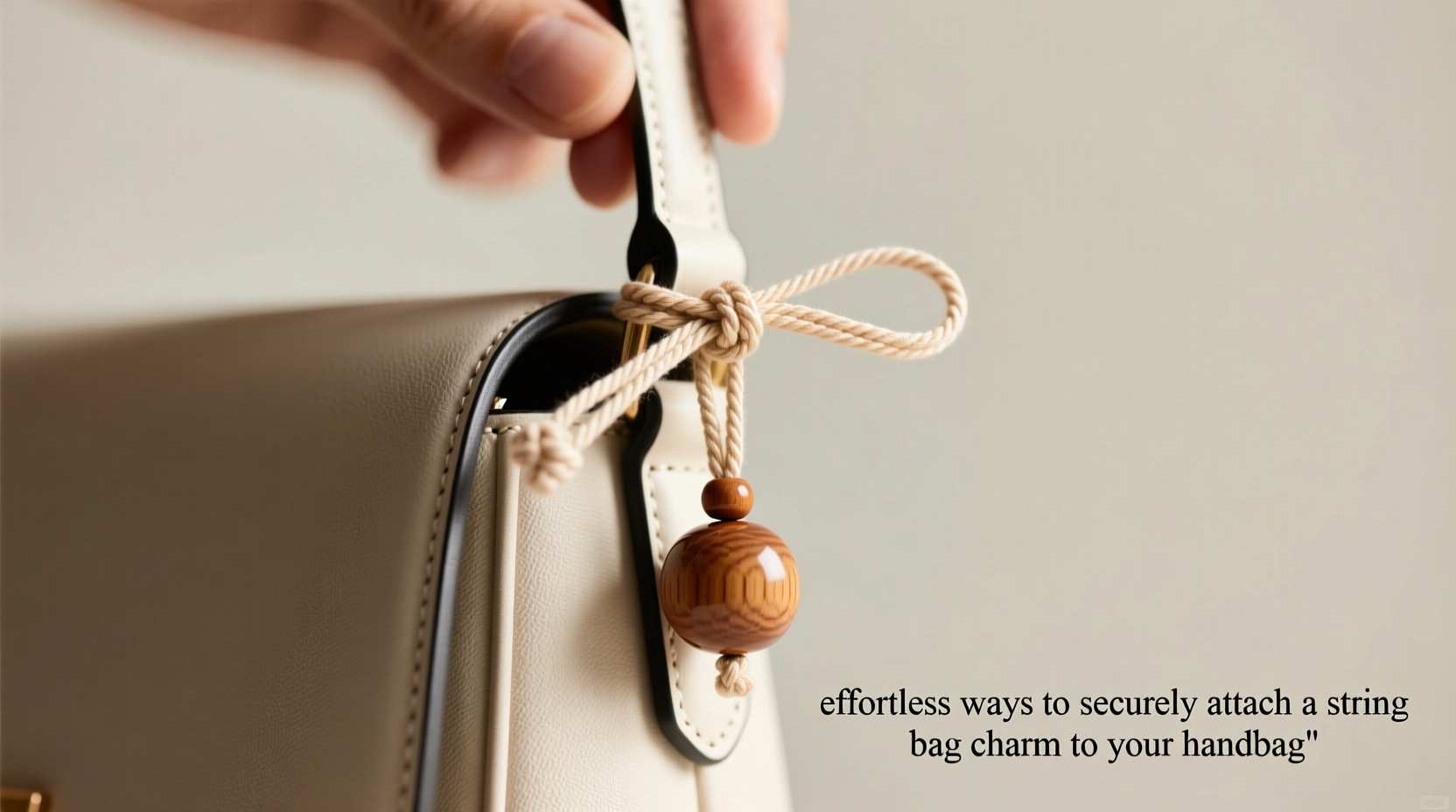
A loose charm isn’t just inconvenient—it can snag on clothing, get caught in doors, or even cause structural strain on weaker stitching points. Over time, constant pulling or swinging weight may compromise the hardware or fabric of your bag, especially if it's made from soft leather, vegan materials, or has thin chain straps. A properly attached charm enhances your bag’s aesthetic without becoming a liability.
Security also ensures longevity. Losing a sentimental or handmade charm is more than a material loss—it’s emotional. The right attachment method balances visibility, movement, and stability.
“Many customers don’t realize how much stress a dangling accessory places on strap rivets. A few grams might seem harmless, but over months, it adds up.” — Lena Torres, Handbag Designer & Repair Specialist
Choosing the Right Charm and Placement
Before attaching anything, consider compatibility. Not all charms work with all bags. Weight, size, and material play crucial roles.
- Weight: Lightweight charms (under 50g) are safest for most bags.
- Material: Avoid sharp edges or rough textures that could scratch leather or fray fabric.
- Placement: Opt for stable anchor points—zipper pulls, D-rings, or sturdy strap junctions.
Best Anchor Points on Common Bag Types
| Bag Type | Recommended Attachment Point | Risk Areas to Avoid |
|---|---|---|
| Tote | D-rings near handles or base | Thin top handles, decorative stitching |
| Shoulder Bag | Zipper pull or shoulder strap ring | Adjuster sliders, weak metal links |
| Backpack | Top carry handle or side compression straps | Zippers under tension, mesh pockets |
| Clutch | Wrist strap loop or closure clasp | Fray-prone seams, glued components |
Step-by-Step Guide: 5 Effortless Attachment Methods
No sewing, no tools, no permanent modifications—just practical solutions anyone can implement in minutes.
- Use a Keyring Through the Zipper Pull
Slide a small keyring through the zipper’s metal pull tab, then hook your string charm onto the ring. This keeps the charm visible and centered, without adding strain to straps. Ideal for crossbody bags and satchels with zipped tops. - Clip-On Carabiner (Mini Size)
Attach a tiny stainless steel carabiner to a D-ring or strap link. Loop the string charm through the clip. Choose one with a secure gate lock to prevent accidental opening. This method allows quick swaps between charms. - Lasso Knot Around Strap Base
Position the charm at the base where the strap meets the bag body. Use a simple lark’s foot knot (also called a cow hitch): fold the string in half, pass the loop under the strap, pull ends through, and tighten. This distributes pressure evenly and hides excess string neatly. - Double-Loop Toggle Method
Fold the charm’s string to create two equal loops. Pass both loops under a sturdy strap, then pull the charm’s main body through both loops before tightening. This creates a locking effect that resists slipping. - Secure with a Bead Stopper
Thread the charm’s string through a small wooden or resin bead first, then tie it around a handle. When tightened, the bead acts as a stopper, preventing the knot from loosening. It also adds a decorative touch.
Real Example: Traveler’s Fix for Lost Charms
Sophie, a frequent traveler from Portland, used to lose her destination-themed string charms every few months. After attaching one directly to a thin leather strap with a basic knot, the thread frayed within weeks. She switched to using a micro carabiner clipped to her backpack’s sternum strap ring. Now, she rotates charms based on her current trip, and none have been lost in over a year. “It’s like carrying memories I can actually see,” she says.
Do’s and Don’ts of Charm Attachment
| Action | Recommendation |
|---|---|
| Do inspect attachment points monthly | Check for wear, especially if charm is heavy |
| Do use nylon or waxed cotton string | These resist fraying better than embroidery floss |
| Don’t tie directly onto delicate chains | Can cause link deformation or breakage |
| Don’t ignore moisture exposure | Wet string swells and weakens knots |
| Do remove during air travel or storage | Prevents snagging in overhead bins or dust buildup |
Maintaining Your Charm and Bag Long-Term
Even the best attachment method requires occasional maintenance. Dust accumulation, UV exposure, and friction can degrade both charm and connection point.
Rotate charms seasonally to reduce continuous strain on one area of the bag. Store detached charms in a soft pouch to prevent tangling or color transfer.
Expert Insight: Preventing Damage Before It Starts
“The golden rule? If you wouldn’t hang your house keys there, don’t hang a charm. Always assess load-bearing capacity first.” — Marcus Lin, Luxury Bag Conservator at The Leather Archive, London
FAQ
Can I attach a string charm to a silk scarf tied on my bag?
Yes, but not directly. Instead, tie the charm to the scarf’s knot or fringe ends rather than cutting or piercing the fabric. This preserves the scarf’s condition and allows easy removal.
What if my bag has no D-rings or zipper pulls?
Use a non-adhesive silicone strap grip—a small rubberized band that wraps around a handle to provide texture and grip. Some models include a mini loop perfect for clipping on lightweight charms.
Is glue ever acceptable for securing knots?
Only in emergencies and never on natural materials. A tiny drop of fabric glue *on the knot* (not the bag) can prevent unraveling, but avoid super glue or hot glue, which can stain or stiffen fibers irreversibly.
Final Checklist: Secure Charm Attachment in 6 Steps
- ✅ Weigh your charm—keep under 50g for safety.
- ✅ Identify a strong anchor point (D-ring, zipper, base of strap).
- ✅ Choose a secure knot or connector (lark’s foot, carabiner, keyring).
- ✅ Test movement by simulating daily motion (walking, placing in car).
- ✅ Inspect monthly for wear, fraying, or loosening.
- ✅ Remove during high-risk situations (travel, rain, storage).
Conclusion
Attaching a string bag charm doesn’t need to be complicated or risky. With the right technique, you can express your style confidently, knowing your accessory is both beautiful and secure. These effortless methods protect your investment, preserve craftsmanship, and let your charm tell its story—one swing at a time.




 浙公网安备
33010002000092号
浙公网安备
33010002000092号 浙B2-20120091-4
Comments
No comments yet. Why don't you start the discussion?