
Choosing the right dog necklace isn’t just about style—it’s about fit, function, and safety. Two popular styles—elastic and clasp—offer different benefits, but when it comes to ease of use, one might suit your lifestyle better than the other. Whether you're dressing up your pup for a special occasion or simply adding a touch of flair to their everyday look, understanding how each type performs in real-world handling can make all the difference.
Elastic necklaces stretch over the dog’s head with minimal effort, while clasp varieties require fastening around the neck like a collar. But which one stays on more securely? Which is faster to apply during wiggly moments? Let’s break down the practical differences based on design, dog behavior, and owner experience.
How Elastic Dog Necklaces Work
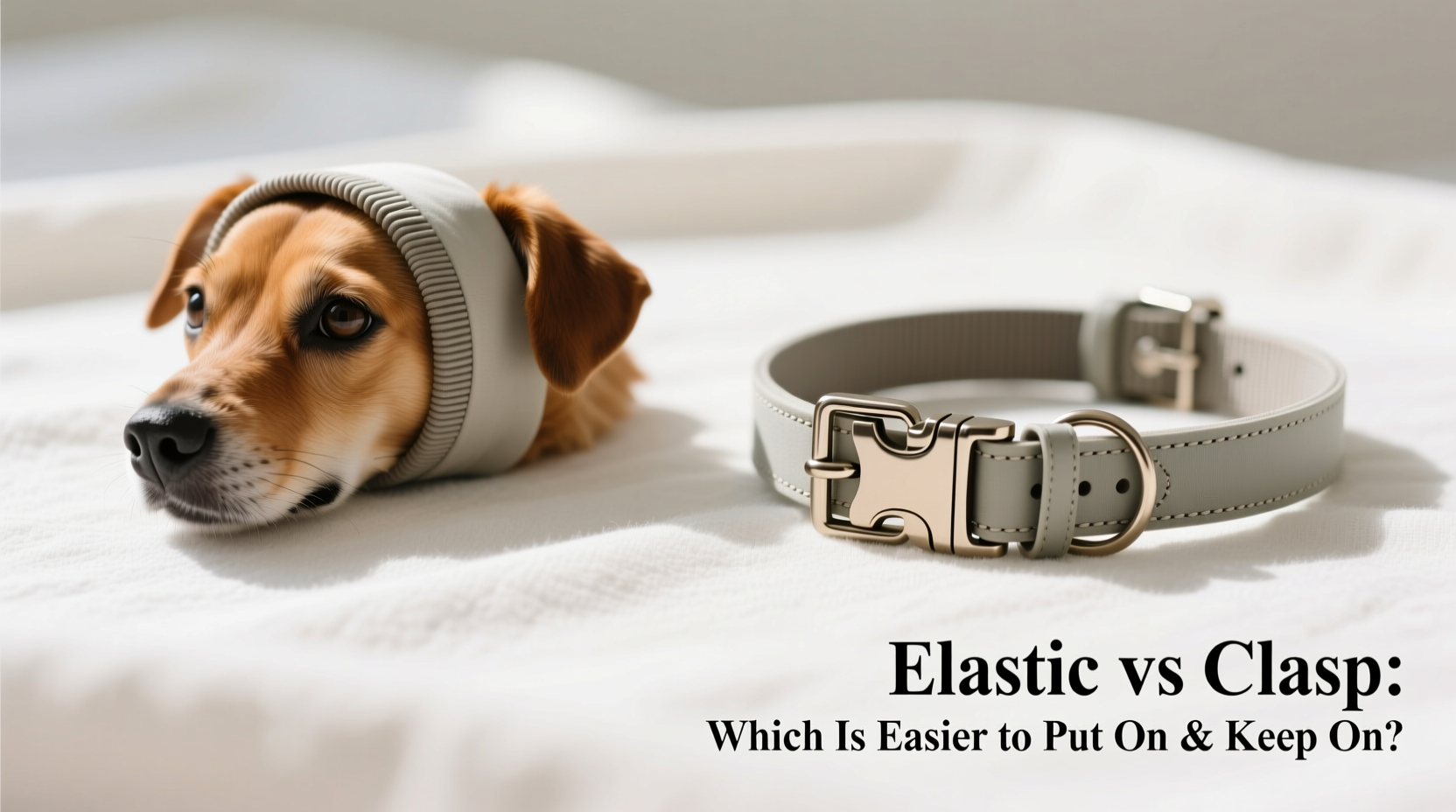
Elastic dog necklaces are designed with a flexible band that expands to fit over your dog’s head or ears, depending on the style. They’re commonly used for decorative purposes—think flower crowns, bow ties, or festive bands for holidays and photo shoots. Because they rely on stretch rather than buckles or clasps, they’re often marketed as “quick-on, quick-off” accessories.
Their primary advantage lies in speed and simplicity. You don’t need to adjust straps or fumble with closures. Just stretch the band and slide it into place. This makes them ideal for dogs who resist handling or for owners managing multiple pets at once.
Understanding Clasp Dog Necklaces
Clasp-style dog necklaces operate much like traditional collars. They feature a buckle, snap, or magnetic closure that secures around the dog’s neck. These are often sturdier, more adjustable, and better suited for longer wear. Unlike elastic bands, they don’t rely on constant tension against the head or ears, which can be more comfortable for extended use.
While they take slightly longer to put on—especially if your dog moves around—they offer greater control over fit. Most allow for micro-adjustments, ensuring a snug but not restrictive hold. This precision makes them a favorite among professional groomers and pet photographers who need accessories to stay firmly in place during sessions.
“With anxious or energetic dogs, a secure clasp gives me peace of mind that the accessory won’t fall off mid-session.” — Lena Torres, Pet Stylist & Grooming Consultant
Comparing Ease of Use: A Practical Breakdown
When evaluating which type is truly easier to get on and keep on, several factors come into play: dog size, temperament, frequency of use, and intended duration of wear. Below is a detailed comparison highlighting key performance areas.
| Feature | Elastic Necklace | Clasp Necklace |
|---|---|---|
| Time to Put On | 5–10 seconds (stretch and go) | 15–30 seconds (position and fasten) |
| Adjustability | Limited (fixed stretch range) | High (multiple sizing holes) |
| Security During Movement | Moderate (can slip if oversized) | High (locked in place) |
| Dog Comfort (Long Wear) | Low to Moderate (constant pressure) | High (even distribution) |
| Breed Suitability | Best for small breeds with narrow heads | Suitable for all sizes and head shapes |
| Durability | Medium (elastic weakens over time) | High (metal/plastic clasps last longer) |
The data shows a clear trade-off: elastic wins in speed, but clasp designs win in reliability and adaptability. If you're accessorizing a calm Chihuahua for a quick photo, elastic may be perfect. But for an active Labrador who shakes his head or rubs against furniture, a clasp provides far better retention.
Real-World Example: The Holiday Photoshoot Dilemma
Sarah, a pet parent from Portland, adopted a rescue terrier mix named Milo. Every Christmas, she hosts a family photoshoot with her two dogs. Last year, she used elastic bow necklaces because they were advertised as “easy to use.” Within minutes, Milo shook his off after scratching behind his ear. The second attempt lasted only until he greeted a guest—then it slipped sideways and fell unnoticed under the couch.
This year, Sarah switched to slim clasp necklaces with soft velvet bands. Though it took an extra 10 seconds per dog to fasten them, both stayed perfectly in place throughout the event. “I didn’t have to reapply anything,” she said. “It was less stressful for me—and for the dogs.”
This scenario reflects a common pattern: convenience in application doesn’t always translate to convenience in practice. Sometimes, investing a few extra seconds upfront saves repeated hassle later.
Step-by-Step: How to Choose Based on Your Dog’s Behavior
Selecting the right necklace type should align with your dog’s habits and your routine. Follow this decision-making sequence:
- Observe your dog’s head-shaking frequency. Do they shake vigorously after drinking, bathing, or playing? If yes, avoid reliance on elastic-only holds.
- Measure your dog’s neck and widest head point. If the head is significantly wider than the neck, elastic may struggle to fit without excessive stretching.
- Consider wear duration. For short-term decoration (<1 hour), elastic is acceptable. For events lasting hours, choose a clasp.
- Test for sensitivity. Some dogs dislike pressure on their ears or skull. If your dog resists elastic bands, switch to neck-based clasps.
- Evaluate activity level. Active, playful dogs benefit from secure closures that won’t dislodge during motion.
Common Mistakes to Avoid
- Assuming all elastic fits all dogs. Breeds with broad skulls (like Pugs or Bulldogs) may find elastic bands uncomfortable or impossible to wear.
- Using oversized elastic bands. Even if they go on easily, loose bands shift and increase the risk of snagging or swallowing.
- Ignoring clasp quality. Cheap plastic snaps can break under pressure. Opt for metal buckles or reinforced clips.
- Leaving any necklace on unsupervised. Neither type is meant for continuous wear. Always remove after use to prevent choking hazards.
Frequently Asked Questions
Can I leave an elastic dog necklace on overnight?
No. Decorative necklaces, whether elastic or clasp, are not designed for unsupervised or extended wear. They pose a choking hazard if caught on furniture or chewed. Always remove after use.
Are magnetic clasps safe for dogs?
Magnetic clasps can be safe if well-constructed and used under supervision. However, weaker magnets may open unexpectedly during play. Test the strength before relying on them in active settings.
My dog hates anything near his head—what should I do?
Start with brief exposure using treats and positive reinforcement. Clasp necklaces worn low on the neck (not over the head) are often less intrusive. Avoid headband-style elastics entirely if your dog shows stress.
Final Recommendation: Match Function to Lifestyle
If your priority is speed and simplicity for occasional, short-term use—especially with a cooperative, small-breed dog—an elastic necklace can work well. But if you value security, durability, and consistent positioning—particularly with active, large, or head-shy dogs—a clasp-style necklace is objectively easier to keep on and more reliable overall.
In most real-world situations, the slight extra effort required to fasten a clasp pays off in reduced frustration and better results. After all, the easiest accessory to put on is meaningless if it won’t stay put.




 浙公网安备
33010002000092号
浙公网安备
33010002000092号 浙B2-20120091-4
Comments
No comments yet. Why don't you start the discussion?