
Occasional elbow popping is a common experience for many people, especially during physical activity or after periods of inactivity. While it’s often harmless, persistent or painful popping can signal underlying issues such as tendon strain, joint instability, or early degeneration. Understanding the mechanisms behind this phenomenon—and knowing when to seek help—can prevent long-term damage and support optimal joint function.
Understanding Elbow Anatomy and Joint Sounds
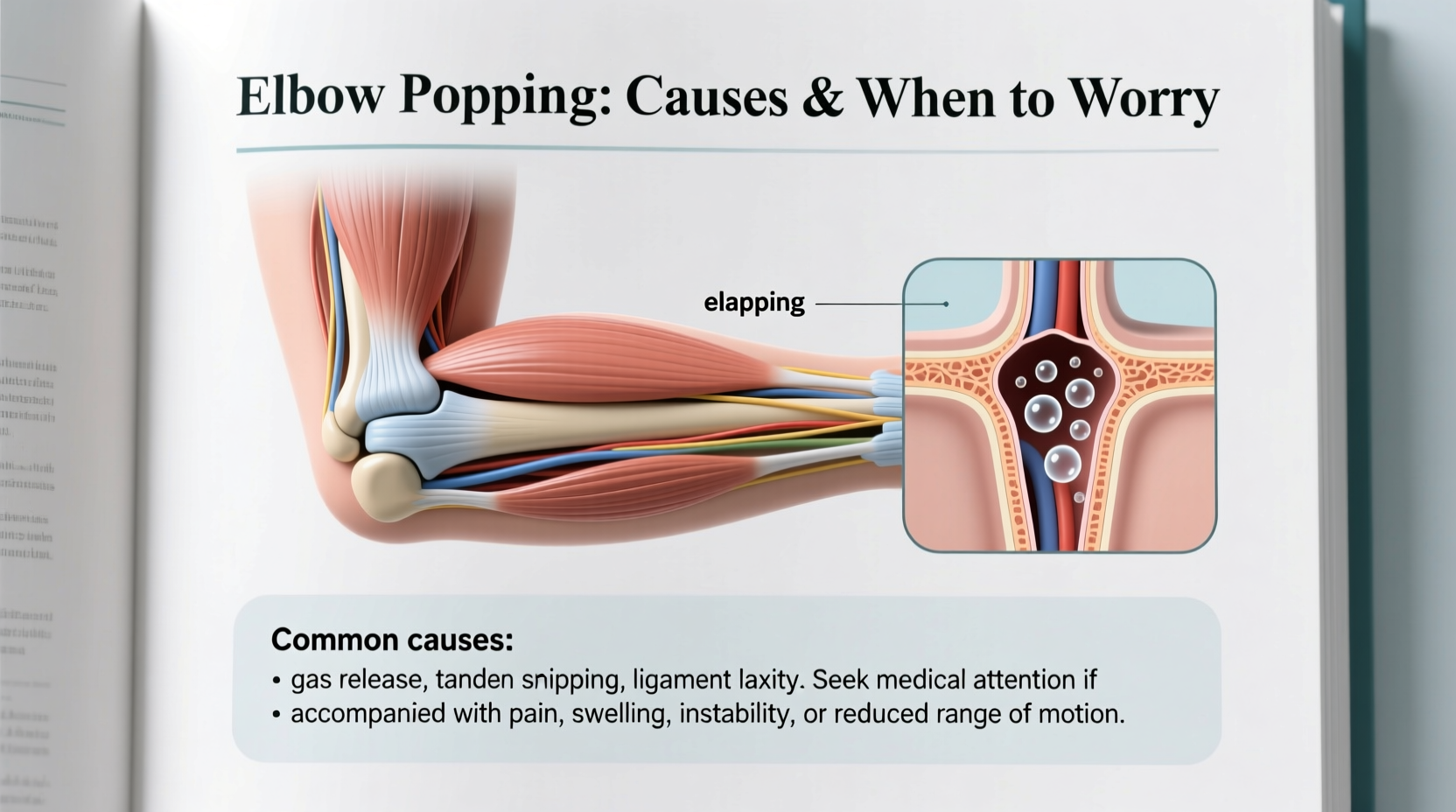
The elbow joint connects three bones: the humerus (upper arm), radius, and ulna (forearm). It functions as a hinge joint, allowing flexion, extension, and rotation of the forearm. Within this complex structure, tendons, ligaments, and synovial fluid work together to ensure smooth motion.
Joint sounds like popping, cracking, or snapping—collectively known as crepitus—are typically caused by one of several physiological processes:
- Gas release: Synovial fluid lubricates the joint and contains dissolved gases like nitrogen and carbon dioxide. Rapid joint movement can cause these gases to form bubbles that pop audibly.
- Tendon snapping: Tendons may shift slightly over bony prominences during movement, producing a snapping sound when they return to their normal position.
- Cartilage wear: As cartilage thins due to age or injury, surfaces become less smooth, leading to audible friction.
In most cases, painless popping without swelling or weakness is benign and requires no intervention. However, changes in frequency, associated discomfort, or reduced range of motion should prompt closer evaluation.
Common Causes of Elbow Popping
While occasional noise is normal, repetitive or symptomatic popping may stem from specific conditions. Recognizing the root cause guides appropriate management.
Cubital Tunnel Syndrome
This condition involves compression of the ulnar nerve as it passes through the cubital tunnel on the inner side of the elbow. Some individuals report a snapping sensation as the nerve shifts over the medial epicondyle during flexion. Symptoms include tingling in the ring and little fingers, hand weakness, and discomfort with prolonged bending.
Lateral Epicondylitis (Tennis Elbow)
Repetitive gripping or wrist extension can inflame the tendons attached to the lateral epicondyle. Inflammation alters tendon glide, potentially causing clicking or popping during forearm use. Pain on the outer elbow is the hallmark symptom.
Loose Bodies in the Joint
Small fragments of bone or cartilage can break off inside the joint due to trauma or osteoarthritis. These “joint mice” may float within the synovial space and cause mechanical catching or popping sensations, sometimes accompanied by locking.
Post-Injury Instability
After dislocations or ligament sprains, the elbow may develop laxity. This instability allows abnormal movement between bones, resulting in recurrent popping. Athletes or those with prior elbow trauma are at higher risk.
Osteoarthritis
Though less common in the elbow than in weight-bearing joints, osteoarthritis can occur, particularly in individuals with a history of heavy manual labor or previous injury. Cartilage breakdown leads to roughened joint surfaces, producing grinding or popping with movement.
“Not all joint noise is pathological. But when popping is paired with pain, swelling, or functional loss, it warrants clinical assessment.” — Dr. Rebecca Lin, Orthopedic Specialist
Treatment Options Based on Cause
Effective treatment depends on identifying whether the popping is mechanical, inflammatory, or neurologic in origin. Most non-painful cases need no treatment, but symptomatic ones benefit from targeted interventions.
Conservative Management
For mild to moderate cases involving tendon irritation or nerve gliding, conservative care is usually sufficient:
- Activity modification to avoid aggravating motions
- Icing after activity to reduce inflammation
- Stretching and strengthening exercises for forearm and shoulder muscles
- Use of counterforce braces during repetitive tasks
Physical Therapy
A physical therapist can assess joint mechanics and prescribe neuromuscular re-education techniques. Nerve gliding exercises help manage cubital tunnel-related snapping, while eccentric loading protocols are effective for tennis elbow.
Medical Interventions
If conservative measures fail, physicians may recommend:
- Corticosteroid injections for localized inflammation
- Ultrasound-guided procedures to target precise structures
- Surgical removal of loose bodies or decompression of the ulnar nerve in severe cases
| Condition | Symptoms | Recommended Treatment |
|---|---|---|
| Benign crepitus | Painless pop, no swelling | No treatment needed |
| Tennis elbow | Outer elbow pain, weak grip | Rest, PT, bracing |
| Cubital tunnel syndrome | Numbness, snapping, night symptoms | Nerve gliding, possible surgery |
| Loose body | Catching, locking, recurrent pop | Arthroscopic removal |
| Osteoarthritis | Stiffness, grinding, limited motion | Lifestyle mods, possible injection |
When to Worry: Red Flags Requiring Medical Attention
Most elbow popping is innocuous, but certain signs indicate the need for professional evaluation:
- Pain with popping: Discomfort suggests tissue irritation or structural damage.
- Swelling or warmth: Inflammation may point to arthritis, infection, or acute injury.
- Joint locking: Inability to fully straighten or bend the elbow could mean a loose fragment is obstructing motion.
- Weakness or numbness: Neurological involvement, such as ulnar nerve compression, requires timely diagnosis.
- History of trauma: Prior dislocation or fracture increases the risk of chronic instability.
Delaying care in these scenarios can lead to progressive joint deterioration or permanent nerve dysfunction. Early imaging—such as X-rays or MRI—can clarify the diagnosis and guide therapy.
Mini Case Study: Office Worker with Recurring Elbow Snap
Mark, a 38-year-old graphic designer, noticed his left elbow began snapping loudly when he bent it, especially after long hours at his desk. Initially painless, the sound was soon followed by tingling in his ring finger. A visit to a hand specialist revealed mild cubital tunnel syndrome. Nerve conduction studies confirmed ulnar nerve irritation. After adjusting his workstation, performing daily nerve glides, and wearing a nighttime splint, Mark’s symptoms resolved within eight weeks—without surgery.
Prevention and Long-Term Joint Health
Maintaining elbow function involves proactive habits, especially for those engaged in repetitive upper-limb activities.
Checklist: Protecting Your Elbows Daily
- ✅ Maintain neutral wrist and elbow posture during computer work
- ✅ Take breaks every 30–60 minutes to stretch arms and shoulders
- ✅ Strengthen rotator cuff and scapular stabilizers to reduce elbow strain
- ✅ Avoid leaning on elbows for extended periods
- ✅ Warm up before sports involving throwing or racquet use
Proper ergonomics and balanced muscle development minimize uneven forces across the joint. Cross-training and avoiding overuse are key for athletes and laborers alike.
Frequently Asked Questions
Is elbow popping dangerous if it doesn’t hurt?
Generally, no. Painless popping due to gas release or tendon movement is considered normal. However, monitor for new symptoms like stiffness or discomfort, which may indicate developing issues.
Can I continue working out if my elbow pops?
You can, as long as there’s no pain, swelling, or loss of strength. Modify exercises that provoke the sound—such as triceps extensions or bench presses—and focus on form. If symptoms arise, stop and consult a professional.
How long does it take for elbow popping to resolve with treatment?
With proper care, conditions like tennis elbow or nerve irritation improve within 6–12 weeks. Chronic cases may require longer rehabilitation. Surgical recovery varies but typically spans 3–6 months.
Conclusion: Listen to Your Body and Act Early
Your elbow’s sounds are part of its biomechanical language. While an isolated pop is usually nothing to fear, recurring or painful noises deserve attention. By understanding the causes, applying preventive strategies, and recognizing red flags, you preserve joint integrity and maintain full function. Don’t wait for symptoms to worsen—early action supports faster recovery and long-term comfort.




 浙公网安备
33010002000092号
浙公网安备
33010002000092号 浙B2-20120091-4
Comments
No comments yet. Why don't you start the discussion?