
The release of the *Shadow of the Erdtree* DLC for *Elden Ring* has reignited one of the most debated questions among players: how does the DLC's difficulty compare to the base game, and is it wise to begin with a fresh character? For many, the decision isn’t just about challenge—it’s about pacing, power scaling, and the kind of experience they want from their journey through the Lands Between and beyond. With FromSoftware known for crafting punishing yet fair gameplay, understanding the nuances between the original campaign and its expansion is crucial before making a long-term commitment.
This guide breaks down the real differences in enemy density, boss design, level scaling, and gear availability to help you decide whether to bring your endgame Tarnished into the DLC or embark on a brand-new adventure from scratch.
DLC Difficulty: A Step Up in Challenge
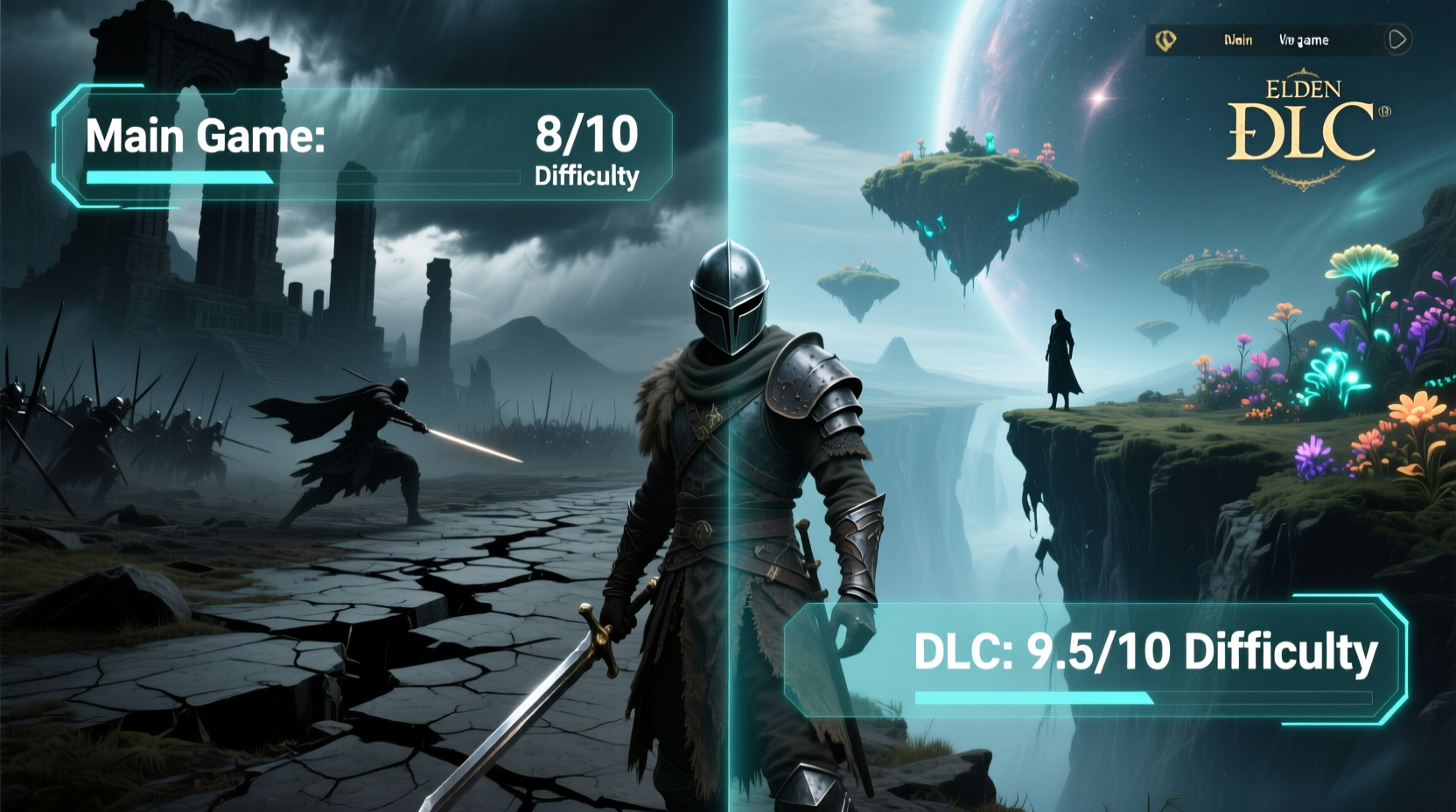
FromSoftware has consistently raised the bar with each major release, and *Shadow of the Erdtree* is no exception. While the base *Elden Ring* already featured formidable enemies and intricate boss patterns, the DLC introduces a more aggressive combat rhythm, tighter encounter spacing, and bosses that demand mastery of mechanics rather than brute force.
Enemies in the DLC scale more aggressively based on player level, especially past level 150. Unlike certain areas in the main game where overleveling could trivialize threats, the DLC ensures high-level players still face meaningful resistance. Enemy attack speed, aggression, and combo complexity increase noticeably. Some foes now chain multi-hit sequences with minimal recovery frames, requiring precise timing to dodge or parry.
“Shadow of the Erdtree doesn’t just add harder enemies—it redefines what ‘hard’ means in the context of player skill ceilings.” — James Hwang, Soulsborne Game Analyst
Bosses are where the difficulty spike becomes most apparent. Many require deep knowledge of hitbox timings, phase transitions, and environmental awareness. The DLC features fewer “tank and spank” encounters; instead, it emphasizes pattern recognition, movement efficiency, and resource management. Stamina discipline becomes critical—misjudged rolls or excessive spellcasting can leave you vulnerable during extended fights.
Scaling & Leveling: How Power Transfers from Base Game
One of the most significant factors influencing the decision to carry over a character is how effectively stats and gear translate into the DLC. The good news: your runes, equipment, and infusion choices remain fully functional. However, the effectiveness of your build may diminish depending on your approach.
The DLC scales both enemy health and damage output relative to your character level, but not linearly. There’s a soft cap around level 170–190, beyond which marginal gains in survivability decrease while enemy offense continues to climb. This creates a “sweet spot” where players feel powerful without being overleveled—a zone often missed by those importing max-level characters.
Additionally, many new weapons and incantations in the DLC are designed to synergize with specific stat investments. Bringing a strength-based greatsword wielder into an area that rewards faith and focus might leave you underpowered despite high raw damage. Conversely, spellcasters may struggle if they haven’t invested in intelligence or mind adequately.
Recommended Level Range for DLC Entry
| Entry Level | Pros | Cons |
|---|---|---|
| 120–150 | Ideal balance; enemies are tough but manageable. Encourages build refinement. | Slightly longer early DLC progression. |
| 150–180 | Strong survivability; access to most late-game builds. | Risk of overleveling; some encounters feel less tense. |
| Below 100 | High immersion; authentic challenge curve. | Potentially frustrating pacing; limited gear options. |
| Above 200 | Massive damage output; easy rune farming. | Diminished satisfaction; enemies still hit hard regardless. |
Importantly, the DLC does not reset your runes or inventory. You retain all items, ashes of war, spirits, and talismans. This means meta-defining combinations like the *Rotten Winged Sword Insignia* + *Magic Scorpion Charm* persist, potentially unbalancing intended difficulty if brought in at extreme levels.
Should You Start a New Save File?
The answer depends on your goals. There is no universally correct choice—only what aligns with your preferred playstyle and expectations.
If you value narrative cohesion and want to experience the DLC as a natural extension of your existing journey, continuing your current save makes sense. You’ll enter with proven gear, upgraded weapons, and hard-earned summons. This path favors completionists who want to explore every corner without backtracking for stat investment.
However, starting fresh offers unique advantages. A new character lets you experiment with builds you skipped in your first playthrough—perhaps a bleed samurai, a glintstone sorcerer, or a dual-wielding dagger assassin. It also restores the sense of vulnerability and discovery that defined your initial hours in the Lands Between. Without legacy gear, you’re forced to adapt to new systems, learn enemy behaviors organically, and appreciate incremental upgrades.
Mini Case Study: Two Players, Two Paths
Consider two players: Alex and Jordan. Alex completed the base game at level 210 with a fully upgraded Moonveil Katana and maxed-out armor. They imported this character into the DLC and cleared the first region quickly—but found later bosses felt artificially inflated, requiring memorization over adaptation. Despite high stats, they died repeatedly due to aggressive combos and environmental hazards.
Jordan started a new file at level 135 after completing the main story. They focused on building mind and dexterity for a thrusting sword/focus hybrid. Though initially slower, Jordan reported greater engagement with exploration and combat flow. By the time they reached the final DLC boss, their build felt earned, and victories were deeply satisfying.
Both finished the DLC, but Jordan described the experience as “more rewarding,” while Alex called it “efficient but hollow.”
Actionable Checklist: Preparing for the DLC
- ✅ Assess your current level and ask: Am I overgeared for the intended challenge?
- ✅ Evaluate your build synergy with new DLC weapon types (e.g., curved swords, greataxes, glintstone tools).
- ✅ Farm key materials in the base game (Somber Smithing Stones, Furlcalling Finger Remnants) before importing.
- ✅ Consider soft-capping primary stats to avoid diminishing returns.
- ✅ Backup your save file before launching the DLC to preserve your main game progress.
- ✅ Decide whether you want to farm legacy gear (like Black Steel weapons) pre-DLC or discover them in-world.
Step-by-Step Guide: Choosing Your Path
- Reflect on your last playthrough: Did you rely on exploits or overleveling? If yes, a new file may restore balance.
- Check your level: If above 180, consider creating a new character or using a second save at a lower level.
- Review your gear: Are you carrying meta-breaking talismans? Try removing one or two to normalize difficulty.
- Test the waters: Play the first DLC area with your current character. If enemies feel trivial, restart.
- Build flexibility: Whether new or old, prioritize adaptable gear (moddable weapons, versatile spells).
- Embrace limitations: Restrict yourself to DLC-only resources for added challenge (optional).
Frequently Asked Questions
Is the Elden Ring DLC harder than Malenia or Radahn?
While no single boss matches Malenia’s infamous难度 in terms of mechanical precision, the cumulative pressure of the DLC—tighter arenas, faster enemies, and layered attacks—makes it feel more consistently demanding. Several DLC bosses surpass even the optional raid bosses in complexity and stamina management.
Can I beat the DLC with a level 100 character?
Technically, yes—but expect a brutal challenge. Early DLC zones assume higher stats, and healing inefficiency will be punishing. Success would require near-perfect execution, optimal gear, and extensive use of defensive items like the Cerulean Hidden Tear.
Does starting a new save unlock anything special?
No exclusive items or endings are tied to new saves. However, discovering lore fragments, weapons, and secrets without prior knowledge enhances immersion. Some players report finding hidden paths they missed the first time due to altered exploration habits.
Expert Insight: Design Philosophy Behind the DLC
“The goal wasn’t just to make things harder, but to deepen the relationship between player agency and consequence. Every dodge, every spell cast, should feel impactful.” — Hidetaka Miyazaki, in a recent Famitsu interview
This quote underscores a core principle of the DLC: meaningful engagement over attrition. Enemies are designed to punish complacency. Healing is less forgiving. Positioning matters more than ever. These changes reward thoughtful play rather than grinding or gear superiority.
Starting a new save naturally aligns with this philosophy. Without the safety net of endgame gear, players must engage deeply with mechanics, encouraging mastery over min-maxing. That said, FromSoftware respects player autonomy—they don’t lock content behind arbitrary restrictions. Whether you bring a god-tier build or a fledgling warrior, the path remains open.
Final Recommendation: What Most Players Should Do
For the majority of players, the optimal approach lies in the middle ground. If you’ve invested 100+ hours into your current character, don’t discard that journey. Instead, consider these balanced strategies:
- Use your main save to unlock fast travel points and map out key locations, then switch to a new file for a purer challenge.
- Create a second character at level 140–160 using recommended stats for your desired build, importing only essential consumables.
- Disable certain talismans (e.g., Godskin Swaddling Cloth, Shard of Alexander) to self-impose a skill-based run.
The DLC was designed to be accessible yet demanding. Starting fresh isn’t mandatory, but it often leads to a richer, more memorable experience. If you’re unsure, try the first few hours with your old save. If it feels too easy—or worse, boring—reboot with a clean slate.
Conclusion: Make the Choice That Serves Your Journey
The question of whether to start a new save file for the *Elden Ring* DLC isn’t about right or wrong—it’s about intention. Are you seeking triumph, or growth? Completion, or discovery? The beauty of the Lands Beyond is that both paths are valid.
Whether you stride into the fog gate clad in legendary armor or shiver in rags with nothing but courage, the challenge awaits. Choose the version of Tarnished you want to become. Then step forward—not because the way is easy, but because it is yours.




 浙公网安备
33010002000092号
浙公网安备
33010002000092号 浙B2-20120091-4
Comments
No comments yet. Why don't you start the discussion?