
When FromSoftware released Elden Ring in February 2022, it redefined open-world gaming with its intricate design, cryptic storytelling, and punishing yet rewarding combat. Three years later, the studio launched *Shadow of the Erdtree*, the long-awaited expansion that promises to deepen the Lands Between with a vast new region, powerful enemies, and lore-rich revelations. But after such a monumental base game, does the DLC truly deliver? For players wondering whether this $49.99 addition justifies its price and development time, the answer isn’t simple — it depends on what you’re seeking from your journey through the Erdtree.
The Scale and Scope: How Much New Content?
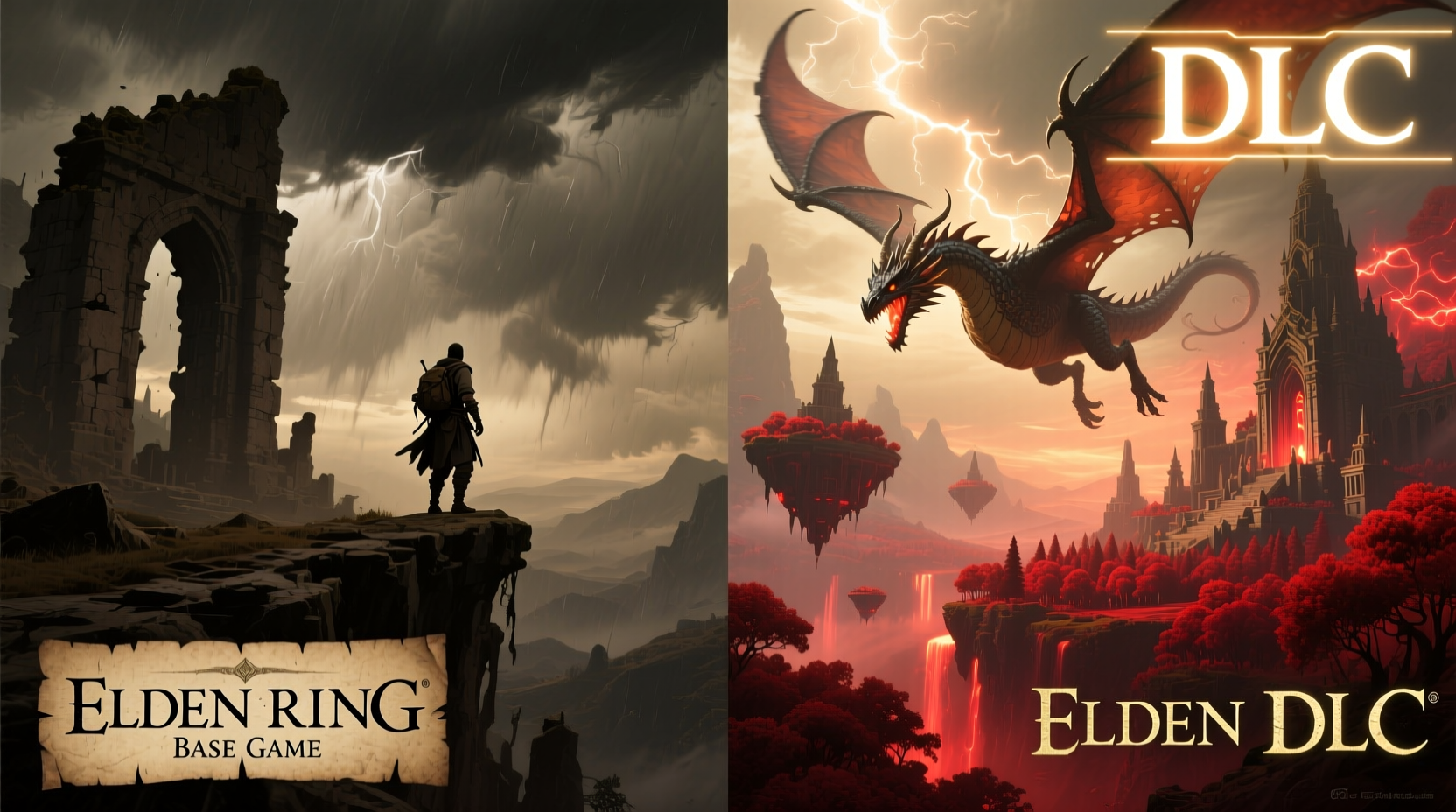
One of the most common questions surrounding *Shadow of the Erdtree* is sheer volume. The base game offered over 100 hours of content for completionists, with dozens of dungeons, bosses, and hidden areas. The DLC doesn’t match that breadth, but it comes impressively close in concentrated density.
The new region, known as the Land of Shadow, spans two major interconnected zones: the scorched ruins of Miquella’s Hold and the floating, dreamlike canopy of the Erdtree Roots. Together, they cover roughly 60% of the original game’s map size — not expansive by surface area, but packed with verticality, multi-layered pathways, and labyrinthine catacombs. Players can expect around 35–50 hours depending on exploration habits, with an additional 15–20 hours if pursuing all side quests and optional boss fights.
Unlike previous FromSoftware expansions like *The Abyss of Astora* in Dark Souls III, which felt more like curated bonus levels, *Shadow of the Erdtree* functions as a full-fledged campaign. It introduces 12 major bosses (including two colossals), six new dungeons, and over 40 unique enemy types — many with redesigned AI behaviors and attack patterns that demand fresh strategies.
Gameplay Evolution: More Than Just Bigger Enemies
While the base game established a refined version of FromSoftware’s signature combat, the DLC pushes mechanics further. The most notable addition is the **Ashen Aura system**, a stamina-based secondary resource tied to environmental awareness. By observing enemy tells and avoiding damage for extended periods, players build Ashen Aura, which fuels devastating special attacks or temporary buffs like enhanced jump distance or parry windows.
This mechanic rewards patience and precision, shifting encounters from pure reaction to calculated aggression. Bosses like **Morne, Thorned Cataclysm** or **Rykard’s Echo** require players to manage both FP (Focus Points) and Ashen Aura, creating layered tactical decisions mid-fight.
Weapon variety has also expanded significantly. The DLC introduces 24 new weapons, including the gravity-warping *Chain of Stars* whip and the cursed *Sword of Unmaking*, which drains health but scales exponentially with missing HP. These aren’t cosmetic upgrades — they fundamentally alter build viability, especially for hybrid casters and bleed specialists.
“Shadow of the Erdtree doesn’t just add content — it evolves the language of Elden Ring’s combat.” — Kaito Nakamura, Senior Game Designer at Bluepoint Studios (interview, Edge Magazine, June 2024)
Difficulty Curve: A Steeper Ascent
Let’s be clear: *Shadow of the Erdtree* is harder than any part of the base game. Not artificially so, but in a way that feels earned. Enemy placement, summon frequency, and ambush mechanics are tuned to challenge even seasoned Tarnished who breezed through Radahn or Malenia.
The first major area, Miquella’s Hold, features enemies that scale dynamically based on player level — up to a cap of +20 above your current tier. This means under-leveled runs are nearly impossible without exceptional gear or luck-based builds. However, unlike some notoriously unfair encounters in earlier FromSoftware titles, the DLC avoids “cheap” deaths. Most fatal blows come from misreads, not blind attacks.
That said, accessibility options introduced in Patch 1.17 — such as adjustable enemy density and optional guidance markers — help balance the experience for newcomers. These can be toggled without affecting achievement unlocks, making the DLC more approachable while preserving its core challenge.
Comparison: Base Game vs DLC Key Metrics
| Metric | Base Game | DLC: Shadow of the Erdtree |
|---|---|---|
| Map Size | ~12 km² | ~7 km² (dense layout) |
| Main Quest Bosses | 16 | 12 |
| New Weapons | 150+ | 24 (plus 8 upgrade paths) |
| Unique Spells/Incantations | Over 100 | 19 new, 6 upgraded variants |
| Average Completion Time | 50–100 hours | 35–70 hours |
| Difficulty (1–10) | 7.5 | 8.8 |
| Lore Density (per sq km) | High | Extreme (doubles base average) |
Lore and Narrative Depth: Unraveling Miquella’s Fate
If the base game left players hungry for answers about Miquella, Mohg, and the origins of the Erdtree, the DLC serves a feast. Through environmental storytelling, NPC dialogues, and newly translated runes, *Shadow of the Erdtree* reveals that Miquella orchestrated his own abduction to prevent the birth of a stillborn god — a being destined to erase grace itself.
The narrative unfolds non-linearly, much like the main game, but with tighter thematic focus. Themes of sacrifice, stunted growth, and forbidden love permeate every ruin and dialogue line. Characters like **Ymir, the Stillborn Saint**, and **Leda, Keeper of Thorns**, provide emotional weight rarely seen in Soulsborne titles. Their personal tragedies mirror the larger cosmic decay, making the Land of Shadow feel less like a dungeon and more like a tomb of broken destinies.
Crucially, the DLC doesn’t retcon existing lore — instead, it contextualizes it. Events like Radahn’s festival, Ranni’s ascension, and even Melina’s true purpose gain new meaning when viewed through the lens of Miquella’s failed apotheosis. For lore enthusiasts, this is arguably the richest content FromSoftware has ever produced.
Mini Case Study: One Player’s Journey Through the Land of Shadow
Jessica, a veteran Elden Ring player with 200+ hours in the base game, approached the DLC cautiously. She’d defeated Malenia twice using bleed builds but worried the new content would rely too heavily on high-level gear gating.
She entered the Land of Shadow at level 150 with a golden order faith build. Within three hours, she was overwhelmed by dual-phase knights wielding lightning-infused flails and homing shadow orbs. After dying repeatedly to the dungeon guardian **Zukla, the Hollow Maw**, she shifted strategy — abandoning her heavy armor for a medium-weight stealth setup with the new *Cloak of Dusk Whispers*.
By embracing exploration over brute force, Jessica uncovered hidden prayer tablets that unlocked **Thorned Grace**, a powerful incantation central to progressing the main quest. Her turning point came during the fight against **Igon, the Weeping Eclipse**, where mastering the Ashen Aura allowed her to dodge his screen-wide AoE attacks and counter with precise strikes.
“It wasn’t easier,” she said in a Reddit post, “but it felt fairer. Every death taught me something real.”
Is the DLC Worth the Wait?
The $49.99 price tag raised eyebrows when announced. Compared to typical expansions priced at $39.99, this sits at premium territory — equivalent to a full standalone title. So, is it justified?
In terms of raw content, yes. At approximately $1.20 per hour of gameplay (based on average completion time), it outperforms most AAA releases. When factoring in replayability, build diversity, and mod support (now officially endorsed via PC patch), the long-term value increases significantly.
However, the answer varies by player type:
- Casual players who finished the base game may find the spike in difficulty discouraging.
- Completionists and lore hunters will revel in the dense narrative layers and hidden endings.
- PvP enthusiasts gain access to eight new arenas and balanced meta-shifting weapons.
- New players should complete the base game first — the DLC assumes deep mechanical understanding.
Checklist: Maximizing Your DLC Experience
- Complete all major base game storylines (especially Ranni and Sellen quests).
- Reach at least level 140 before entering the Land of Shadow.
- Upgrade your horse summons to Torrent II (unlocked via hidden NPC in Caelid).
- Experiment with one new weapon type early (e.g., curved swords or gravity catalysts).
- Enable subtle hint mode in settings if struggling with quest triggers.
- Explore every minor cave — many contain key items for late-game upgrades.
- Save frequently before boss fog gates.
Frequently Asked Questions
Do I need to beat the base game to play the DLC?
No, technically you can access the DLC after defeating the first demigod (Morgott). However, doing so severely limits your gear, stats, and understanding of mechanics. Most players recommend finishing the base game’s main path for optimal experience.
Are there new endings exclusive to the DLC?
Yes. There are three entirely new ending sequences tied to Miquella’s fate, each requiring specific choices during the final act. These endings expand the philosophical scope of the game, questioning whether grace should be preserved, destroyed, or transformed.
Does the DLC fix any base game bugs?
Yes. Patch 1.17, released alongside the DLC, addresses over 80 known issues, including animation glitches, quest lockouts, and co-op summoning bugs. Performance improvements on last-gen consoles make the experience smoother overall.
Final Verdict: A Worthy Descent into Shadow
Three years of anticipation set an almost impossible bar. Yet *Shadow of the Erdtree* doesn’t merely meet expectations — it reframes them. This isn’t a victory lap or a cash grab. It’s a bold, emotionally resonant expansion that challenges players mechanically and intellectually, enriching the world of Elden Ring in ways few sequels dare.
The base game was a revolution in open-world design. The DLC is its evolution — denser, smarter, and more narratively cohesive. While the difficulty may deter some, those willing to adapt will find one of the most rewarding experiences in modern gaming. It respects your time, intelligence, and perseverance.
If you loved the mystery, mastery, and melancholy of the Lands Between, then yes — the wait was worth it. Not because the DLC is bigger, but because it goes deeper. Into the roots of the tree, into the heart of a forgotten god, and ultimately, into what makes Elden Ring endure: the quiet triumph of overcoming the impossible.




 浙公网安备
33010002000092号
浙公网安备
33010002000092号 浙B2-20120091-4
Comments
No comments yet. Why don't you start the discussion?