
Boiling water seems like a simple task—just heat it until it bubbles. But if you're serious about coffee, tea, or even French press brewing, not all boiling is created equal. The rise of electric kettles with variable temperature settings has sparked debate: Is the added precision truly beneficial, or is a basic model just as effective? For many, the answer depends on how they use their kettle, their beverage preferences, and their willingness to invest in better control.
While basic electric kettles do one thing well—boil water quickly—temperature-controlled models offer nuanced heating options that can elevate your drink experience. This article breaks down the key differences, real-world benefits, and practical considerations so you can make an informed decision.
How Electric Kettles Work: A Quick Overview
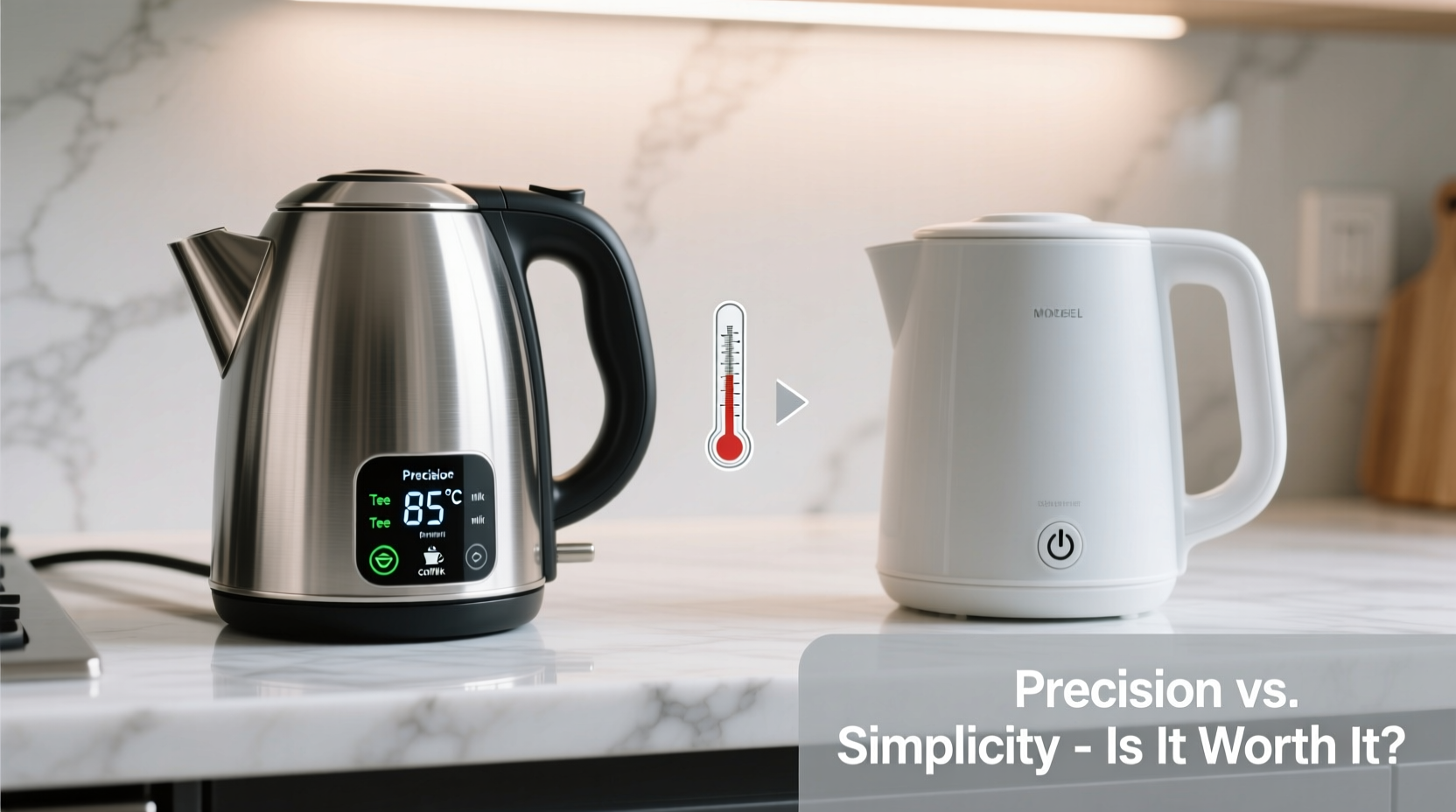
All electric kettles function by using a heating element—usually concealed at the base—to bring water to a boil. When the water reaches boiling point (100°C or 212°F at sea level), a thermostat triggers the kettle to shut off automatically. This safety feature prevents overheating and dry boiling.
Basic models stop there. They offer no user input beyond “on” and “off.” Once activated, they heat water to full boil regardless of your intended use. In contrast, variable temperature kettles include digital controls that allow you to select a specific target temperature before heating begins. These kettles often feature LED displays, keep-warm functions, and more refined heating elements for consistent results.
Key Differences: Precision Control vs Simplicity
The core distinction lies in control. A basic kettle delivers a single outcome: boiling water. A temperature-variable model lets you choose from a range—typically between 40°C and 100°C (104°F–212°F)—in increments of 5° or 10°. This may sound excessive, but it matters when preparing beverages that are sensitive to heat.
| Feature | Basic Electric Kettle | Temperature-Controlled Kettle |
|---|---|---|
| Heating Range | 100°C only | 40°C – 100°C (adjustable) |
| Temperature Display | No | Yes (digital) |
| Keep-Warm Function | Rare | Common (15–30 min) |
| Brewing Suitability | Tea (black), instant coffee, oatmeal | Fine teas, pour-over, French press, matcha |
| Average Price | $20–$40 | $60–$120+ |
| Material Options | Plastic, stainless steel, glass | Stainless steel, gooseneck, borosilicate glass |
The table illustrates a clear trade-off: simplicity and affordability versus precision and versatility. If you only need hot water for instant meals or strong black tea, a basic kettle suffices. But if you’re exploring specialty drinks, the investment in temperature control starts to justify itself.
Why Temperature Matters in Beverage Preparation
Water temperature directly affects extraction—the process by which flavors, aromas, and compounds dissolve from tea leaves or coffee grounds into water. Too hot, and delicate components burn; too cool, and under-extraction leads to flat, weak flavor.
Consider green tea: brewed above 80°C (176°F), it can become bitter due to tannin release. Conversely, espresso-style coffee requires near-boiling water to extract properly in a short time. Without control, you’re either guessing or waiting for boiled water to cool—a process that’s inconsistent and time-consuming.
“Precision in water temperature isn’t just for baristas. It’s the difference between astringent green tea and a smooth, vegetal cup.” — James Reed, Certified Tea Sommelier
Different beverages thrive at different temperatures:
- White Tea: 65°C–70°C (149°F–158°F) – preserves floral notes
- Green Tea: 70°C–80°C (158°F–176°F) – avoids bitterness
- Oolong Tea: 85°C–95°C (185°F–203°F) – balances sweetness and depth
- Black Tea: 95°C–100°C (203°F–212°F) – ensures full extraction
- Pour-Over Coffee: 90°C–96°C (194°F–205°F) – optimal for clarity and acidity
- French Press: 93°C–96°C (199°F–205°F) – maximizes body without scalding
With a basic kettle, achieving these ranges means removing water from heat prematurely (risky) or letting boiled water sit for minutes (inaccurate). A variable kettle eliminates guesswork, delivering the exact temperature on demand.
Real-World Use Case: The Home Barista’s Morning Routine
Sarah, a remote worker and coffee enthusiast, used a basic electric kettle for years. She loved her morning pour-over but struggled with inconsistent flavor—sometimes sour, sometimes burnt. After reading about ideal brewing temperatures, she invested in a gooseneck kettle with variable control.
She set her new kettle to 93°C, preheated her brewer, and followed a precise pour pattern. Within days, her coffee became noticeably smoother, with brighter acidity and more defined notes of citrus and chocolate. “It wasn’t just the beans,” she said. “The right temperature made everything click.”
For Sarah, the upgrade wasn’t about luxury—it was about consistency. She also discovered she could finally enjoy her Japanese sencha without bitterness by brewing it at 75°C. What started as a coffee tool became essential for her entire beverage routine.
Step-by-Step: How to Maximize Your Kettle’s Potential
Whether you own a basic or advanced kettle, optimizing its use improves results. Follow this guide based on your model type:
- Assess your needs: Do you primarily boil water for instant drinks, or do you brew delicate teas and manual coffee?
- Choose your kettle accordingly: If you value precision, opt for a variable-temperature model with a gooseneck spout for controlled pouring.
- Descale regularly: Mineral buildup affects heating efficiency. Use a vinegar solution every 1–2 months.
- Use filtered water: Impurities alter taste and promote scaling. Filtered or spring water enhances flavor.
- Preheat your vessel: Rinse your teapot or mug with warm water to maintain brewing temperature stability.
- Set or adjust temperature: On a smart kettle, select the ideal range. On a basic model, use the cool-down method if needed.
- Monitor steeping time: Pair correct temperature with proper infusion duration—green tea shouldn’t steep longer than 2–3 minutes.
Is the Precision Worth the Cost?
The price gap between basic and temperature-controlled kettles can be significant. A reliable entry-level kettle costs under $30, while premium models exceed $100. So, is the upgrade justified?
For casual users who mainly reheat water for soups, instant noodles, or English breakfast tea, the answer is likely no. The convenience of faster boiling may outweigh any benefit from temperature selection.
However, for tea connoisseurs, home baristas, or those experimenting with matcha, cold brew concentrates, or herbal infusions, precision adds tangible value. It reduces trial and error, enhances flavor consistency, and supports exploration of global brewing methods.
Moreover, high-end kettles often come with additional features: rapid boil times, automatic shutoff, cordless serving, and durable materials like stainless steel or borosilicate glass. These contribute to longevity and safety, improving long-term value.
Checklist: Choosing the Right Kettle for You
Before purchasing, ask yourself the following questions:
- ✅ Do I brew delicate teas (white, green, oolong) regularly?
- ✅ Do I make pour-over or French press coffee at home?
- ✅ Am I frustrated by inconsistent flavor in my beverages?
- ✅ Would I use preset temperatures daily, or would they go unused?
- ✅ Is my budget flexible enough to invest in long-term performance?
- ✅ Do I prefer sleek design and digital features over minimalism?
If you answered “yes” to three or more, a temperature-controlled kettle is likely a worthwhile investment. If most answers are “no,” a basic model will serve you well without unnecessary complexity.
Frequently Asked Questions
Can I damage tea by using boiling water from a basic kettle?
Yes. Boiling water (100°C) can scald delicate green, white, and some oolong teas, releasing excessive tannins and causing bitterness. Allowing boiled water to cool for 2–5 minutes helps, but it’s less accurate than using a variable kettle set to the correct temperature.
Do temperature-controlled kettles take longer to heat?
Not necessarily. While they may heat slightly slower when targeting sub-boil temperatures, many models are designed for speed and efficiency. Some high-end kettles heat faster than basic ones due to superior heating elements and insulation.
Are gooseneck kettles only for coffee?
No. While gooseneck spouts excel in pour-over brewing due to their precision flow, they’re also useful for gongfu-style tea ceremonies or any method requiring controlled water dispersion. However, they typically have smaller capacities and slower pours, making them less ideal for quick tasks like making oatmeal.
Final Thoughts: Matching Tool to Purpose
The choice between a basic electric kettle and a temperature-controlled model ultimately comes down to intent. If your goal is utility—fast, safe boiling for everyday needs—a simple kettle is perfectly adequate. It’s affordable, reliable, and requires no learning curve.
But if you view beverage preparation as an act of craftsmanship, where small variables influence the final result, then precision becomes valuable. Temperature control empowers you to unlock the full potential of high-quality teas and coffees, turning each cup into a repeatable, enjoyable experience.
Technology doesn’t always improve life, but in this case, it bridges the gap between convenience and quality. You don’t need a smart kettle to survive, but if you love what you drink, it might just make your mornings better.




 浙公网安备
33010002000092号
浙公网安备
33010002000092号 浙B2-20120091-4
Comments
No comments yet. Why don't you start the discussion?