
For decades, pet owners of large and giant breed dogs have turned to elevated dog bowls under the belief that raising food and water off the ground helps prevent gastric dilatation-volvulus (GDV), commonly known as bloat. This life-threatening condition affects thousands of dogs each year, particularly deep-chested breeds like Great Danes, German Shepherds, and Standard Poodles. But does science back up the use of elevated feeders? Or could they actually increase the risk? The answer is more complex than marketing claims suggest.
Bloat occurs when a dog’s stomach fills with gas and twists on itself, cutting off blood flow and requiring emergency surgery. It’s one of the most dangerous non-traumatic conditions in dogs, with mortality rates reaching 30% even with treatment. Because of its severity, prevention strategies are critical. Among them, feeding height has long been debated. This article examines the evidence behind elevated versus standard dog bowls, analyzes recent studies, and provides practical guidance for responsible feeding practices.
The Theory Behind Elevated Dog Bowls
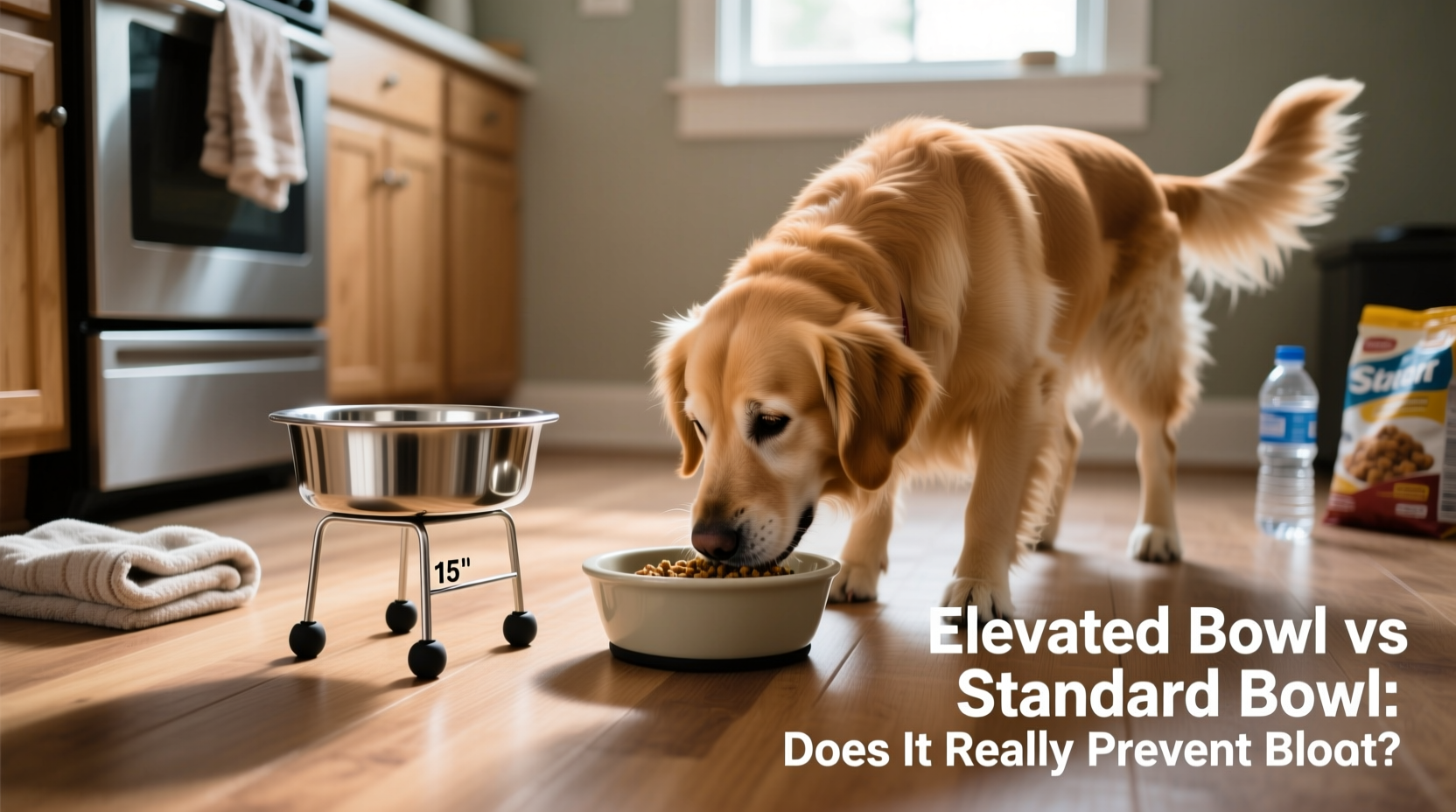
The logic behind using raised feeders seems sound at first glance. Proponents argue that elevating food and water reduces strain on the neck and shoulders, especially for large dogs. It may also encourage slower eating by promoting a more natural head position. For dogs with orthopedic issues such as arthritis or hip dysplasia, less bending can mean greater comfort during meals.
Historically, veterinarians and breeders recommended elevated feeders based on anecdotal evidence and biomechanical reasoning. The idea was that when a dog eats from the floor, it must lower its head significantly, potentially increasing air swallowing (aerophagia) and altering digestion mechanics—factors thought to contribute to bloat.
However, theory doesn’t always align with clinical outcomes. As veterinary research has advanced, so too has our understanding of what truly influences GDV risk.
What Does the Science Say?
A landmark study published in the Journal of the American Veterinary Medical Association in 2000 analyzed data from over 1,600 dogs across multiple breeds. Researchers identified several key risk factors for bloat, including rapid eating, once-daily feeding, stress, and genetic predisposition. Notably, the study found that **dogs who ate from elevated bowls were at a higher risk of GDV** than those eating from floor-level bowls.
This counterintuitive finding shocked many pet owners and professionals alike. The researchers hypothesized that raised feeders might encourage faster eating or alter aerodynamics in the digestive tract, leading to increased gas accumulation. However, the exact mechanism remains unclear.
More recent analyses, including a 2022 review by the American College of Veterinary Surgeons, confirm that while certain conformational traits (like deep chest depth) are strongly linked to bloat, feeding height alone is not protective—and may be detrimental in some cases.
“Contrary to popular belief, elevated feeders do not reduce the incidence of bloat. In fact, our data suggests they may slightly increase risk, particularly in genetically susceptible breeds.” — Dr. Laura Lefebvre, DVM, DACVS, Veterinary Surgical Researcher
Comparing Elevated vs Standard Bowls: A Practical Breakdown
| Factor | Elevated Bowl | Standard Bowl (Floor-Level) |
|---|---|---|
| Bloat Risk | Potentially increased, especially in large/deep-chested breeds | No proven increase; may be lower according to epidemiological studies |
| Eating Posture | Upright, less neck flexion | Head lowered, natural scavenging posture |
| Digestive Mechanics | May promote faster swallowing and air intake | Gravity-assisted, possibly slower ingestion |
| Mobility Support | Better for arthritic or elderly dogs | Requires bending; may discomfort older dogs |
| Port Stability | Higher center of gravity; prone to tipping if not weighted | Stable on flat surfaces |
| Cleanliness & Hygiene | Easier to keep clean if designed well | Can collect debris if placed on dirty floors |
The table highlights a central dilemma: while elevated bowls offer ergonomic benefits, they may inadvertently introduce physiological risks. For healthy, young dogs without joint problems, the potential downsides may outweigh the conveniences.
Proven Strategies to Reduce Bloat Risk
If elevated bowls aren't the solution, what actually works? Research consistently points to behavioral and dietary modifications as the most effective tools for preventing GDV.
- Feed smaller meals two to three times daily – Large single meals stretch the stomach and increase fermentation and gas production.
- Use a slow-feeder bowl or puzzle feeder – Slowing down eating reduces air ingestion and promotes better digestion.
- Avoid vigorous exercise before and after meals – Wait at least one hour before and after feeding to walk or play intensely.
- Minimize stress during mealtimes – Feed in quiet areas away from other pets or loud noises.
- Consider prophylactic gastropexy for high-risk breeds – A surgical procedure that tacks the stomach to the abdominal wall, preventing torsion. Often done alongside spay/neuter in young dogs.
- Monitor water intake post-meal – While hydration is essential, drinking excessive amounts immediately after eating may distend the stomach.
Real Example: Max the Great Dane
Max, a 2-year-old male Great Dane, had always eaten from an elevated stainless steel feeder his owner purchased shortly after bringing him home. The breeder recommended it for joint health. At 18 months, Max experienced a sudden onset of restlessness, unproductive retching, and a visibly distended abdomen late one evening. Rushed to the emergency clinic, he was diagnosed with GDV and underwent immediate surgery.
During recovery, Max’s veterinarian reviewed his lifestyle and feeding habits. Despite being fed twice daily and avoiding post-meal activity, Max ate quickly—even with a slow-feeder insert. His elevated bowl was noted as a possible contributing factor. After discussion, the vet advised transitioning to floor-level feeding using a timed-release bowl and implementing strict mealtime protocols.
Now two years post-surgery, Max eats from a standard rubber bowl placed on a washable mat. He shows no signs of recurrence, and his owner reports he eats more slowly and seems calmer during meals. While no single change guarantees prevention, the combination of evidence-based adjustments has made a measurable difference.
When Might an Elevated Feeder Be Appropriate?
Despite the risks, elevated bowls are not universally harmful. There are specific scenarios where their benefits justify cautious use:
- Dogs with cervical spine disease – Conditions like wobbler syndrome or severe spondylosis may make bending painful or dangerous.
- Senior dogs with advanced arthritis – Especially in hips, knees, or elbows, where repeated lowering and rising causes discomfort.
- Dogs recovering from abdominal surgery – Temporarily using a raised bowl may reduce strain during early healing phases.
- Small-breed dogs with tracheal collapse – Raising the water bowl can ease drinking and reduce coughing episodes.
In these cases, the decision should be made in consultation with a veterinarian. Even then, additional precautions—such as slowing food intake, monitoring portion sizes, and avoiding post-meal excitement—are crucial.
Checklist: Safer Feeding Practices for Bloat-Prone Dogs
- ☑ Feed two to three small meals per day instead of one large meal
- ☑ Use a slow-feed or maze-style bowl to extend meal duration
- ☑ Restrict exercise for at least one hour before and after eating
- ☑ Avoid raised feeders unless medically necessary and vet-approved
- ☑ Prevent competitive eating among multiple pets
- ☑ Watch for early bloat symptoms: pacing, drooling, retching, bloated abdomen
- ☑ Discuss prophylactic gastropexy with your vet if your dog is high-risk
Frequently Asked Questions
Can elevated bowls cause bloat directly?
No single factor \"causes\" bloat, but elevated bowls appear to be a modifiable risk factor. They don’t cause bloat outright, but studies show they may increase the likelihood in genetically predisposed dogs, likely due to changes in eating dynamics and air swallowing.
Are there any dog breeds that definitely shouldn’t use elevated bowls?
Deep-chested breeds—including Great Danes, Irish Setters, Saint Bernards, Weimaraners, and Gordon Setters—are at highest risk for GDV. For these dogs, especially those under 7 years old, avoiding elevated feeders unless medically required is strongly advised.
What’s the safest way to feed a large dog with arthritis?
Work with your vet to find a balance between joint comfort and digestive safety. Options include using a shallow, wide standard bowl placed on a low platform (just 2–4 inches high), providing orthopedic flooring, or exploring therapeutic diets that support both joint and gut health.
Conclusion: Prioritize Evidence Over Habit
The belief that elevated dog bowls prevent bloat is deeply entrenched in dog-owning culture. Yet, modern veterinary science challenges this assumption, revealing that convenience and tradition don’t always equate to safety. While raised feeders may benefit dogs with specific medical conditions, for most pets—especially those at risk of bloat—they may do more harm than good.
Preventing bloat requires a holistic approach focused on feeding frequency, eating speed, post-meal behavior, and breed-specific awareness. Rather than relying on equipment changes alone, owners should adopt a comprehensive strategy grounded in research and professional guidance.




 浙公网安备
33010002000092号
浙公网安备
33010002000092号 浙B2-20120091-4
Comments
No comments yet. Why don't you start the discussion?