
When choosing a leather wallet, most people focus on size, style, or brand—but one subtle yet critical factor often goes overlooked: the surface texture. Embossed and smooth leathers may look different, but do those differences affect how long your wallet lasts? The short answer is yes—texture plays a role in both immediate feel and long-term resilience. However, it's not as simple as one being \"better\" than the other. Understanding how each type is made, used, and maintained reveals a more nuanced picture of durability.
The Anatomy of Leather Texture
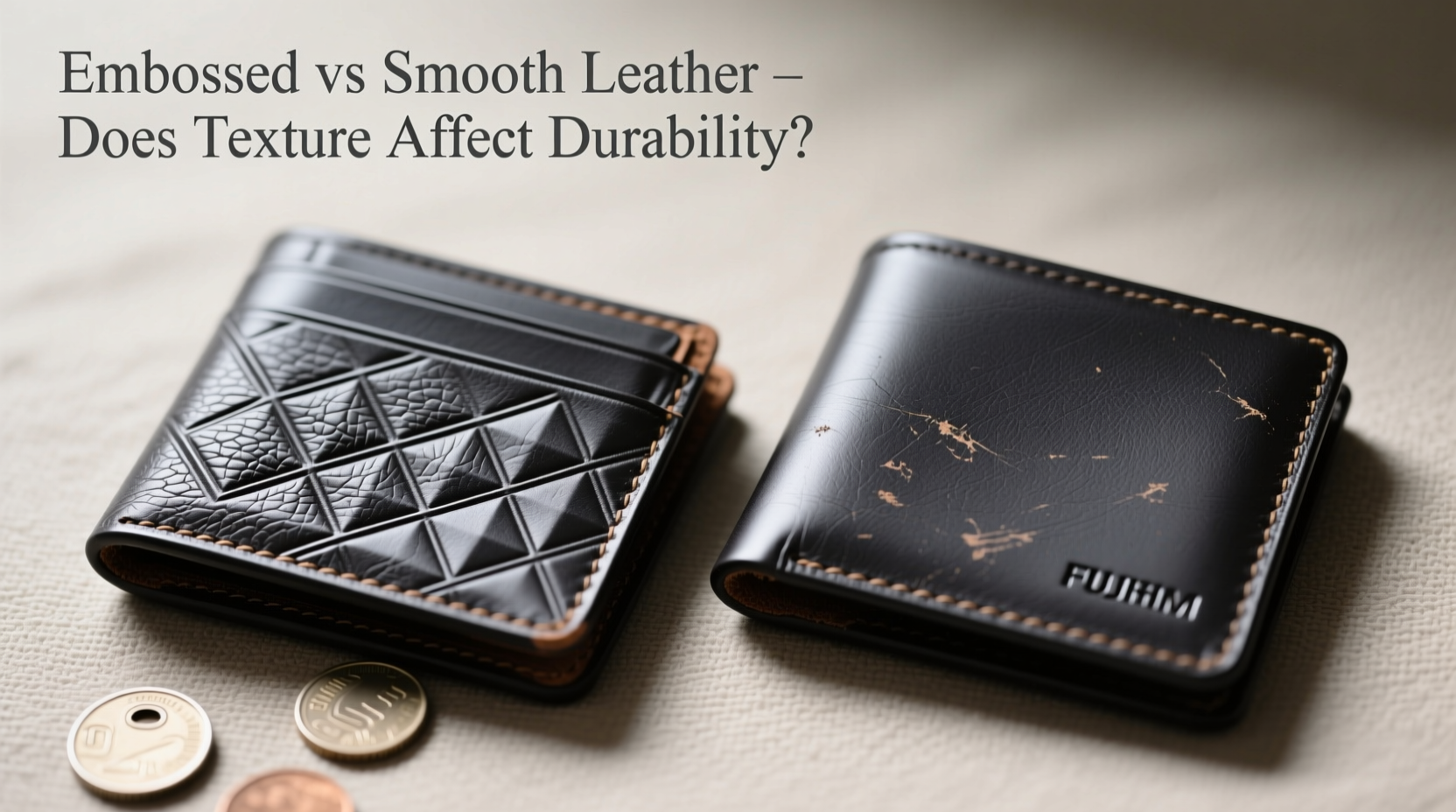
Leather texture begins with the hide’s natural grain. Full-grain leather retains the original surface, including scars, wrinkles, and variations that contribute to character and strength. Top-grain leather, which is sanded and refinished, allows for greater control over texture. Smooth leather typically comes from top-grain or full-grain hides that are polished to a flat, even finish. Embossed leather, on the other hand, starts with top-grain and is pressed under high heat with metal rollers to imprint patterns—commonly resembling exotic skins like crocodile, ostrich, or basketweave.
This embossing process alters the surface structure but doesn’t penetrate deeply into the fiber matrix. As a result, the core durability of the leather remains tied more to the original cut (full-grain, top-grain) and tanning method than to the texture itself.
Durability Compared: Wear, Tear, and Real-World Use
At first glance, smooth leather appears more vulnerable. Without texture to mask scratches, minor scuffs show up quickly. But this visibility doesn’t mean it’s weaker. In fact, smooth full-grain leather develops a patina over time—a natural darkening and softening that many enthusiasts value. This aging process enhances character without compromising integrity.
Embossed leather, by contrast, hides surface abrasions well due to its patterned surface. A scratch across a crocodile-embossed wallet may disappear into the ridges. However, once the embossed layer wears through—especially at stress points like fold lines or edges—the damage becomes irreversible. You can't polish or condition away a flattened emboss; it simply reveals the underlying flat surface beneath, breaking visual continuity.
“Texture affects perception of wear more than structural endurance. A smooth wallet might show every mark, but it ages gracefully. An embossed one hides flaws early on, but fails abruptly when the pattern erodes.” — Daniel Reeves, Master Leather Artisan, Tanner & Trace
Material Performance Breakdown
| Feature | Smooth Leather | Embossed Leather |
|---|---|---|
| Surface Resistance | Moderate – shows scratches early but resists deep tearing | High initially – pattern masks minor wear |
| Patina Development | Excellent – rich aging with use | Limited – pattern restricts natural oxidation |
| Edge Durability | Strong – easier to seal and finish | Weak – embossing stops at edges, creating weak transition zones |
| Cleanability | Easy – flat surface wipes clean | Harder – crevices trap dirt and moisture |
| Lifespan (with care) | 10–15+ years | 5–8 years (pattern integrity) |
The data suggests that while embossed leather performs well in initial concealment of wear, it lacks the long-term adaptability of smooth leather. Once the pattern degrades, there’s no recovery path—only replacement.
Real-World Case: Two Wallets, Five Years
Consider two users: Mark and Julian. Both bought high-end bifold wallets at the same time. Mark chose a smooth full-grain calf leather model. Julian opted for a luxury-branded crocodile-embossed version, also labeled top-grain.
After five years, Mark’s wallet shows visible creases and light surface scuffs. But the leather has darkened beautifully, feels supple, and all stitching remains intact. He applies leather conditioner twice a year and stores it flat when not in use.
Julian’s wallet initially looked more premium. But after three years, the embossed scales began to flatten at the center fold. By year five, the spine had cracked slightly, and the once-pronounced texture was barely detectable in high-use areas. Despite less frequent use, the embossed surface deteriorated faster due to inflexible material stress.
This example illustrates a key truth: perceived elegance doesn’t always align with endurance. Texture influences how damage accumulates and becomes visible—but underlying construction determines ultimate lifespan.
How to Maximize Longevity, Regardless of Texture
Durability isn’t fixed at purchase. How you treat your wallet matters more over time than its initial texture. Follow these steps to extend its life:
- Limit Overstuffing: Packing too many cards or receipts creates constant tension, accelerating crease formation and seam stress.
- Condition Regularly: Every 3–6 months, apply a pH-balanced leather conditioner. Smooth leather absorbs it better; embossed types need sparing application to avoid pooling in grooves.
- Avoid Moisture Exposure: Water causes embossed leather to lose definition and can warp smooth surfaces. If wet, air-dry slowly—never use direct heat.
- Rotate Usage: Owning two wallets and alternating weekly reduces continuous strain on one piece.
- Store Properly: Keep in a breathable cotton bag, away from plastic sleeves that trap humidity.
Frequently Asked Questions
Does embossed leather peel?
True embossed leather—stamped into genuine hide—does not peel. However, some products marketed as “embossed” are actually printed bonded leather with a plastic coating, which can flake over time. Always verify the material is real leather.
Can I restore an embossed pattern once it’s worn down?
No. Unlike smooth leather, which can be rejuvenated with oils and buffing, embossed texture cannot be re-imprinted at home. Restoration requires industrial stamping equipment and risks further damage.
Is smooth leather harder to maintain because it shows scratches?
It requires more attention to appearance, but not necessarily more maintenance. Scratches on smooth full-grain leather often blend into the patina naturally. Conditioning helps integrate marks rather than remove them.
Final Verdict: Which Should You Choose?
If your priority is longevity and timeless appeal, smooth full-grain leather is the superior choice. It ages with dignity, withstands daily stress, and responds well to care. Its simplicity is deceptive—it’s built to last.
Embossed leather serves a different purpose: aesthetic distinction. It makes a statement, mimics luxury exotics affordably, and conceals early wear. But it trades long-term resilience for short-term prestige. For occasional use or fashion-forward rotation, it’s perfectly valid. As a daily driver expected to last a decade? Less ideal.
In the end, texture matters—but not in the way most assume. It doesn’t weaken the leather structurally, but it does influence how failure manifests. Smooth leather tells its story openly. Embossed leather hides it—until it can’t.




 浙公网安备
33010002000092号
浙公网安备
33010002000092号 浙B2-20120091-4
Comments
No comments yet. Why don't you start the discussion?