
When it comes to choosing a diamond for an engagement ring, few decisions spark as much debate as the choice between emerald cut and round cut. One shines with fire and sparkle, the other with elegance and clarity. But beyond aesthetics, does the shape truly impact value, durability, and long-term satisfaction—or is the preference merely a matter of trend and personal taste?
The answer lies in understanding how each cut performs under real-world conditions, how they interact with light, and what they reveal about the stone beneath the surface. This isn’t just about beauty; it’s about informed decision-making.
Understanding Cut: More Than Just Shape
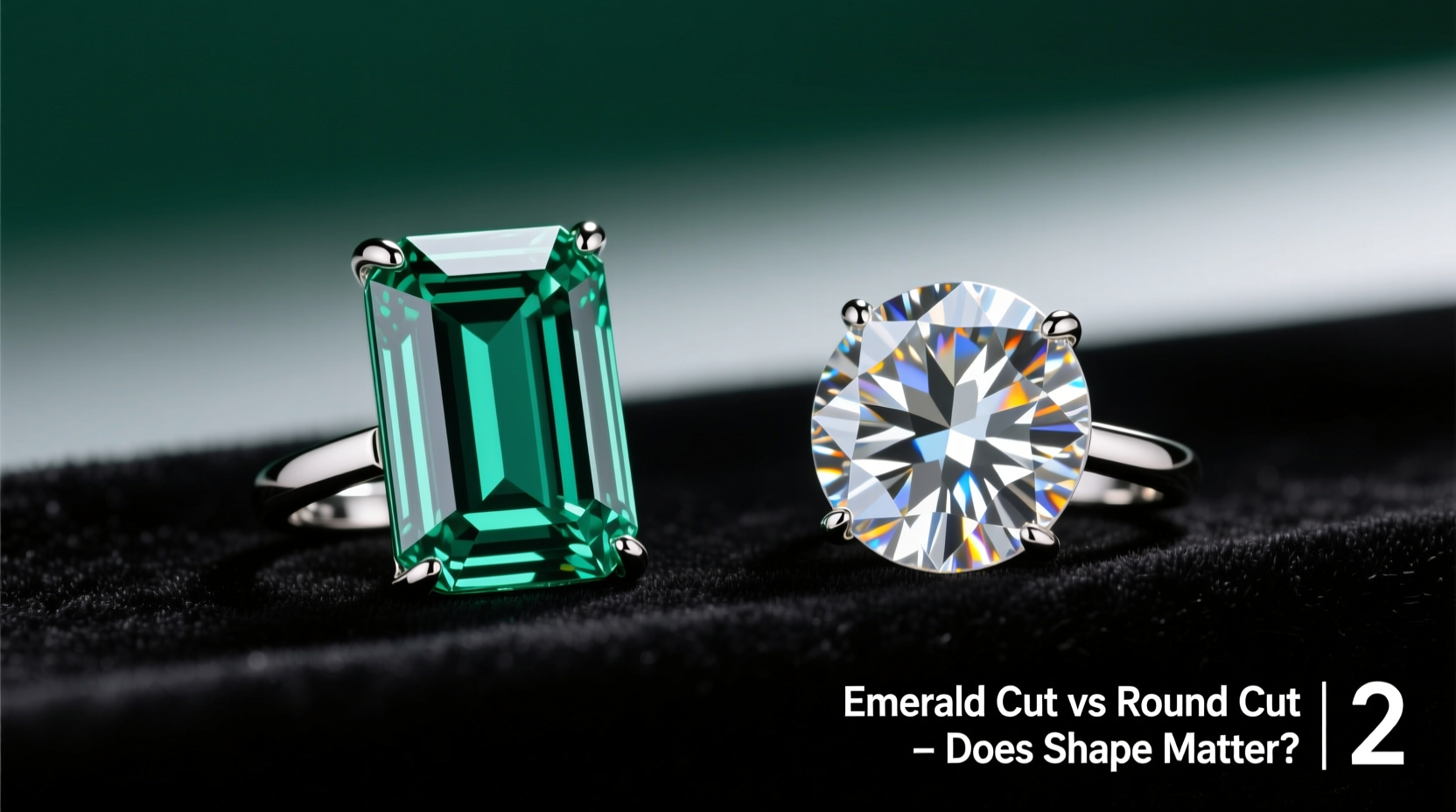
The term “cut” in diamonds refers not only to the geometric shape—round, emerald, princess, etc.—but also to the precision of proportions, symmetry, and polish. These factors determine how well a diamond interacts with light, influencing its brilliance (white light reflection), fire (colored light dispersion), and scintillation (sparkle when moved).
The round brilliant cut is engineered for maximum light return. With 57 or 58 precisely angled facets, it's designed to reflect nearly all incoming light back through the top of the stone. In contrast, the emerald cut features a rectangular shape with stepped facets and cropped corners, prioritizing clarity and transparency over sparkle.
“Round brilliants are the gold standard for sparkle. Emerald cuts, on the other hand, reward those who appreciate subtlety and sophistication.” — Dr. Laura Simmons, GIA Gemologist
Brilliance & Fire: The Science of Sparkle
If your priority is maximum brilliance and eye-catching sparkle, the round cut has no equal. Its facet arrangement is optimized through decades of optical research to refract and reflect light in a way that creates continuous flashes of white and colored light, even in low-light settings.
Emerald cuts, by design, produce a more subdued effect. Their large, open table and parallel facets create a “hall of mirrors” illusion, emphasizing clarity and depth rather than fire. This makes inclusions and color tints far more visible. As a result, emerald cuts typically require higher clarity grades (VS1 or better) and near-colorless tones (G or better) to appear clean to the naked eye.
Cost Comparison: What You’re Really Paying For
Diamond pricing is influenced by carat weight, cut quality, clarity, and color—but shape plays a critical role too. Round cuts are generally 15–30% more expensive than emerald cuts of similar specifications. Why?
- Higher demand: Round is the most popular diamond shape, accounting for over 75% of engagement ring sales.
- Greater waste during cutting: Rough diamond material is lost more heavily when shaping a round brilliant, increasing production cost.
- Premium certification: Top-tier round cuts with excellent symmetry and polish receive higher market premiums.
Emerald cuts offer better value per carat. Because they retain more of the original rough crystal, especially from elongated stones, they often appear larger face-up than rounds of the same carat weight. This makes them ideal for those seeking presence without premium pricing.
Visual Differences at a Glance
| Feature | Round Brilliant Cut | Emerald Cut |
|---|---|---|
| Facet Style | Radiant, triangular and kite-shaped | Stepped, linear facets |
| Brilliance | Very High | Moderate |
| Fire (Color Sparkle) | High | Low |
| Clarity Sensitivity | Less Visible Inclusions | Highly Visible Inclusions |
| Average Price (1ct, G/VS1) | $8,500–$10,500 | $6,500–$8,000 |
| Face-Up Size (1ct) | ~6.5mm diameter | ~6.7 x 5.0mm (appears longer) |
| Durability (Corner Vulnerability) | Excellent (no sharp corners) | Good (cropped corners reduce risk) |
Real-World Example: Choosing Between Cuts
Sophia was set on an emerald cut for her engagement ring. She loved its Art Deco elegance and the way it looked “cleaner” and more modern than traditional sparkly stones. But after viewing several options, she noticed haze in lower-clarity stones and struggled to find one that didn’t show faint yellow tones.
Her jeweler suggested a high-quality round brilliant in the same budget. Though smaller in millimeters, it dazzled under store lighting and appeared brighter in natural sunlight. Ultimately, Sophia chose the round cut—not because it was trendier, but because it performed better within her actual lifestyle and setting preferences.
Conversely, James proposed with an emerald cut he’d sourced with a GIA report, 1.20ct, D color, VVS1 clarity. He prioritized rarity and timeless design. The stone had no visible flaws and sat beautifully in a platinum bezel setting that protected its edges. For him, the higher investment in quality was justified by aesthetic goals and long-term sentiment.
Choosing the Right Setting for Each Cut
Setting plays a crucial role in both protection and visual enhancement.
- Round cuts shine in classic solitaire, halo, and pavé settings. Their symmetry allows for versatile mounting, and their brilliance complements almost any metal type.
- Emerald cuts benefit from protective side prongs or bezel settings due to their vulnerable corners. East-west orientations (horizontal mounting) have gained popularity for a contemporary look.
Because emerald cuts emphasize clarity, settings with minimal interference—like cathedral or tension styles—allow full visibility of the stone’s interior. However, these expose the corners more, increasing risk of chipping if struck.
Step-by-Step Guide: How to Decide Between Emerald and Round
- Assess your priorities: Do you want maximum sparkle or architectural elegance?
- Set a realistic budget: Allocate extra funds for higher clarity and color if choosing emerald.
- View stones in person or via video: Inspect for inclusions, contrast, and overall luster.
- Consider the wearer’s lifestyle: Active hands may favor durable round cuts; office environments may suit delicate emerald designs.
- Try both on: Wear replicas or visit a jeweler to compare face-up size and comfort.
- Choose a trusted vendor: Look for stores offering magnified imagery, certifications, and return policies.
Frequently Asked Questions
Does an emerald cut diamond look bigger than a round cut?
Yes, typically. Due to its elongated shape and larger table, an emerald cut often appears larger face-up than a round diamond of the same carat weight. However, it may weigh less while looking bigger—a key advantage for maximizing perceived size.
Is the round cut worth the extra cost?
For many buyers, yes. The round brilliant offers unmatched brilliance and resale value. It remains the most universally admired and liquid diamond shape on the secondary market. If lasting appeal and maximum sparkle are important, the premium is often justified.
Can emerald cuts be worn every day?
Absolutely—but with care. While their cropped corners improve durability, emerald cuts are more prone to showing damage and inclusions. A protective setting and regular inspection help maintain longevity. Avoid wearing during high-impact activities.
Final Thoughts: Beyond the Hype
The debate between emerald and round cut diamonds isn’t about which is objectively better—it’s about alignment with personal values. The round cut delivers proven performance, enduring popularity, and radiant beauty. The emerald cut offers sophistication, uniqueness, and a vintage-inspired aesthetic that stands apart from mainstream choices.
Shape matters—not because of marketing hype, but because it directly affects how a diamond performs in daily life. Light behavior, visibility of imperfections, price efficiency, and emotional resonance all hinge on this single decision.
Ultimately, the right choice reflects not just taste, but intention. Whether you're drawn to the fiery dance of a round brilliant or the serene clarity of an emerald cut, your decision should be rooted in knowledge, not trends.




 浙公网安备
33010002000092号
浙公网安备
33010002000092号 浙B2-20120091-4
Comments
No comments yet. Why don't you start the discussion?