
Great conversations don’t happen by accident—they start with the right question. Whether you're meeting someone new at a party, on a first date, or trying to strengthen an existing relationship, the way you open the dialogue can set the tone for everything that follows. The most effective conversation starters do more than fill silence; they invite authenticity, reveal personality, and create emotional resonance. Instead of defaulting to “How’s your day?” or “What do you do?”, try questions that spark curiosity, laughter, and meaningful exchange.
Why Conversation Starters Matter More Than You Think
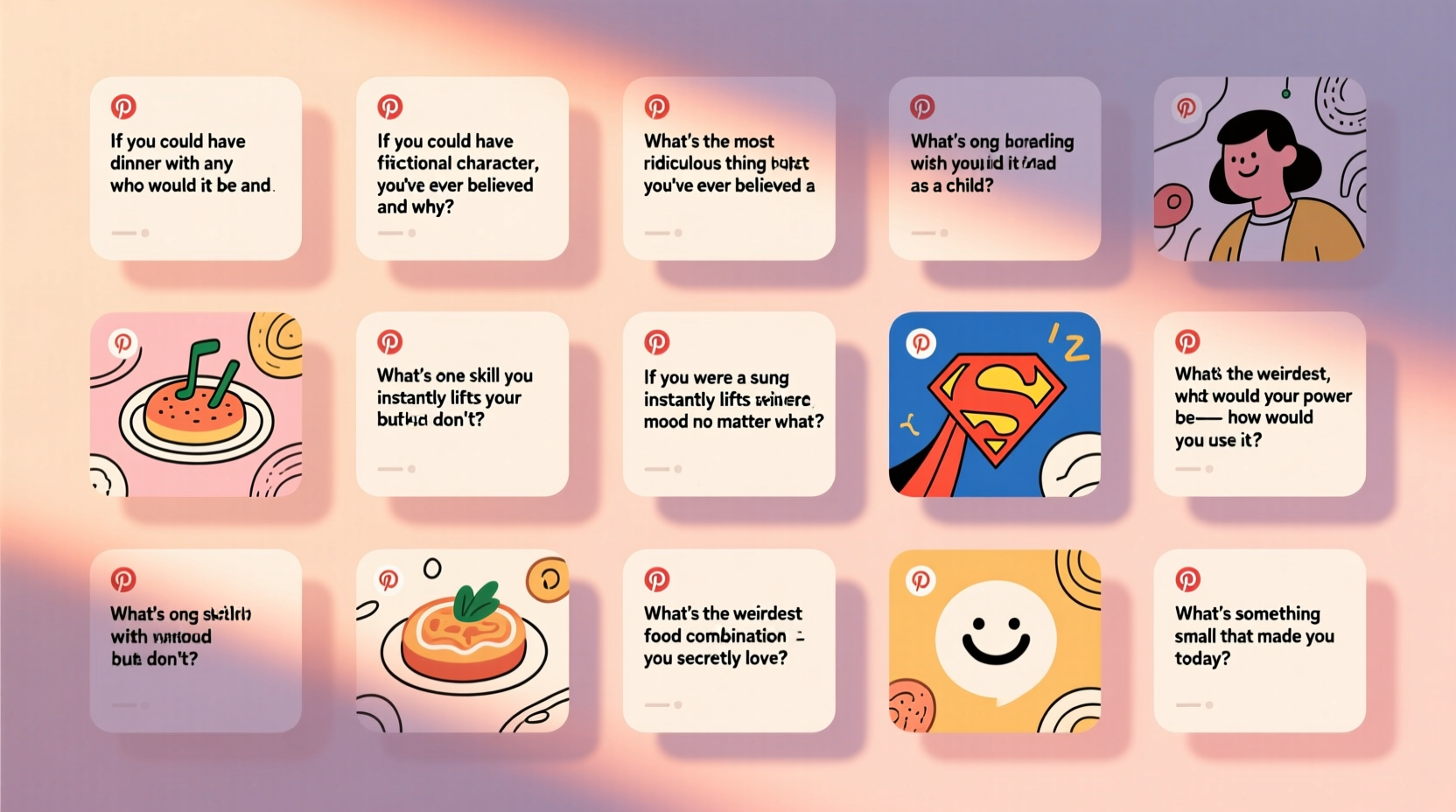
Human beings are wired for connection. We remember how people made us feel long after we forget what was said. A well-chosen question signals interest, respect, and presence. It shifts interactions from transactional to relational. According to Dr. Arthur Aron, a psychologist known for his research on interpersonal closeness, structured self-disclosure through thoughtful questions can rapidly accelerate intimacy between strangers.
“Mutual vulnerability breeds connection. When two people share something personal in a safe context, neural pathways associated with trust and bonding activate.” — Dr. Lena Peterson, Social Psychologist
The key isn’t just asking questions—it’s choosing ones that encourage storytelling, reflection, and emotion. Questions that begin with “what,” “how,” or “imagine” often work better than closed “yes/no” prompts because they open doors rather than close them.
Top 15 Conversation Starter Questions That Actually Work
Below is a curated list of questions proven to generate engaging, memorable exchanges. These are organized by mood and setting so you can match the energy of the moment.
For Fun & Laughter
- If you could have any animal as a pet, but it had to be the size of a horse, what would you pick and why?
- What’s the most ridiculous thing you’ve ever believed as a child?
- If your life were a sitcom, what would the title be and which actor would play you?
For Deepening Connection
- What’s one experience that changed how you see the world?
- When did you feel most proud of yourself in the past year?
- What’s something you’re curious about but haven’t told anyone?
For First Dates
- What’s your ideal Sunday look like—from morning to night?
- What’s a small thing someone can do that instantly makes you like them more?
- What’s a place you’ve never been but dream of visiting?
For Networking or Professional Settings
- What project are you currently excited about outside of your main job?
- Who’s someone who influenced your career path—and how?
- What’s a skill you’d love to master in the next 12 months?
How to Use These Questions Naturally
Even brilliant questions fall flat if delivered like an interview. The goal is flow, not interrogation. Here’s a simple four-step approach to weave these into real conversations:
- Observe and anchor: Notice something specific—a detail in their environment, outfit, comment, or shared context. For example: “I noticed your mug says ‘Plant Dad’—are you into gardening?”
- Ask with warmth: Smile, make eye contact, and phrase the question casually. Avoid sounding rehearsed.
- Listen deeply: Focus on understanding, not preparing your response. Nod, use verbal cues (“really?” “no way!”), and let silence breathe.
- Expand or pivot: Build on their answer. If they say they love hiking, ask, “What’s the most unexpected thing you’ve seen on a trail?”
This rhythm keeps the exchange balanced and organic. It transforms a question from a tool into a bridge.
Do’s and Don’ts of Great Conversation Starters
| Do | Don’t |
|---|---|
| Ask open-ended questions that invite stories | Lead with overly personal or controversial topics (politics, salary, exes) |
| Tailor questions to context (party vs. coffee meeting) | Use clichés like “So, what do you do?” without follow-up depth |
| Show genuine curiosity—even if the answer seems simple | Interrupt or redirect immediately to talk about yourself |
| Use humor when appropriate to ease tension | Rattle off multiple questions in a row |
A Real Example: From Awkward Silence to Real Connection
Jamie attended a friend-of-a-friend dinner party where most guests were strangers. Early on, small talk stalled after basic introductions. Instead of retreating into phone-scrolling mode, Jamie turned to the person beside them and asked, “If you could teleport anywhere for dinner tonight, where would you go—and what would you order?”
The guest lit up and described a childhood memory of eating fresh pasta in a tiny village in Italy. That led to a 20-minute conversation about travel mishaps, favorite comfort foods, and family traditions. By the end of the night, three others had joined the conversation, and two people exchanged numbers to plan a group cooking night. One guest later said, “That question felt playful but real—it broke the ice without pressure.”
The takeaway? A single imaginative prompt transformed a potentially forgettable interaction into a meaningful moment of shared joy.
Checklist: Your Go-To Toolkit for Better Conversations
Keep this checklist handy before entering any social situation—whether it's a networking event, date, or team meeting.
- ✅ Prepare 2–3 versatile questions in advance based on the setting
- ✅ Anchor your opener to something observable or shared
- ✅ Replace “What do you do?” with “What kind of work excites you lately?”
- ✅ Listen actively—respond to feelings, not just facts
- ✅ Share something personal in return to build reciprocity
- ✅ Exit gracefully: “This was great—let’s continue this another time”
Frequently Asked Questions
Can these questions work in virtual settings like Zoom calls?
Absolutely. In fact, digital environments often need stronger openers due to lack of physical cues. Try using screen backgrounds or profile details as anchors: “I love your wallpaper—where is that photo from?” Pair it with a lighthearted starter like, “If this video call had a theme song, what should it be?”
What if the other person gives short answers?
Some people take time to warm up. Try rephrasing the question more casually: instead of “What’s a defining moment in your life?” say, “Has anything recently surprised you about yourself?” Or model openness first: “I’ll go first—last week I realized I actually enjoy doing dishes if I play jazz. Weird, right?” Vulnerability invites reciprocity.
Are some questions too personal for early conversations?
Yes. Avoid questions about trauma, finances, health issues, or relationship status unless there’s clear mutual comfort. Gauge emotional temperature—if someone shares lightly, match their level. Deep questions belong in deeper contexts. Save the heavy lifts for when trust has built naturally.
Conclusion: Turn Moments Into Meaning
Every conversation holds the potential to surprise, inspire, or transform. The right question doesn’t just start dialogue—it unlocks identity, memory, and emotion. By replacing routine prompts with ones that spark imagination and honesty, you create space for real human connection. These aren’t tricks; they’re invitations. And in a world of surface-level interactions, those who know how to ask thoughtfully stand out.




 浙公网安备
33010002000092号
浙公网安备
33010002000092号 浙B2-20120091-4
Comments
No comments yet. Why don't you start the discussion?