
The entryway sets the tone for your home. It’s the first impression guests have—and often the last place you check before heading out the door. Yet many homeowners face a common design challenge: Is a simple vase on a shelf or pedestal sufficient, or is it time to invest in a functional console table? The answer depends on more than aesthetics—it hinges on lifestyle, space, storage needs, and long-term usability.
A vase can bring elegance, color, and life to an otherwise blank wall or corner. But beauty alone doesn’t help you find your keys, stash mail, or drop off bags at the end of a long day. This article explores when a vase suffices, when a console table becomes essential, and how to strike the perfect balance between form and function.
When a Vase Works: The Case for Minimalism
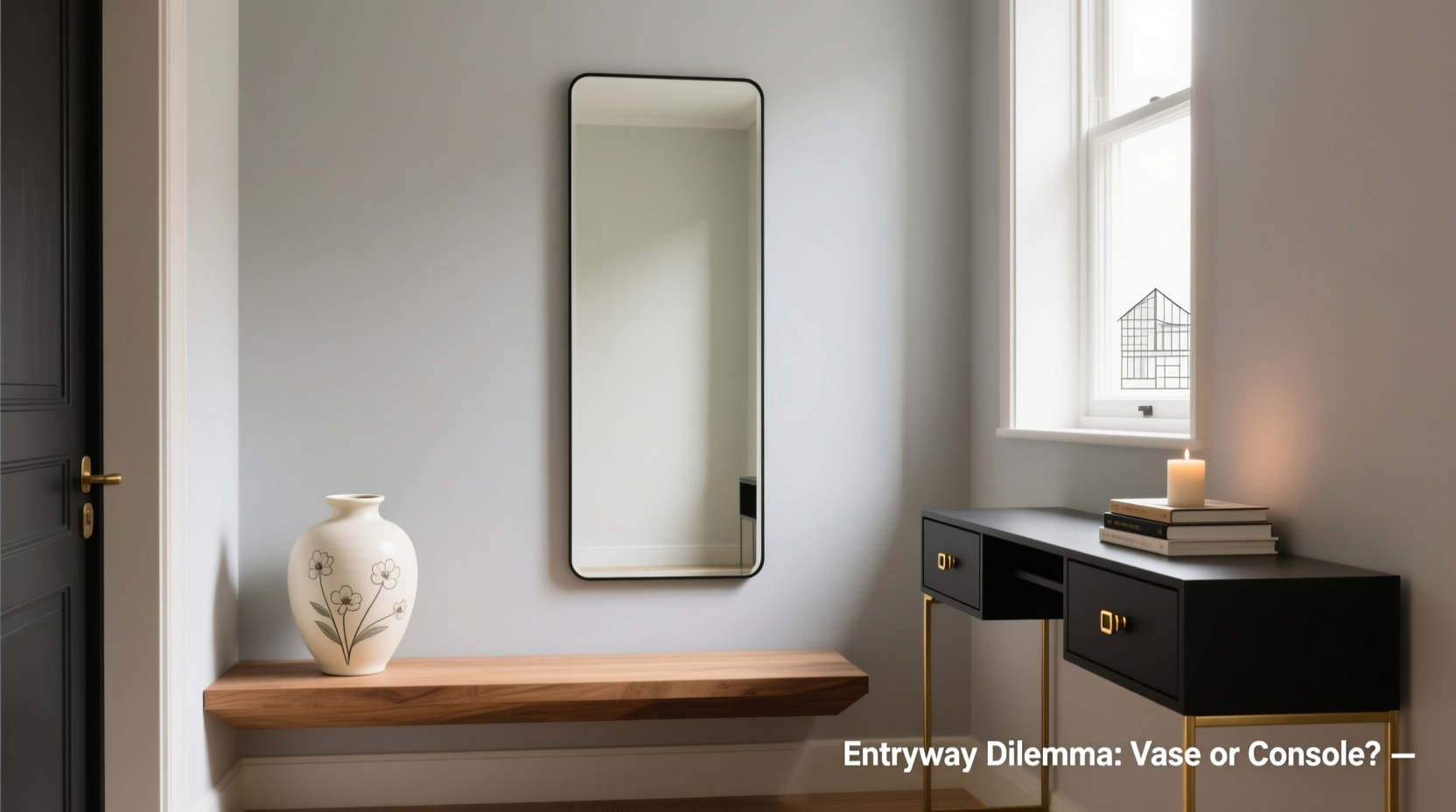
In smaller spaces or homes with minimalist decor, a single decorative element like a vase can be both intentional and effective. A tall ceramic piece with dried botanicals or fresh flowers adds warmth without clutter. In modern apartments or studio layouts, over-furnishing the entry can make the space feel cramped.
Interior designer Lena Torres notes:
“Sometimes less is more. A well-placed vase can act as a focal point—elegant, seasonal, and easy to change. If your lifestyle doesn’t require daily drop zones, there’s no rule saying you must have furniture in your entry.”
Vases shine in these scenarios:
- You live alone or in a small household with minimal comings and goings.
- Your coat closet or storage is located just off the entry, reducing surface needs.
- You prioritize clean lines and uncluttered visuals.
- You rotate decor seasonally and enjoy styling vignettes.
When You Need a Console Table: Function Meets Form
If you regularly misplace keys, struggle with incoming mail, or juggle bags, shoes, and jackets, a console table isn’t just decorative—it’s a practical necessity. These pieces serve as organizational hubs, offering horizontal space for essentials and vertical clearance (when sized correctly) to maintain an open feel.
A console table typically ranges from 24 to 36 inches in height, with depths between 10 and 16 inches—narrow enough for tight entries but wide enough to hold everyday items. Many models include drawers, shelves, or hidden cubbies, adding discreet storage without sacrificing style.
Consider a console table if:
- You have children or pets who generate extra gear.
- Your entryway doubles as a mail-processing center.
- You frequently prepare for outings and need a staging area.
- You want to incorporate lighting (e.g., a table lamp) for ambiance or visibility.
Key Features to Look For
| Feature | Benefit | Best For |
|---|---|---|
| Drawers or cabinets | Hide clutter, store gloves, chargers, etc. | Families, high-traffic homes |
| Open shelving | Display baskets, shoes, or books | Small-space organization |
| Mirror above | Enhance light and sense of space | Dim or narrow entries |
| Narrow depth (≤12\") | Fit in tight hallways | Urban apartments, foyers |
| Durable finish | Resist scuffs from bags and keys | High-use areas |
Blending Both: Styling Tips for Balance
You don’t have to choose between a vase and a console table—they can coexist beautifully. The key is thoughtful layering and purposeful placement.
Start with the console as your foundation. Use it to house functional items: a bowl for keys, a basket for mail, a small charger station. Then elevate the aesthetic with curated decor—one statement vase, a stack of art books, or a sculptural object.
Follow this checklist to create a balanced entry:
- Measure your entryway width; leave at least 36 inches of clear walking space.
- Select a table no taller than your front door handle (typically 32–34\").
- Anchor with a rug to define the zone.
- Add overhead or ambient lighting if natural light is limited.
- Style in odd numbers: group three items (e.g., lamp, vase, box) for visual harmony.
Real-Life Example: From Cluttered to Cohesive
Sarah, a working mother of two in Chicago, struggled with her 5-foot-wide entry. Shoes piled by the door, backpacks hung on knobs, and mail covered a narrow shelf. She loved the idea of a vase for elegance but found it impractical.
She invested in a 30-inch-wide console table with a lower shelf and a shallow drawer. Inside the drawer, she stored dog leashes and spare masks. On top, she placed a woven tray holding keys and sunglasses. A medium-sized ceramic vase with eucalyptus sat at one end, adding softness without sacrificing space.
The result? Her family now uses the table daily. “It’s not just pretty,” Sarah says. “It actually works. We’re not tripping over things anymore, and the vase makes it feel welcoming.”
Expert Insight: What Designers Recommend
According to Marcus Bell, residential interior consultant and author of *First Impressions: Entryway Design That Lasts*, function should guide form in transitional spaces.
“The entryway is a workspace. It needs to support habits, not just look good in an Instagram photo. A vase is lovely, but if you’re spending ten minutes every morning searching for your wallet, the design has failed.”
Bell recommends auditing your daily routine: How many people enter and exit? What items do you carry regularly? Where do things currently get lost? Answering these questions reveals whether a decorative accent is enough—or if infrastructure is needed.
FAQ: Common Questions About Entryway Design
Can I use a vase instead of a console table in a large entryway?
Possibly, but only if other surfaces (like a bench, credenza, or built-in cabinet) already fulfill storage needs. In spacious foyers, a vase can serve as a sculptural accent, but leaving the entire zone devoid of utility may feel underutilized.
How do I choose the right size vase for my entry?
As a rule, the vase should be no taller than 1.5 times the height of the surface it sits on. For floor-level display, opt for vases between 18–24 inches tall. Ensure the base doesn’t crowd walkways, and avoid wide mouths that invite accidental knocks.
Are there alternatives to a console table?
Yes. Wall-mounted floating shelves, entry benches with storage, or even a repurposed trunk can offer function without a full table. The goal is to provide a designated spot for essentials—form follows once function is addressed.
Final Thoughts: Solve the Dilemma With Intention
The choice between a vase and a console table isn’t about trends—it’s about alignment with your life. A vase brings artistry and seasonal charm, ideal for serene, low-traffic entries. A console table brings order, especially in homes buzzing with activity.
The most successful entryways blend both: a place for beauty and a place for purpose. Whether you start with a simple bowl and upgrade later, or install a full console from day one, let your decisions reflect how you actually live—not just how a Pinterest board looks.




 浙公网安备
33010002000092号
浙公网安备
33010002000092号 浙B2-20120091-4
Comments
No comments yet. Why don't you start the discussion?