
For drivers who value early warning systems against speed traps and law enforcement radar, the choice between high-end radar detectors often comes down to two elite models: the Escort Redline 360c and the Valentine One Gen2. Both are engineered for performance, sensitivity, and stealth—but they approach detection differently. Deciding whether upgrading from one to the other is worthwhile requires understanding their core differences in range, filtering, interface, and real-world usability.
Detection Performance and Range
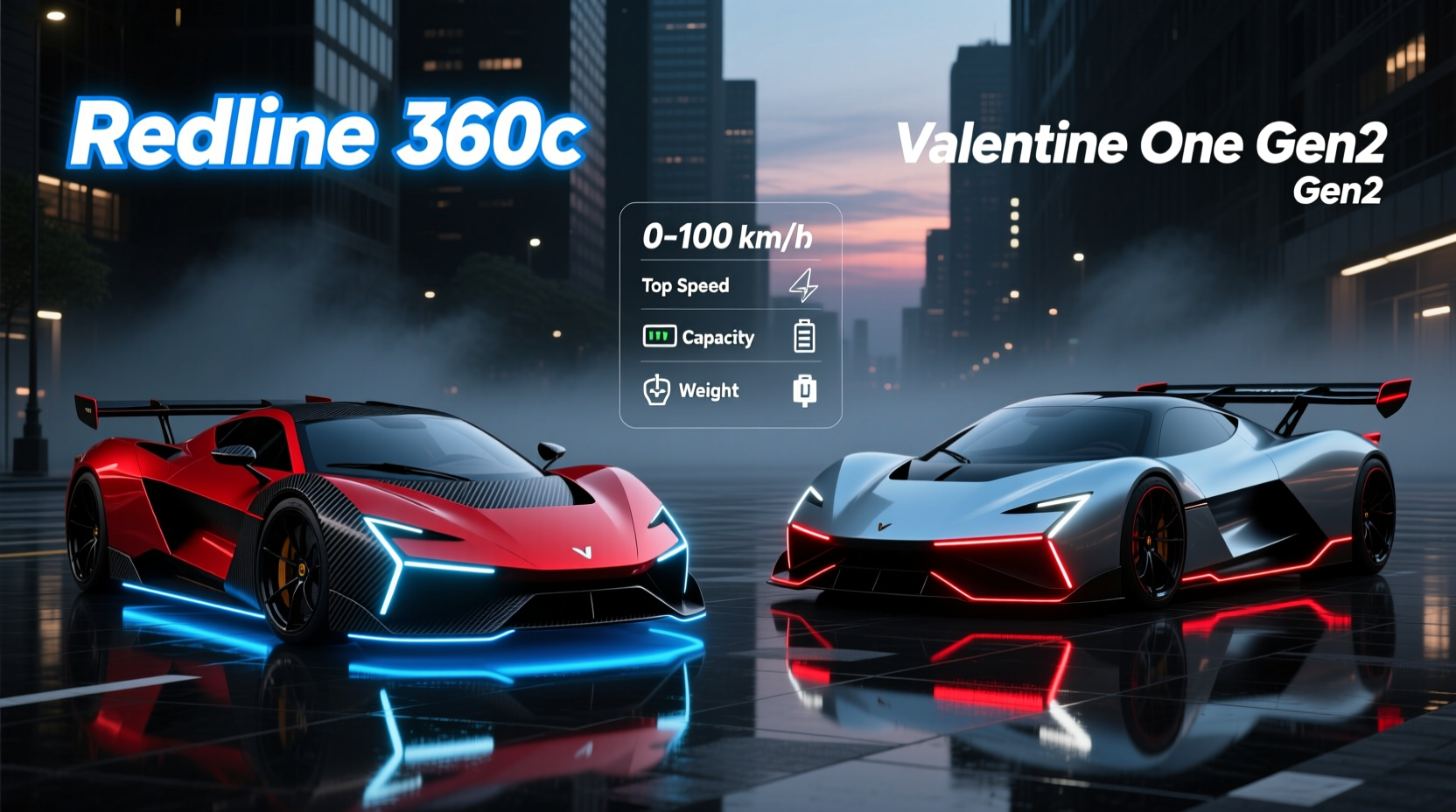
The Escort Redline 360c is widely regarded as one of the most sensitive radar detectors on the market. Its long-range Ka-band detection, particularly in the 34.7 GHz frequency, consistently outperforms many competitors. The Redline 360c uses Escort’s IQ Circuit technology to reduce false alerts while maintaining high responsiveness to real threats. In open highway conditions, users report alerts up to 5–7 miles ahead of a stationary police radar unit—especially when mounted high on the windshield.
In contrast, the Valentine One Gen2 takes a minimalist, analog-inspired approach. It lacks GPS and automatic muting features but delivers raw, unfiltered detection power. Its directional arrows provide instant feedback on threat location—left, right, or behind—giving drivers precise situational awareness. While its maximum detection range is slightly shorter than the Redline 360c’s under ideal conditions, the V1G2 excels in urban environments where quick threat identification matters more than sheer distance.
“Directional awareness is just as important as sensitivity. The Valentine One tells you not just *that* there’s radar, but *where* it’s coming from.” — Mark Reynolds, Long-Haul Trucking Safety Consultant
Filtering, False Alerts, and User Experience
One of the biggest pain points for radar detector users is false alerts from automatic door openers, adaptive cruise control, and blind-spot monitoring systems. The Redline 360c addresses this with advanced digital signal processing and an integrated database of known false alert locations via Escort Live (a companion smartphone app). Over time, the detector learns and suppresses recurring falses, especially when combined with user-reported data.
The Valentine One Gen2, however, offers no built-in GPS or crowd-sourced filtering. This means users must manually mute unwanted alerts or rely on careful band segmentation (e.g., disabling K-band in cities). While purists appreciate the lack of automation—believing it preserves detection integrity—daily commuters may find the constant beeping from BSM systems on modern vehicles frustrating.
Design, Installation, and Interface
The physical design of each unit reflects its philosophy. The Redline 360c has a compact, low-profile housing that blends into the windshield. It connects wirelessly to a smartphone app that displays signal strength, GPS lock status, and community-reported alerts. Voice alerts are clear and customizable, and the OLED display is bright but not distracting.
The Valentine One Gen2 stands out with its iconic analog-style dial and LED arrow indicators. It requires a separate control box for volume and band selection, which can clutter the dash. However, its tactile buttons and immediate visual feedback appeal to enthusiasts who want full manual control. The lack of a smartphone dependency is a plus for privacy-focused users, though it limits access to real-time alert networks.
Comparison Table: Key Features at a Glance
| Feature | Escort Redline 360c | Valentine One Gen2 |
|---|---|---|
| Radar Sensitivity | Excellent (best-in-class Ka-band) | Very High (balanced across bands) |
| Directional Arrows | No | Yes (front and rear) |
| GPS & Auto-Muting | Yes | No |
| Smartphone App Integration | Yes (Escort Live) | No |
| False Alert Filtering | Advanced (AI + crowd-sourced) | Manual only |
| Stealth Mode (RDD Immunity) | Yes (undetectable by Spectre) | Yes |
| Installation Complexity | Moderate (plug-and-play wiring) | High (separate control pod) |
| Price (MSRP) | $599 | $449 |
Is Upgrading from Valentine One Gen2 to Redline 360c Worth It?
If you're currently using a Valentine One Gen2, the decision to upgrade hinges on your driving habits and tolerance for technological trade-offs. The Redline 360c offers significantly better false alert suppression, longer detection range on Ka-band, and seamless integration with real-time traffic and alert data through Escort Live. For frequent highway travelers or those navigating mixed urban-rural routes, these benefits can dramatically improve the driving experience.
However, the V1G2 still holds advantages. Its directional arrows allow you to instantly assess whether a radar source is ahead or behind, reducing reaction time. There's also peace of mind in knowing your device operates independently—no app crashes, battery drain, or connectivity issues. Some users report that after switching back to the V1G2, they feel more \"in tune\" with their surroundings due to the immediacy of the audio and visual cues.
Real-World Scenario: The Commuter’s Dilemma
Consider Sarah, a sales representative who drives 1,000 miles weekly across Texas. Her route includes long stretches of open interstate and busy city centers. She upgraded from a Valentine One Gen2 to a Redline 360c primarily to reduce false alerts from grocery store door openers and luxury vehicles with aggressive BSM systems. After three months, she reported a 70% reduction in nuisance alerts and credited Escort Live with warning her about mobile speed trailers before she even saw them. “The app-based alerts alone made the upgrade worth it,” she said.
On the other hand, Tom, a classic car enthusiast who values simplicity and hates smartphone dependence, stuck with his V1G2. He drives mostly weekend trips and appreciates being able to glance at the arrows and know exactly where a signal is coming from. “I don’t want my detector making decisions for me,” he explained. “If there’s radar, I want to know—every single time.”
Action Checklist: Choosing the Right Detector
- Evaluate your typical driving environment (urban, rural, highway-heavy)
- Assess how much you rely on—or distrust—smartphone integration
- Determine your tolerance for false alerts
- Decide whether directional awareness is critical for your safety strategy
- Consider future-proofing: Does the device receive firmware updates?
- Test both units if possible—many retailers offer return windows
Frequently Asked Questions
Can the Valentine One Gen2 be updated like the Redline 360c?
No. The Valentine One Gen2 does not support firmware updates. Once purchased, its functionality remains static. Escort regularly releases updates for the Redline 360c to improve filtering and detection logic.
Does the Redline 360c work without a smartphone?
Yes, but with limitations. Core detection works standalone, but GPS locking, auto-muting at saved locations, and Escort Live alerts require the app to be running and connected via Bluetooth.
Which detector is better for detecting instant-on radar?
Both perform well, but the Redline 360c’s higher sensitivity gives it a slight edge in picking up brief radar bursts, especially if the beam grazes your vehicle. However, user vigilance and proper mounting position play a larger role than model differences in catching POP or instant-on signals.
Final Verdict: Upgrade When Functionality Meets Lifestyle
The Escort Redline 360c represents the evolution of radar detection into the connected era—offering smarter filtering, broader range, and real-time intelligence. For most modern drivers, especially those spending significant time on highways or in radar-dense areas, the upgrade from the Valentine One Gen2 delivers tangible benefits.
Yet the Valentine One Gen2 remains a benchmark for purist design, unmatched directional feedback, and independence from digital ecosystems. If you value control, simplicity, and immediate threat localization over convenience features, staying with the V1G2 isn't just acceptable—it may be preferable.




 浙公网安备
33010002000092号
浙公网安备
33010002000092号 浙B2-20120091-4
Comments
No comments yet. Why don't you start the discussion?