
For city dwellers, studio apartment residents, or anyone working with a tight kitchen layout, every inch of counter space matters. When it comes to brewing coffee, the choice between an espresso machine and a pod system isn’t just about flavor or convenience—it’s also a spatial decision. While both deliver café-style beverages, their physical footprint, storage needs, and setup requirements vary significantly. Understanding these differences helps you make a smarter, more space-conscious choice without sacrificing your morning ritual.
Understanding Space Constraints in Small Kitchens
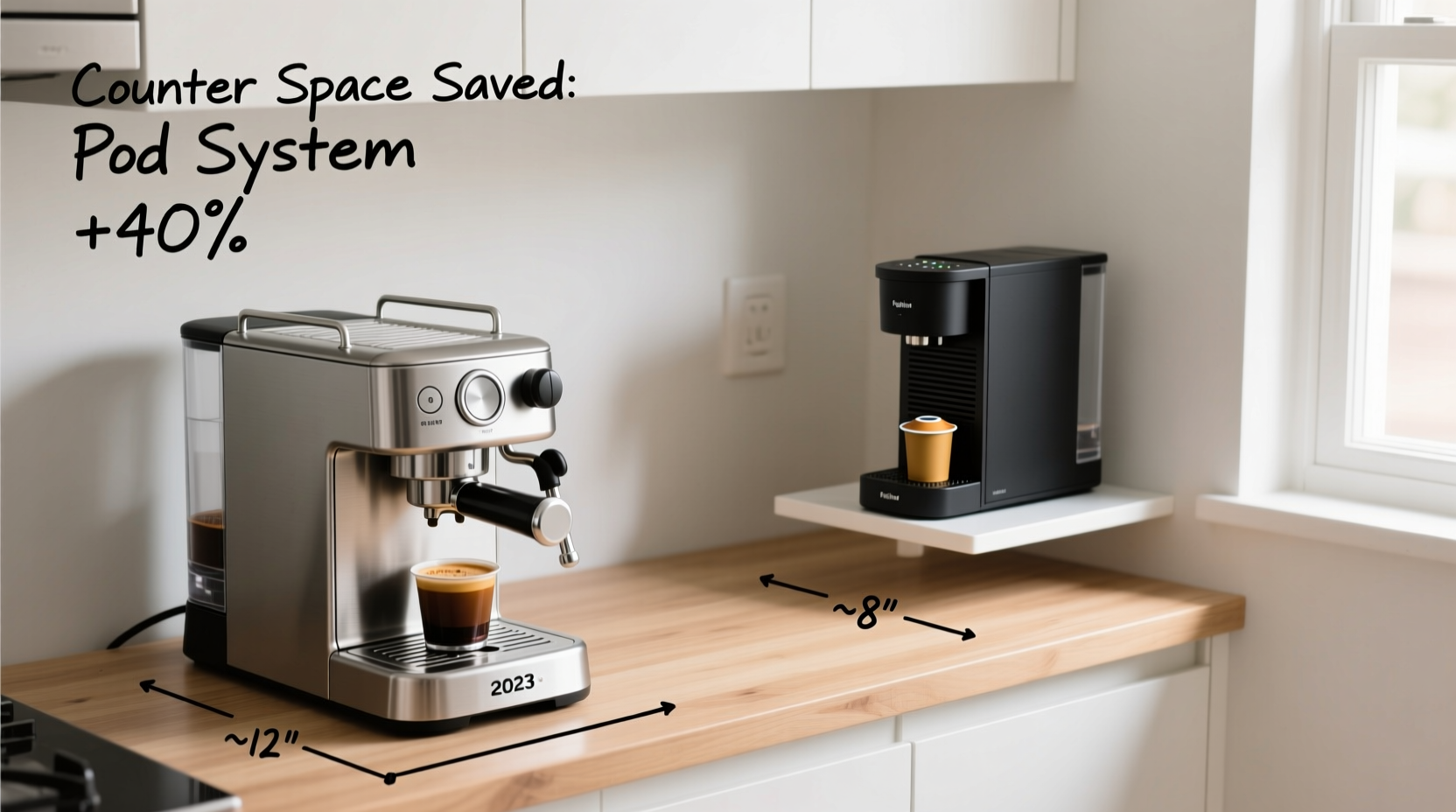
Small kitchens typically range from 50 to 100 square feet, often with limited countertop real estate. Appliances compete not only with each other but also with prep areas, sinks, and stovetops. In such environments, vertical clearance, cord management, and storage accessibility become critical. A bulky appliance may force you to give up workspace needed for chopping vegetables or setting down groceries—something no home barista wants to compromise on.
Coffee makers are used daily by millions, making them one of the most frequently placed—and hardest to relocate—appliances. The ideal brewer should occupy minimal space, be easy to access, and ideally store away when not in use. But does that mean pod systems always win in compact spaces? Not necessarily. It depends on the type of machine, usage habits, and long-term maintenance needs.
Size and Footprint Comparison
The most direct way to compare espresso machines and pod systems is by measuring their dimensions. On average:
- Full-sized espresso machines (manual or semi-automatic) measure 12–16 inches wide, 10–14 inches deep, and 12–15 inches tall.
- Compact espresso machines designed for smaller homes range from 9–12 inches wide and can fit under standard upper cabinets.
- Pod systems like Nespresso OriginalLine or Keurig K-Mini are typically 5–7 inches wide, 10–12 inches deep, and 12–13 inches high—making them narrower but sometimes just as tall.
While pod systems take up less width, they often require additional surface area nearby for storing pods, water reservoirs, or drip trays. Espresso machines, especially manual models, may need accessories like tampers, milk frothers, or portafilters stored within reach. However, many modern pod systems integrate all components into a single unit, reducing clutter.
“Space efficiency isn’t just about footprint—it’s about workflow integration. A sleek pod machine might seem smaller, but if it disrupts your prep zone, it’s functionally larger.” — Carlos Mendez, Kitchen Design Consultant at Urban Interiors Studio
Counter Space Efficiency: Key Factors
Beyond raw measurements, several functional aspects influence how much usable space a coffee maker actually consumes:
- Depth and cabinet clearance: Some espresso machines extend beyond the edge of countertops, interfering with seating or drawers.
- Vertical height: Tall units block overhead storage or prevent opening upper cabinets.
- Cord length and outlet proximity: Long cords may require extension strips, adding visual clutter.
- Drip tray and water tank access: Units needing frequent refills benefit from front-facing tanks rather than rear ones.
Detailed Comparison: Espresso Machine vs Pod System
| Feature | Espresso Machine (Manual/Semi-Auto) | Pod System (e.g., Nespresso, Keurig) |
|---|---|---|
| Average Width | 9–16 inches | 5–7 inches |
| Average Depth | 10–14 inches | 10–12 inches |
| Height | 12–15 inches | 12–13 inches |
| Water Tank Location | Rear or side (often fixed) | Front or top (easier refill) |
| Accessories Needed | Grinder, tamper, milk pitcher | None (optional capsule holder) |
| Storage Flexibility | Limited; usually permanent placement | Some models stackable or storable |
| Footprint Efficiency | Moderate to low | High (narrow design) |
| Energy Use per Brew | Higher (longer heat-up time) | Lower (instant heat, auto-shutoff) |
As shown, pod systems generally offer better width efficiency, allowing them to tuck into narrow gaps beside kettles or microwaves. However, their similar depth means they don’t automatically free up more total space. What truly sets them apart is simplicity: fewer moving parts, no external grinder needed, and faster cleanup—all contributing to reduced cognitive and physical clutter.
Real-Life Scenario: A Brooklyn Studio Apartment
Consider Maya, a freelance designer living in a 450-square-foot Brooklyn studio. Her kitchen counter spans just 36 inches between the sink and stove. She initially purchased a compact Rancilio Silvia espresso machine because she loved fresh crema and control over extraction. But after two months, she found herself constantly moving the machine aside to chop ingredients or roll out dough. The portafilter and tamper took up drawer space already crowded with utensils.
She switched to a Nespresso Essenza Mini, which measures only 5.4 x 10.6 x 12.5 inches. Though nearly the same depth, its slimmer profile allowed her to place it next to the toaster without blocking access. She mounted a small magnetic strip to hold capsules vertically, saving shelf space. Total setup time dropped from five minutes to under 30 seconds.
“I didn’t realize how much mental load my old machine added,” Maya said. “Now I grab a pod, press a button, and my counter is clear again in seconds.”
This case illustrates that while both machines have comparable depth, the pod system’s streamlined operation enhances perceived space by reducing accessory sprawl and interaction time.
Hidden Space Costs You Might Overlook
When evaluating space savings, consider indirect spatial demands:
- Accessory storage: Manual espresso setups often require a separate burr grinder (another 6–8 inch device), plus tools like a scale or knock box.
- Cleaning routine: Backflushing, descaling, and wiping down group heads add steps that demand nearby sink access and counter clearance.
- Pod storage: While pods themselves are small, a month’s supply (60–90 capsules) takes up roughly the volume of a shoebox. Without organization, this creates visual clutter.
- Waste disposal: Used pods (especially aluminum ones) need immediate removal to avoid odor or pest issues, requiring bin placement nearby.
Step-by-Step: Optimizing Coffee Setup for Minimal Footprint
- Measure your available space: Use a tape measure to record width, depth, and height clearance, including overhead cabinets.
- List your must-have features: Do you need milk frothing? Programmable settings? Reusable options?
- Compare product specs: Focus on depth and height—not just width—as many slim devices still protrude far.
- Plan accessory zones: Decide where grinders, tampers, or pod holders will live—inside a cabinet, on a shelf, or mounted.
- Test mock placement: Cut cardboard to match appliance dimensions and place it on your counter to visualize impact.
- Consider off-counter storage: If daily use allows, store the machine in a cabinet and bring it out only when needed.
- Evaluate cord routing: Ensure outlets are accessible and cords won’t drape across walkways.
Environmental and Cost Considerations
While space is the primary concern, sustainability and long-term cost affect overall value. Pod systems generate waste unless using recyclable or compostable capsules. Aluminum pods require proper sorting; plastic ones may not be accepted locally. Manual espresso machines produce zero packaging waste and allow full control over bean sourcing, supporting ethical and eco-friendly practices.
However, energy consumption favors pod systems: most heat up in under 30 seconds and shut off automatically after 30 minutes. Traditional espresso machines often stay powered for hours to maintain boiler temperature, increasing electricity use even when idle.
“In urban micro-kitchens, the best solution balances footprint, usability, and environmental impact. There’s no universal winner—only what fits your lifestyle.” — Dr. Lena Torres, Sustainable Living Researcher at City Habitats Institute
Checklist: Choosing the Right Brewer for Your Small Kitchen
- ✅ Measure exact counter space (width, depth, height)
- ✅ Prioritize front-loading water tanks and drip trays
- ✅ Check whether the unit fits under upper cabinets
- ✅ Assess need for external accessories (grinder, frother)
- ✅ Determine tolerance for daily cleanup and maintenance
- ✅ Evaluate storage options for pods, beans, or tools
- ✅ Consider noise level and startup time
- ✅ Decide on sustainability preferences (waste reduction, energy use)
Frequently Asked Questions
Can I store my espresso machine in a cabinet when not in use?
Yes, if you're willing to set it up and connect it daily. However, repeated plugging/unplugging may wear out seals and hoses over time. Pod systems are generally better suited for intermittent storage due to simpler plumbing and shorter warm-up times.
Do pod systems really save counter space compared to all-in-one espresso machines?
In width, yes—most pod systems are significantly narrower. But depth and height are often similar. The real space advantage comes from eliminating the need for a separate grinder and reducing accessory clutter.
Are there compact espresso machines that rival pod systems in size?
Yes. Models like the Breville Bambino Plus or De’Longhi ECP3420 measure under 10 inches wide and include built-in milk frothers. These bridge the gap between traditional espresso quality and space efficiency, though they still require more attention and cleaning than pod systems.
Final Recommendation
For most small kitchens, **pod systems offer superior counter space efficiency** due to their narrow footprint, minimal accessory needs, and faster operation. They’re ideal for renters, busy professionals, or anyone prioritizing simplicity and clean surfaces. However, if you value barista-level control, richer crema, and long-term cost savings on coffee, a compact manual espresso machine can still work—with careful planning around storage and workflow.
The key is aligning your choice with your actual habits. If you make one shot per day and value speed, go pod. If you enjoy the ritual of grinding, tamping, and pulling shots, invest in a space-optimized semi-automatic model and dedicate a consistent zone for it.




 浙公网安备
33010002000092号
浙公网安备
33010002000092号 浙B2-20120091-4
Comments
No comments yet. Why don't you start the discussion?