
Poedagar has built a reputation for offering stylish, reliable quartz watches that combine modern design with functional precision. While quartz movements are known for their durability and low maintenance compared to mechanical counterparts, even the best timepieces require proper care to maintain accuracy, appearance, and longevity. A well-maintained Poedagar watch can serve as a dependable companion for over a decade—provided you follow essential upkeep routines. This guide outlines practical, expert-backed practices to protect your investment and ensure your watch continues to perform flawlessly.
1. Regular Cleaning to Prevent Buildup
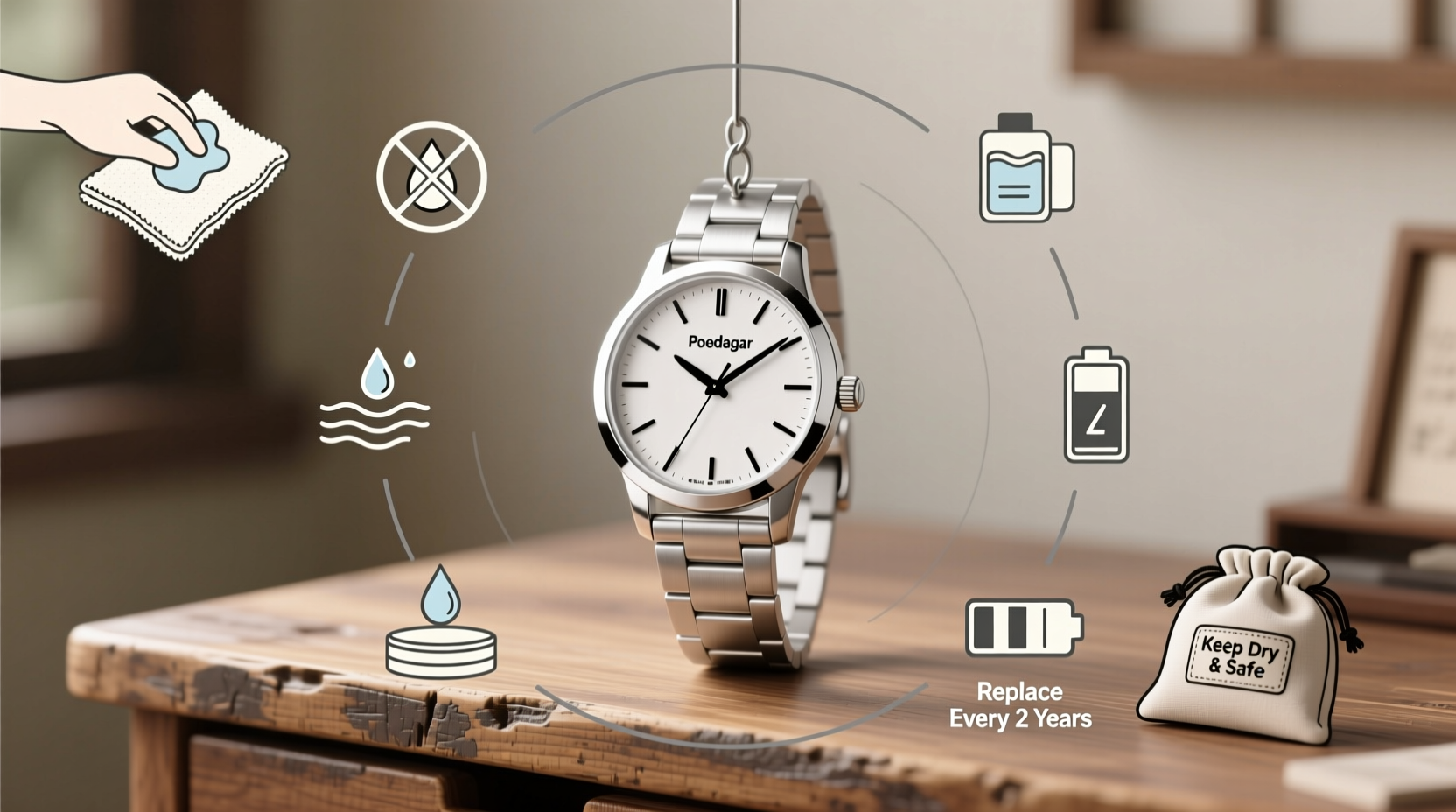
Dirt, sweat, oils from the skin, and environmental debris accumulate on your watch over time. These contaminants can degrade the finish, clog crevices around buttons, and even affect water resistance seals. Cleaning your Poedagar quartz watch every few weeks keeps it looking sharp and functioning properly.
Use a soft microfiber cloth to wipe the case and crystal daily. For deeper cleaning, dampen a soft-bristled toothbrush with lukewarm water and mild soap. Gently scrub the case, bezel, and bracelet (if stainless steel or resin). Avoid submerging non-water-resistant models. Rinse only if the watch is rated at least 5 ATM and designed for water exposure. Dry thoroughly with a lint-free cloth.
2. Protect Against Environmental Damage
Your Poedagar watch is engineered for everyday wear, but extreme conditions can compromise its integrity. Exposure to strong magnetic fields, sudden temperature shifts, and harsh chemicals can interfere with the quartz movement or degrade materials.
- Magnets: Keep your watch away from speakers, smartphones, magnetic clasps, and electronic devices that generate strong fields. Magnetization can cause erratic timekeeping.
- Chemicals: Remove your watch before using solvents, perfumes, chlorine, or cleaning agents. These substances can corrode metal parts or discolor straps.
- Temperature Extremes: Avoid leaving your watch in hot cars or freezing environments. Rapid thermal changes may cause condensation inside the case, leading to fogging or corrosion.
“Even quartz watches are sensitive to environmental stressors. Consistent exposure to heat or magnetism can shorten battery life and disrupt circuitry.” — Daniel Reeves, Watch Technician & Horology Instructor
3. Maintain Water Resistance and Seals
Many Poedagar models offer water resistance up to 50 or 100 meters, making them suitable for swimming or snorkeling. However, water resistance isn't permanent. Gaskets dry out over time, and impacts can loosen seals. To preserve this critical feature:
- Rinse your watch with fresh water after saltwater or chlorinated pool exposure.
- Ensure the crown is fully screwed down (if applicable) before any water contact.
- Have water resistance tested by a professional every 18–24 months.
- Avoid operating pushers or the crown underwater unless explicitly designed for it.
| Water Resistance Level | Suitable For | Not Recommended For |
|---|---|---|
| 3 ATM (30m) | Accidental splashes, handwashing | Swimming, showering |
| 5 ATM (50m) | Swimming, snorkeling | Diving, hot showers |
| 10 ATM (100m) | Recreational diving | High-pressure jets, saunas |
4. Battery and Movement Maintenance
The quartz movement in your Poedagar watch relies on a small battery, typically lasting 2–3 years. When the battery weakens, the second hand may begin to jump in two-second intervals—a clear sign it’s time for replacement.
Always have the battery replaced by a qualified technician. DIY attempts risk damaging the movement or compromising water resistance. During battery service, the technician should inspect and reseal gaskets, check for corrosion, and verify timekeeping accuracy.
In addition, avoid letting the battery remain dead inside the watch. A leaking battery can cause irreversible damage to the movement, requiring costly repairs or full replacement.
Step-by-Step: Battery Replacement & Seal Check
- Take the watch to an authorized service center or trusted jeweler.
- Request a full seal inspection along with battery change.
- Ask for a post-service pressure test to confirm water resistance.
- Clean the case and bracelet while servicing.
- Verify time accuracy over 24 hours after replacement.
5. Proper Storage When Not in Use
If you rotate between multiple watches, how you store your Poedagar when not worn matters. Poor storage leads to scratches, tarnishing, and reduced battery life.
Store your watch in a cool, dry place away from direct sunlight to prevent dial fading and strap deterioration. Use a padded watch box or a fabric-lined tray. If storing long-term, remove the battery to prevent leakage, especially if the watch won’t be worn for six months or more.
For leather straps, consider using a silica gel packet nearby to absorb moisture and inhibit mold growth. Never stack watches on top of each other—this causes scratches on crystals and cases.
Mini Case Study: The Weekend Watch That Lasted 12 Years
Mark T., an architect from Portland, purchased a Poedagar Diver Pro in 2012. He wore it primarily on weekends and during travel. By wiping it after each use, avoiding saunas, and having the battery replaced every 2.5 years with seal checks, his watch maintained perfect timekeeping. In 2024, a technician confirmed the original movement was still functional. “I never thought a $180 watch would last this long,” Mark said. “But treating it like a tool I depend on made all the difference.”
Complete Care Checklist
- ✅ Clean case and bracelet monthly with soft cloth and mild soap
- ✅ Inspect for scratches, loose links, or crown wobble
- ✅ Replace battery every 2–3 years (don’t wait for total failure)
- ✅ Test water resistance annually if used in water frequently
- ✅ Store in a dry, shaded location with minimal humidity
- ✅ Avoid magnets, chemicals, and extreme temperatures
- ✅ Rinse with fresh water after ocean or pool use
- ✅ Service movement every 5–7 years for deep inspection
Frequently Asked Questions
How often should I service my Poedagar quartz watch?
While quartz watches don’t need frequent servicing like mechanical ones, a full inspection every 5 to 7 years is recommended. This includes checking the movement, replacing worn gaskets, and verifying accuracy. Battery changes should occur every 2–3 years and are an ideal opportunity for a quick health check.
Can I swim with my Poedagar watch?
Yes—if your model is rated at least 5 ATM (50 meters). Check the case back for the water resistance marking. Avoid pressing buttons underwater unless the watch is specifically designed for it. After swimming, rinse with fresh water and dry thoroughly.
Why is my watch losing time even though it’s quartz?
Quartz watches are highly accurate, typically within ±15 seconds per month. If your watch is gaining or losing minutes, possible causes include a dying battery, magnetization, or internal damage from impact. Have it evaluated by a technician to diagnose the issue.
Final Thoughts: Small Habits, Long-Term Rewards
Your Poedagar quartz watch is more than an accessory—it’s a precision instrument designed to deliver consistent performance. The key to longevity lies not in occasional fixes, but in daily habits and proactive maintenance. Simple actions like wiping it down after wear, avoiding extreme environments, and staying on schedule with battery replacements compound into years of flawless service.
Whether you rely on it for daily timekeeping or wear it as a statement piece, treating your watch with care reflects respect for craftsmanship and functionality. A little attention goes a long way in preserving both form and function.




 浙公网安备
33010002000092号
浙公网安备
33010002000092号 浙B2-20120091-4
Comments
No comments yet. Why don't you start the discussion?