
Apple Watch is designed for continuous use, but there are times when turning it off makes sense—whether you're traveling, troubleshooting, or trying to extend its lifespan. While Apple doesn’t encourage frequent shutdowns, knowing how to power down correctly can help preserve battery health, conserve energy during inactivity, and resolve performance issues. This guide walks through the proper methods, explains when and why to turn off your device, and shares proven strategies to optimize battery longevity.
When Should You Turn Off Your Apple Watch?
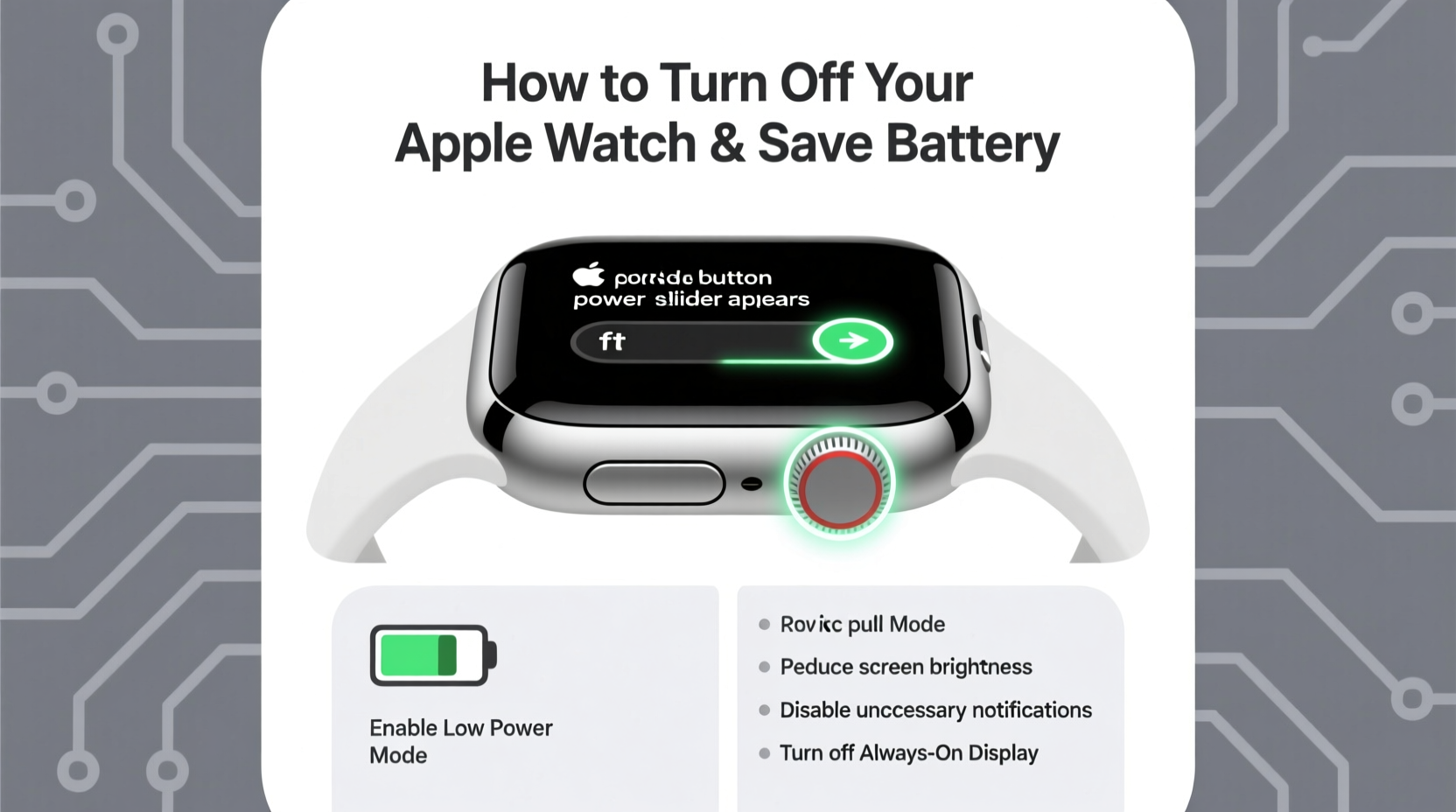
Unlike smartphones, smartwatches are built to stay powered on. However, certain situations call for a full shutdown:
- Traveling through security checkpoints: Some airlines and countries recommend disabling wearable electronics.
- Software updates gone wrong: A forced restart or shutdown may be necessary if the watch freezes.
- Extended periods of non-use: If you won’t wear your watch for several days, powering it down conserves battery cycles.
- Sending in for repair: Apple Support often requests devices be turned off before shipping.
- Battery calibration: Occasionally resetting the power cycle helps recalibrate battery readings.
“While Apple Watches are optimized for 18-hour daily use, intentional shutdowns during dormancy can reduce unnecessary charge cycling.” — Dr. Lena Park, Wearable Technology Analyst at GadgetHealth Labs
Step-by-Step: How to Properly Turn Off Your Apple Watch
Shutting down your Apple Watch isn’t as simple as pressing a button. Follow these steps carefully to avoid triggering a restart instead of a full power-down.
- Press and hold the side button until the Power Off slider appears.
- Drag the red power icon from left to right across the screen.
- Wait for the screen to go black. The Apple logo may briefly appear—this is normal during shutdown.
- Once the display is completely dark, wait 10–15 seconds to ensure all processes have halted.
To confirm the watch is fully off, gently tap the screen. If nothing responds—even after a minute—it’s powered down. Do not attempt to charge immediately unless planning to restart.
Battery Preservation Tips When Not in Use
Turning off your Apple Watch is only half the strategy. To truly protect battery health during storage, follow these best practices:
- Charge to 50% before shutdown: Lithium-ion batteries degrade fastest when stored at full or zero charge.
- Store in a cool, dry place: Avoid temperatures above 95°F (35°C) or below 32°F (0°C).
- Keep away from magnets and metal surfaces: These can interfere with internal sensors and charging coils.
- Power on every 3 weeks: Even when stored, lithium-ion batteries benefit from periodic reactivation.
| Situation | Recommended Action | Avoid |
|---|---|---|
| Going on vacation for 10 days | Turn off after charging to 50% | Leaving it at 100% or 0% charge |
| Experiencing app crashes | Restart using side button + Digital Crown | Repeatedly turning off/on without cooling period |
| Long-term storage (1+ month) | Power on monthly, check battery level | Storing in a drawer without climate control |
Common Misconceptions About Turning Off Your Apple Watch
Many users hesitate to shut down their watches due to myths about damage or data loss. Let’s clarify:
- Myth: Turning off the watch deletes health data.
Truth: All synced data remains secure in iCloud and iPhone backups. - Myth: Frequent shutdowns harm the operating system.
Truth: Occasional power cycles are safe; they don’t affect firmware integrity. - Myth: The watch charges faster when turned off.
Truth: Charging speed is nearly identical whether on or off—only background processes stop.
Real Example: Maximizing Battery Life During International Travel
Sophie, a digital nomad based in Lisbon, travels frequently between continents. On a recent 14-hour flight from Portugal to Japan, she powered down her Apple Watch Series 8 before boarding. She had charged it to 52% the night before and placed it in a padded case away from her phone’s magnetic wallet.
Upon arrival, she turned it back on. Despite being off for over 16 hours, GPS recalibrated quickly, and her heart rate data synced seamlessly with her iPhone. Over six months of similar usage, her battery capacity remained at 97%, compared to friends who left theirs running continuously during flights—many reported drops to 88% within the same timeframe.
Her routine? Shut down during long hauls, store at mid-charge, and avoid extreme cabin temperatures. Simple—but effective.
Expert-Backed Checklist for Safe Shutdown & Battery Care
Use this checklist whenever you plan to power down your Apple Watch:
- ✅ Charge the watch to approximately 50%
- ✅ Back up data via iCloud or paired iPhone
- ✅ Close open apps by double-pressing the side button and swiping up
- ✅ Press and hold side button until Power Off slider appears
- ✅ Swipe to power off and wait for screen to go dark
- ✅ Store in a temperature-controlled environment
- ✅ Reboot and recharge monthly if storing long-term
Frequently Asked Questions
Will turning off my Apple Watch delete my workout history?
No. As long as your Apple Watch is regularly synced with your iPhone, all fitness and health data is backed up to Apple Health. Even if the watch is off for weeks, historical records remain intact once reconnected.
How do I know if my Apple Watch is truly off?
The screen will be completely black. Tapping or raising your wrist will not wake it. If the Apple logo flashes briefly and disappears, it’s still shutting down. Wait at least 30 seconds after the screen goes dark to confirm it's fully powered off.
Is it better to restart or turn off the watch for troubleshooting?
For most glitches—like frozen apps or unresponsive touch—a restart (hold side button + Digital Crown) is sufficient. Reserve full shutdowns for deeper issues or when preparing for software restoration.
Conclusion: Smart Shutdowns for Long-Term Performance
Knowing how to properly turn off your Apple Watch isn’t just about convenience—it’s part of responsible device stewardship. By understanding when to power down, following correct procedures, and storing your watch wisely, you extend battery lifespan and maintain peak performance over time. Whether you're a frequent traveler, occasional user, or simply optimizing tech habits, these small actions compound into lasting benefits.




 浙公网安备
33010002000092号
浙公网安备
33010002000092号 浙B2-20120091-4
Comments
No comments yet. Why don't you start the discussion?