
Fountain pens offer a uniquely satisfying writing experience—smooth ink flow, elegant design, and a personal touch that ballpoints can’t replicate. But like any precision instrument, they require regular care. Without proper maintenance, ink buildup, clogs, and corrosion can degrade performance and shorten the pen’s life. For beginners, the process might seem daunting, but with a few consistent habits, keeping your fountain pen in excellent condition is both simple and rewarding.
Why Regular Maintenance Matters
Fountain pens use liquid ink, which dries over time and can leave residue inside the feed, nib, and ink reservoir. This residue can disrupt capillary action—the mechanism that delivers ink from the cartridge or converter to the paper. A neglected pen may start skipping, leaking, or failing to start at all.
Regular cleaning prevents these issues and protects internal components. It also ensures that when you switch ink colors, there’s no cross-contamination. Pens used daily benefit from light rinsing every few weeks; those used occasionally should be flushed before long-term storage.
“Fountain pens are heirloom tools. With minimal care, they can last decades—or even centuries.” — Daniel Park, Pen Restoration Specialist
Step-by-Step Guide to Cleaning Your Fountain Pen
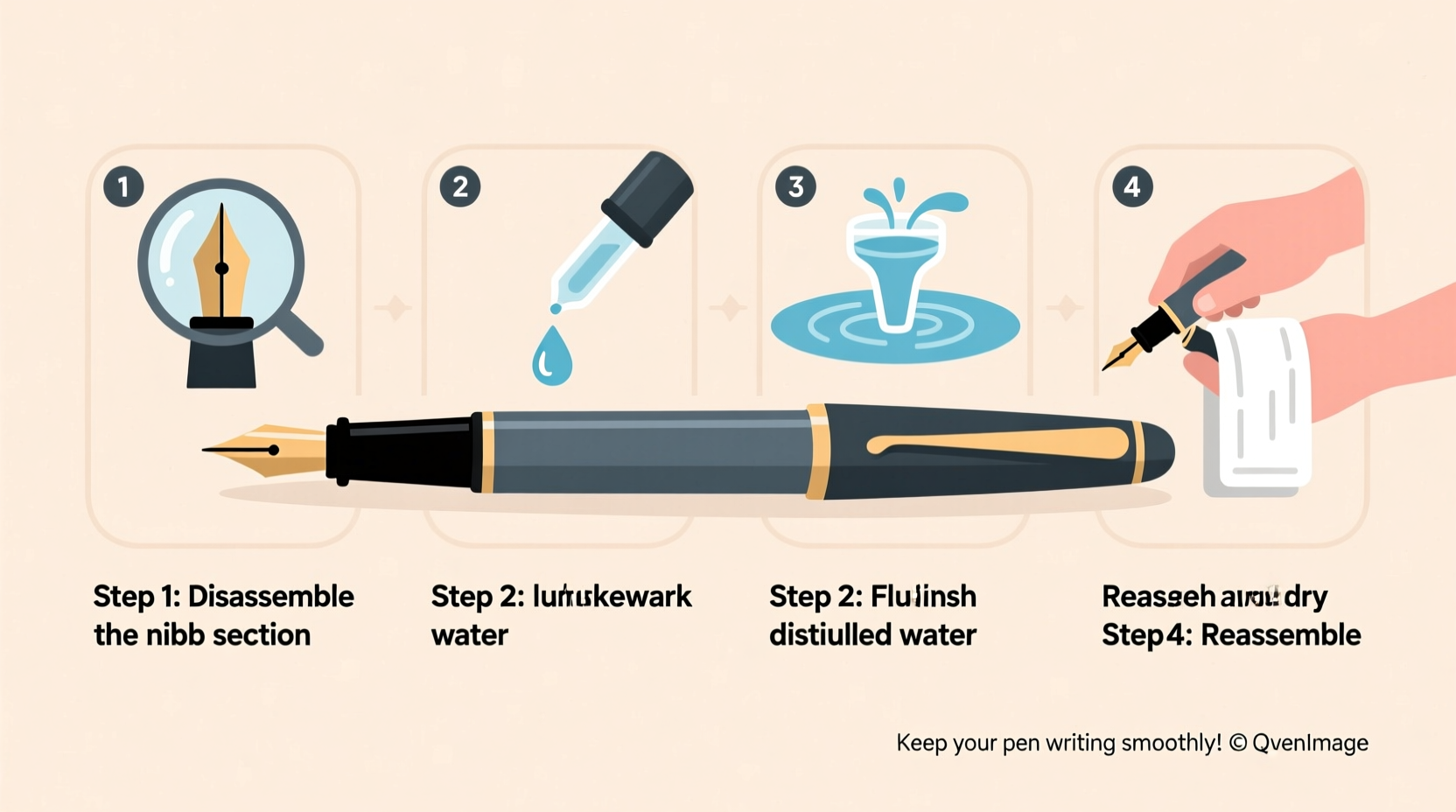
Cleaning a fountain pen doesn’t require special tools or expertise. The key is consistency and using the right technique. Follow this timeline-based routine to keep your pen flowing smoothly.
- Disassemble the pen: Remove the cap, grip section, and ink reservoir (cartridge, converter, or piston filler).
- Rinse the nib and feed: Hold the nib unit under lukewarm running water. Let water flow through the feed channels. Avoid hot water, which can damage adhesives.
- Clean the ink reservoir: If using a converter, flush it by filling and emptying several times under water. For piston fillers, cycle the mechanism while submerged.
- Soak if necessary: For dried ink or stubborn stains, soak the nib and feed in a glass of water for 4–6 hours. For severe clogs, use a 1:10 solution of ammonia and water—but only as a last resort.
- Dry thoroughly: Shake off excess water and place the parts on a lint-free cloth. Let them air-dry for 6–12 hours before reassembly.
- Reassemble and test: Reinsert the reservoir, refill with ink, and write a few lines to confirm smooth flow.
Weekly and Monthly Maintenance Checklist
Maintenance isn’t just about deep cleaning—it’s about forming habits. Use this checklist to stay on track without overwhelming your routine.
Weekly Actions
- Wipe the nib and grip with a dry, soft cloth after use.
- Cap the pen securely to prevent drying.
- Check for ink flow consistency during writing.
Monthly Actions
- Flush the pen with water (even if ink color hasn’t changed).
- Inspect the nib for misalignment or burrs.
- Verify that threads and caps screw on smoothly.
Every 3–6 Months
- Perform a full disassembly and deep clean.
- Lubricate piston mechanisms (if applicable) with silicone grease.
- Rotate between pens if you own multiple, to avoid prolonged stagnation.
Do’s and Don’ts of Fountain Pen Care
| Do’s | Don’ts |
|---|---|
| Use distilled or filtered water for cleaning to avoid mineral deposits. | Never mix different brands of ink without flushing first. |
| Store pens horizontally or with the cap up to prevent leakage. | Avoid shaking the pen to start ink flow—this can damage internal seals. |
| Label converters when testing new inks to avoid cross-contamination. | Don’t use alcohol-based cleaners—they can degrade plastic and rubber parts. |
| Keep pens away from extreme temperatures (e.g., car glove compartments). | Never leave ink sitting in the pen for more than 3–4 weeks without use. |
Real Example: Reviving a Dormant Pen
Sarah inherited her grandfather’s vintage Parker 51, unused for over 20 years. When she tried to write with it, nothing happened. Ink had hardened in the feed, and the piston was stuck. Following basic cleaning steps, she first flushed the nib and feed with warm water for two days, changing the water every few hours. Then, she applied a drop of silicone-free lubricant to the piston and gently worked it back and forth. After three days of patient soaking and cycling, the pen began to draw ink again. A final rinse and refill brought it back to life. Today, Sarah uses it weekly—proof that even long-neglected pens can be restored with patience and proper care.
Choosing the Right Ink and Water
Not all inks are created equal. Some are more prone to sediment buildup or corrosion. Beginner-friendly inks like Pelikan 4001, Diamine Everyday, and Noodler’s Heart of Darkness are known for being low-maintenance and easy to clean.
Similarly, tap water varies by region. Hard water with high mineral content can leave deposits inside your pen. Using distilled or deionized water for cleaning eliminates this risk. Bottled drinking water is acceptable, but distilled is ideal for frequent flushes.
FAQ: Common Fountain Pen Questions Answered
How often should I clean my fountain pen?
If used daily, rinse every 2–4 weeks. For occasional use, flush the pen before each refill, especially when switching ink colors. Pens stored long-term should be cleaned and dried completely before being put away.
Can I use vinegar or bleach to clean my pen?
No. Vinegar is acidic and can corrode metal parts; bleach is too harsh and will degrade plastics and rubber seals. Stick to water, mild dish soap (rarely), or specialized pen flush solutions.
My pen skips after cleaning—what went wrong?
This usually means residual water remains in the feed. Allow more drying time, or draw a small amount of ink into the converter and write on scrap paper until flow stabilizes. Also, ensure the nib is properly aligned with the feed.
Conclusion: Make Care a Natural Part of Your Routine
Maintaining a fountain pen doesn’t have to be complicated. A few minutes every few weeks can preserve performance, protect your investment, and deepen your connection to the writing process. Think of it like brushing your teeth—small, consistent actions yield long-term benefits. Whether you’re using a modern Lamy Safari or a vintage Sheaffer, treating your pen with care ensures it will deliver a flawless line for years to come.




 浙公网安备
33010002000092号
浙公网安备
33010002000092号 浙B2-20120091-4
Comments
No comments yet. Why don't you start the discussion?