
Starting an IT business from the ground up is both exciting and demanding. The technology sector moves fast, and while opportunities are abundant, success requires more than just technical skill. It demands strategic planning, market awareness, and operational discipline. Whether you're a developer, network specialist, or cybersecurity expert, turning your expertise into a sustainable business means navigating legal, financial, and customer acquisition challenges with clarity and purpose.
This guide walks through every critical phase of launching an IT business—from validating your idea to scaling operations—with actionable insights drawn from real-world experience and industry best practices.
Validate Your Business Idea and Identify Your Niche
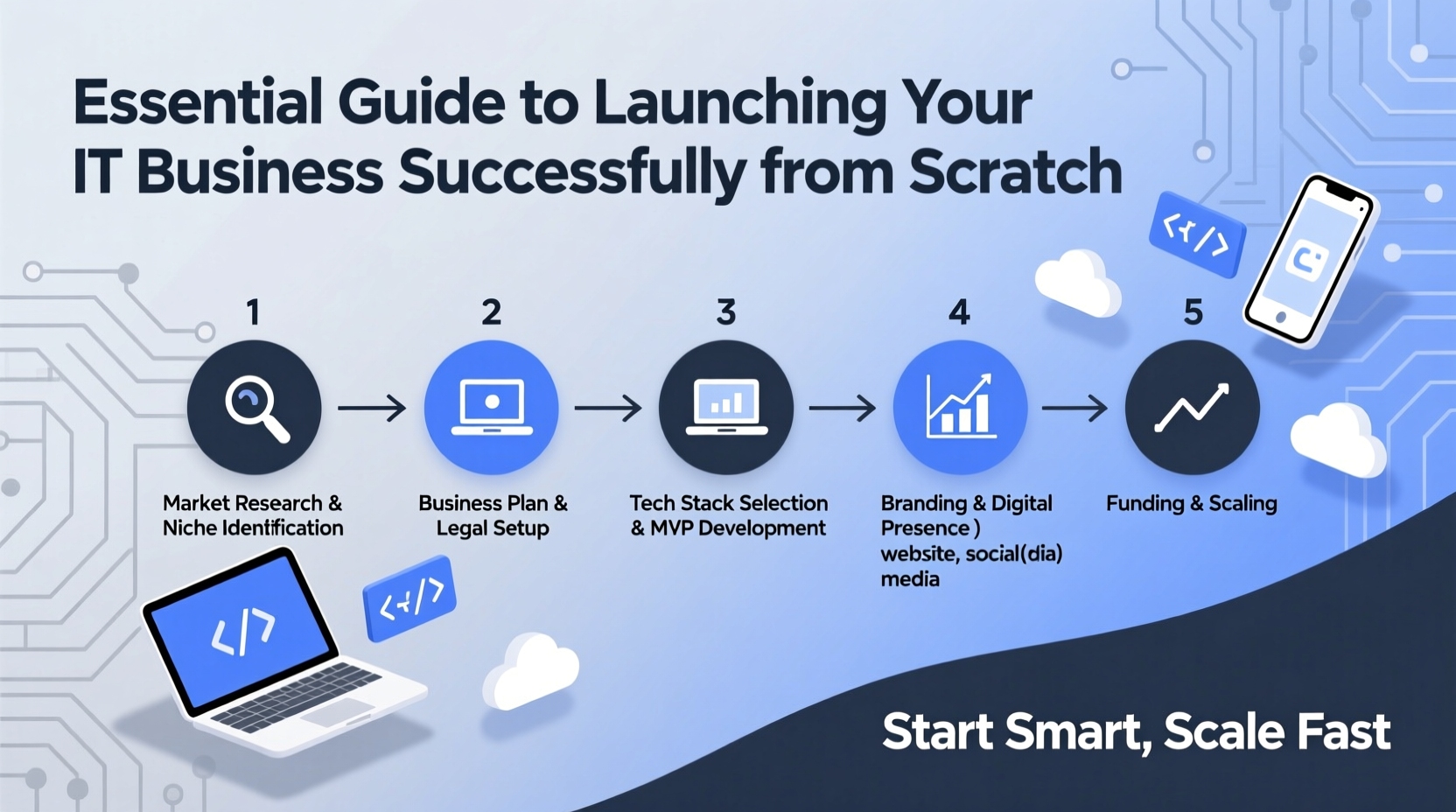
The first step in building a successful IT business isn’t writing code or buying servers—it’s understanding who you serve and what problem you solve. The IT landscape is broad, ranging from software development and cloud consulting to managed IT services and cybersecurity. Trying to do everything dilutes your value. Instead, focus on a specific niche where demand is high and competition isn't oversaturated.
Ask yourself: Who needs my service? What pain points do they face? Are businesses in my region underserved in areas like data backup, system integration, or digital transformation?
For example, small law firms often lack in-house IT support but handle sensitive client data. Offering secure, compliant IT management tailored to legal practices creates a focused, defensible position in the market.
Create a Lean Business Plan
A lean business plan keeps you agile while ensuring key elements are addressed. Unlike lengthy corporate documents, this version focuses on essentials: value proposition, target market, revenue model, cost structure, and growth milestones.
| Component | Description |
|---|---|
| Value Proposition | What unique benefit do you offer? (e.g., 24/7 response SLA for emergency outages) |
| Target Market | Define clearly: local dental clinics, e-commerce startups, nonprofit organizations, etc. |
| Revenue Model | Monthly retainers, project-based fees, hourly support, or subscription SaaS offerings? |
| Startup Costs | Domain registration, laptops, software licenses, liability insurance, legal fees. |
| Growth Milestones | First 5 clients, $5k MRR, hire first employee, expand service area. |
Your plan doesn’t need to be perfect—just clear enough to guide decisions and attract early partners or investors if needed.
Handle Legal and Administrative Setup
Operating without proper legal structure exposes you to personal liability and tax complications. Follow these steps to establish legitimacy and protect your business:
- Choose a business structure: Most solo IT consultants start as sole proprietors, but forming an LLC offers liability protection and credibility.
- Register your business name: Check state availability and secure a DBA (“Doing Business As”) if required.
- Obtain an EIN: Apply for an Employer Identification Number via the IRS website—even if you’re not hiring yet.
- Get necessary licenses: Some states require tech service providers to hold specific permits. <5> Purchase insurance: General liability and professional liability (errors & omissions) coverage are essential.
- Draft client contracts: Include scope of work, payment terms, data handling policies, and termination clauses.
“Many tech founders assume their coding skills are enough. But without contracts and liability protection, one lawsuit can erase months of progress.” — Dana Patel, Technology Law Advisor
Build Your Service Delivery System
Consistency in delivery builds trust and drives referrals. Before acquiring clients, design repeatable processes for onboarding, troubleshooting, reporting, and billing.
- Use project management tools like Trello or ClickUp to track tasks.
- Standardize documentation using templates for network diagrams, asset inventories, and incident reports.
- Set up remote monitoring and management (RMM) software if offering managed services.
- Integrate time-tracking and invoicing platforms such as Harvest or FreshBooks.
Automation reduces errors and frees time for higher-value work. For instance, configure automated alerts for server downtime or failed backups so issues are resolved proactively.
Mini Case Study: From Freelancer to Managed Services Firm
Jamal, a former systems administrator, started by helping friends fix computers. He noticed recurring issues—data loss, slow networks, ransomware threats—and realized small businesses lacked ongoing support. He launched “ClearNet IT,” offering flat-rate monthly maintenance for local retailers.
By standardizing service packages and using RMM tools, he scaled to 18 clients within nine months. His key insight: predictable pricing and proactive communication made clients feel secure. One coffee shop owner referred four other businesses after Jamal restored their system within two hours of a crash.
Marketing and Client Acquisition Strategy
Even excellent services go unnoticed without visibility. Focus on targeted, low-cost marketing that positions you as a trusted advisor.
Effective tactics include:
- Local SEO: Optimize Google Business Profile, use location-based keywords (“IT support in Austin”), and collect reviews.
- Content marketing: Write blog posts addressing common problems (“How to Prevent Phishing Attacks in Small Teams”).
- Networking: Attend chamber of commerce events or join BNI chapters to build relationships.
- Referral incentives: Reward existing clients for successful introductions.
Don’t underestimate word-of-mouth in the IT space. Reliable service generates powerful endorsements, especially when downtime can cost clients thousands per hour.
Step-by-Step Launch Timeline (First 90 Days)
- Week 1–2: Finalize niche, validate demand, choose business name.
- Week 3–4: Register business, open bank account, set up accounting software.
- Month 2: Build basic website, create service packages, draft contracts.
- Month 3: Start outreach—offer free audits, publish first blog post, attend networking events.
- Day 90: Secure first paying client, refine processes based on feedback.
Essential Startup Checklist
Use this checklist to ensure nothing critical is missed during launch:
- ✅ Define core service offering and ideal client profile
- ✅ Choose and register business entity (LLC recommended)
- ✅ Obtain EIN and set up business banking
- ✅ Purchase liability and cyber insurance
- ✅ Develop client agreement and privacy policy
- ✅ Set up professional email and domain
- ✅ Create standardized service packages with pricing
- ✅ Build a simple website with contact form
- ✅ Implement tools for project tracking, invoicing, and communication
- ✅ Launch initial marketing outreach (free audit, local listing, social profile)
FAQ
Do I need prior business experience to start an IT company?
No, but you must be willing to learn fundamentals of finance, marketing, and customer service. Many successful IT entrepreneurs started with only technical knowledge and grew their business acumen over time.
How much capital do I need to get started?
You can launch a consulting or remote support business for under $2,000—covering legal fees, basic equipment, website, and insurance. If offering on-site services, factor in vehicle and travel costs.
Should I hire employees early or stay solo?
Stay lean initially. Use subcontractors or freelancers for overflow work. Hire full-time only when consistent demand justifies the cost, typically after reaching $8k–$10k in monthly recurring revenue.
Conclusion
Launching an IT business from scratch is a journey of calculated risks and continuous learning. Success doesn’t come from having the most advanced tools, but from solving real problems reliably and building trust one client at a time. With a clear niche, solid systems, and persistent outreach, your technical expertise can evolve into a thriving enterprise.




 浙公网安备
33010002000092号
浙公网安备
33010002000092号 浙B2-20120091-4
Comments
No comments yet. Why don't you start the discussion?