
Starting a company is more than just an idea—it’s a commitment to solving problems, creating value, and navigating uncertainty with purpose. While inspiration sparks the journey, execution determines its success. Building a business from scratch requires clarity, resilience, and a structured approach. This guide delivers actionable steps, real-world insights, and proven frameworks to help you launch with confidence and scale with intention.
Define Your Purpose and Validate the Idea
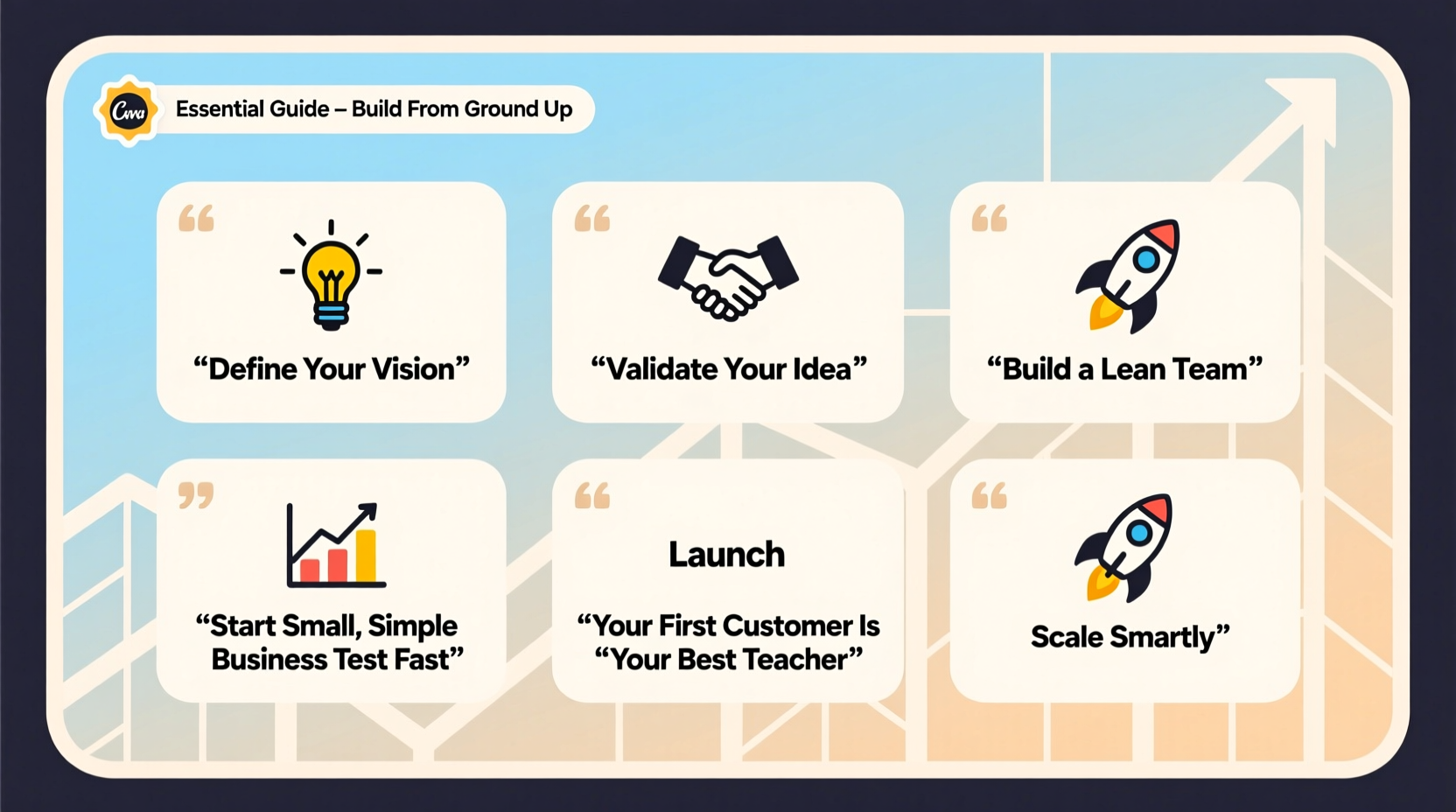
Every successful company begins with a clear “why.” Before investing time or money, define what problem you’re solving and for whom. A strong foundation starts with market validation—ensuring there’s actual demand for your product or service.
Begin by conducting interviews with potential customers. Ask open-ended questions about their pain points, current solutions, and willingness to pay. Avoid assumptions. Instead, gather data. Tools like Google Trends, industry reports, and competitor analysis can reveal gaps in the market.
Validation isn’t a one-time event. It’s an ongoing process. Early feedback shapes your offering and reduces the risk of building something nobody wants.
Create a Lean Business Plan
A traditional 50-page business plan is rarely necessary for early-stage ventures. Instead, adopt a lean model that focuses on agility and adaptability. Your plan should answer six core questions:
- What problem are you solving?
- Who is your target customer?
- What is your unique value proposition?
- How will you reach customers?
- What are your revenue streams?
- What resources do you need to start?
This framework keeps your strategy focused without overcomplicating early decisions. As your business evolves, so should your plan—treat it as a living document.
Do’s and Don’ts When Planning Your Business
| Do’s | Don’ts |
|---|---|
| Start small and iterate based on feedback | Wait for perfection before launching |
| Focus on cash flow from day one | Assume revenue will cover expenses immediately |
| Identify key metrics early (e.g., customer acquisition cost) | Ignore financial tracking until later stages |
| Build partnerships to extend capabilities | Try to do everything alone |
Choose the Right Legal Structure and Register Your Business
Legal setup is not optional—it protects your personal assets and establishes credibility. The most common structures for startups are:
- Sole Proprietorship: Simple but offers no liability protection.
- LLC (Limited Liability Company): Combines flexibility with asset protection. Ideal for most small businesses.
- S-Corporation: Suitable for businesses planning to scale and issue stock.
Consult a local attorney or accountant to determine the best fit based on tax implications, growth plans, and industry regulations. Once decided, register your business name, obtain an EIN (Employer Identification Number), and secure any required licenses or permits.
Step-by-Step Launch Timeline (First 90 Days)
Clarity comes from action. Follow this realistic timeline to organize your first three months:
- Week 1–2: Finalize your business idea, conduct customer interviews, and define your MVP.
- Week 3–4: Choose a legal structure, register your business, and open a dedicated bank account.
- Month 2: Build your brand identity (name, logo, website), set up basic accounting, and begin outreach.
- Month 3: Launch your MVP, collect feedback, refine your offering, and establish initial sales channels.
This phased approach prevents overwhelm and ensures steady progress. Focus on momentum, not perfection.
Real Example: From Side Hustle to Full-Time Venture
Jamie started a meal prep service after noticing coworkers struggling to eat healthy during busy weeks. Instead of renting a kitchen and buying equipment upfront, she began by cooking ten meals per week from her home kitchen, delivering them locally, and collecting payments via mobile apps.
She used Instagram to share behind-the-scenes content and gathered testimonials from early customers. Within two months, demand grew enough to justify leasing a shared commercial kitchen space. By month six, she had hired two part-time assistants and secured recurring subscriptions from local offices.
Her secret? She didn’t wait for funding or a perfect website. She validated demand through direct interaction and scaled only when revenue supported expansion.
“Your first version doesn’t have to be scalable. It just has to work.” — Paul Graham, Y Combinator Co-Founder
Essential Startup Checklist
Use this checklist to stay on track during your first 60 days:
- ☑ Define your target customer and core value proposition
- ☑ Conduct at least 20 customer discovery interviews
- ☑ Choose and register your business structure
- ☑ Open a separate business bank account
- ☑ Develop a simple MVP or pilot offering
- ☑ Set up basic bookkeeping (use tools like QuickBooks or Wave)
- ☑ Create a professional email address and domain
- ☑ Launch initial marketing (social media, referrals, local outreach)
- ☑ Track key metrics: conversion rate, customer acquisition cost, lifetime value
- ☑ Schedule weekly reviews to assess progress and adjust
Frequently Asked Questions
How much money do I need to start a business?
It depends on the type of business. Service-based models (consulting, freelancing) can start with under $1,000. Product-based or retail ventures may require more for inventory, equipment, or licensing. Aim to launch with the smallest viable investment and reinvest profits to grow.
Can I start a company while working full-time?
Yes—and many founders do. Use evenings and weekends to test ideas, build an audience, and generate early revenue. Transition to full-time only when your business consistently covers your living expenses.
What if my idea fails?
Most startups pivot, and many initial ideas evolve significantly. Failure is not the end—it’s feedback. The key is to fail fast, learn quickly, and apply those lessons. Many successful entrepreneurs launched multiple ventures before finding the right fit.
Stay Focused and Keep Moving Forward
Building a company is not a sprint or even a marathon—it’s a series of sprints linked by persistence. Success doesn’t come from having all the answers but from asking the right questions, adapting swiftly, and staying committed to serving your customers.
You don’t need permission to begin. You don’t need perfect conditions. You need a problem worth solving, the courage to try, and the discipline to keep going when results aren’t immediate.




 浙公网安备
33010002000092号
浙公网安备
33010002000092号 浙B2-20120091-4
Comments
No comments yet. Why don't you start the discussion?