
Starting a building company is more than just laying bricks or pouring concrete—it’s about constructing a solid business foundation that can withstand market shifts, competition, and operational challenges. With the global construction industry projected to grow steadily over the next decade, now is an opportune time to enter the field. However, success doesn’t come from ambition alone. It requires strategic planning, regulatory compliance, financial discipline, and a clear vision for service excellence.
1. Define Your Niche and Business Model
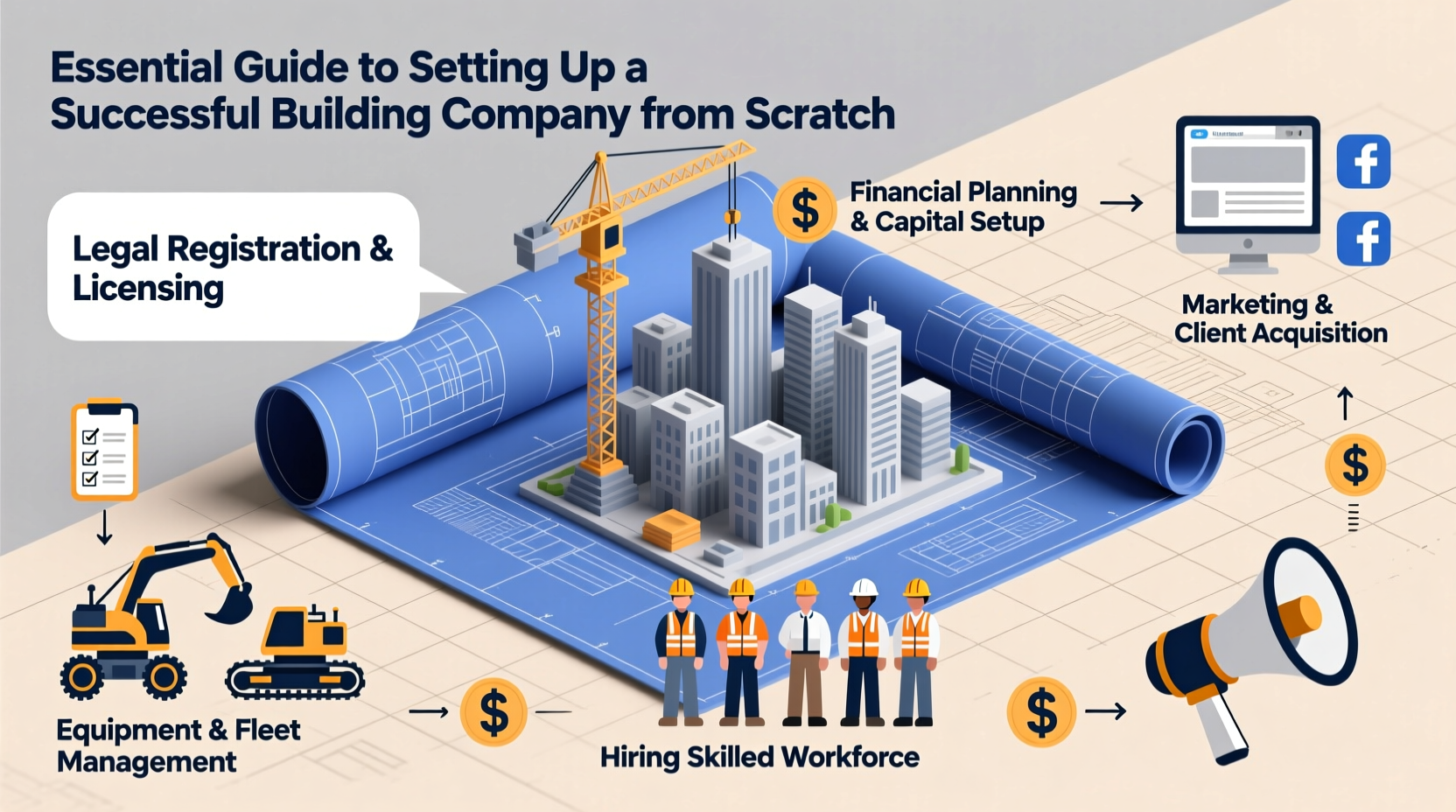
The construction industry is broad, ranging from residential renovations to commercial developments and infrastructure projects. Choosing a specific niche helps you focus your resources, build expertise, and differentiate yourself in a crowded market.
Consider whether you’ll specialize in:
- Residential home building
- Renovations and remodeling
- Commercial construction
- Green or sustainable building
- Project management only (design-build or turnkey services)
Your choice will influence everything from equipment needs to staffing and marketing strategy. For example, green builders need knowledge of energy codes and eco-certifications like LEED, while renovation specialists must master local permit processes and client communication under disruptive conditions.
2. Legal and Regulatory Setup
Before lifting a hammer, ensure your business is legally sound. This phase protects you from fines, lawsuits, and operational delays.
- Choose a business structure: Most contractors start as LLCs (Limited Liability Companies) for liability protection and tax flexibility. Others opt for S-Corps as they scale.
- Register your business: File with your state’s Secretary of State and obtain an EIN from the IRS for tax purposes.
- Get licensed: Licensing requirements vary by state and project type. In California, for instance, a CSLB license is mandatory for jobs over $500. In Texas, licensing is not state-mandated but often required by municipalities.
- Secure permits and insurance: General liability, workers’ compensation, and builder’s risk insurance are non-negotiable. Bonding may also be required for public or large private contracts.
Mistakes here can halt operations before they begin. One contractor in Colorado lost a $300,000 contract because he failed to renew his license on time—despite having completed dozens of jobs successfully.
Licensing Requirements by Project Type
| Project Type | Typical License Needed | Bonding Required? |
|---|---|---|
| Residential New Build | General Contractor (B License) | Yes, for projects >$25k |
| Kitchen Remodel | Remodeling or Specialty (C-27) | Sometimes |
| Commercial Office | General Building + Electrical/Mechanical subs | Yes |
| Roof Replacement | Roofing (C-39) | Frequent |
3. Build Your Team and Supply Chain
No builder works alone. Even solo entrepreneurs rely on subcontractors, suppliers, and administrative support. Assembling a reliable network early ensures consistent quality and on-time delivery.
Start by identifying key roles:
- Project managers
- Licensed electricians, plumbers, HVAC techs
- Estimators and drafters
- Accountant or bookkeeper
Develop relationships with local material suppliers. Negotiate volume discounts or net-30 payment terms to improve cash flow. Always have backup vendors in case of shortages—a lumber delay shouldn’t stall your entire schedule.
“Your reputation is only as strong as your weakest subcontractor.” — Marcus Tran, Founder of Summit Builders Group
Mini Case Study: From Side Hustle to Six-Figure Company
Derek Lopez started as a weekend handyman in Austin, Texas, helping friends with bathroom remodels. After earning his contractor’s license, he formalized operations, hired two full-time carpenters, and partnered with a local plumbing outfit. By focusing exclusively on mid-range bathroom renovations, Derek built a reputation for clean finishes and transparent pricing. Within three years, his company grew to $850,000 in annual revenue, serving over 60 clients per year. His secret? Specialization, consistency, and using client testimonials in targeted Facebook ads.
4. Financial Planning and Funding Options
Construction is capital-intensive. You’ll need funds for tools, vehicles, insurance, payroll, and working capital to cover gaps between invoicing and payment.
Common funding routes include:
- Personal savings: Most common for startups; gives full control but high personal risk.
- SBA loans: The SBA 7(a) loan offers up to $5 million with favorable terms for qualifying businesses.
- Equipment financing: Lenders finance trucks, excavators, or scaffolding directly.
- Lines of credit: Useful for managing cash flow during long projects.
Create a detailed financial model including startup costs, monthly overhead, break-even analysis, and profit margins. Aim for a gross margin of at least 25% after direct labor and materials.
Startup Cost Checklist
- Business registration and licensing fees
- Insurance premiums (annual)
- Initial tool and equipment purchase
- Vehicle (truck or van)
- Office setup (laptop, phone, software)
- Marketing budget (website, branding, ads)
- Working capital reserve (3–6 months of expenses)
5. Marketing, Client Acquisition, and Reputation Building
A technically skilled builder who can’t find work won’t survive. Effective marketing bridges that gap.
Start with a professional online presence:
- A responsive website showcasing past projects, testimonials, and contact info
- Google Business Profile listing for local SEO
- Active social media profiles (Instagram and Houzz work well for visual trades)
Then focus on trust-building:
- Offer free estimates with clear scope and timelines
- Provide references and photo documentation
- Request reviews on Google and Yelp after project completion
Referrals remain the top source of leads in construction. Deliver exceptional work, communicate proactively, and follow up post-completion. A simple “How’s everything holding up?” call six months later can lead to repeat business or referrals.
“Over 70% of our new jobs come from word-of-mouth. We stopped advertising after year two because we were fully booked.” — Lisa Nguyen, Owner, Heritage Homebuilders, Portland OR
FAQ
How long does it take to start a building company?
With proper preparation, you can launch in 4–8 weeks. This includes registering the business, obtaining licenses, securing insurance, and setting up basic operations. Full readiness—hiring staff and landing first job—may take 3–6 months.
Do I need experience to start a building company?
Hands-on trade experience is highly recommended. While business skills can be learned, understanding construction methods, codes, and timelines is critical to estimating accurately and managing jobs effectively. If you lack field experience, partner with a seasoned foreman or project manager.
Can I run a building company part-time?
Yes, many start this way. However, legal and insurance requirements still apply. Be transparent with clients about availability, and avoid overcommitting. Scaling beyond a few side projects usually requires going full-time.
Conclusion
Building a successful construction company from scratch is challenging—but entirely achievable with the right approach. It begins with clarity: knowing your niche, complying with regulations, and structuring your finances wisely. Then comes execution: assembling a trustworthy team, delivering quality work, and growing your reputation one satisfied client at a time.
The industry rewards reliability, integrity, and consistency. Whether you’re framing houses or restoring historic buildings, your company’s legacy starts today. Take the first step—register your name, draft your business plan, and make your first call to a supplier or potential client.




 浙公网安备
33010002000092号
浙公网安备
33010002000092号 浙B2-20120091-4
Comments
No comments yet. Why don't you start the discussion?