
Adding moisture to dry indoor air or infusing a room with calming scents are common goals in modern home wellness. Two popular devices—essential oil diffusers and humidifiers—are often used for these purposes. While they may appear similar, their functions, mechanisms, and safety profiles differ significantly. A frequent question arises: Can you safely use essential oils in a humidifier? The answer isn't a simple yes or no—it depends on the type of humidifier, the oils used, and how the device is maintained.
Mistakes in combining essential oils with the wrong equipment can lead to respiratory irritation, device damage, or even long-term health risks. Understanding the distinctions between diffusers and humidifiers—and knowing when and how to use essential oils—is crucial for both effectiveness and safety.
How Essential Oil Diffusers Work
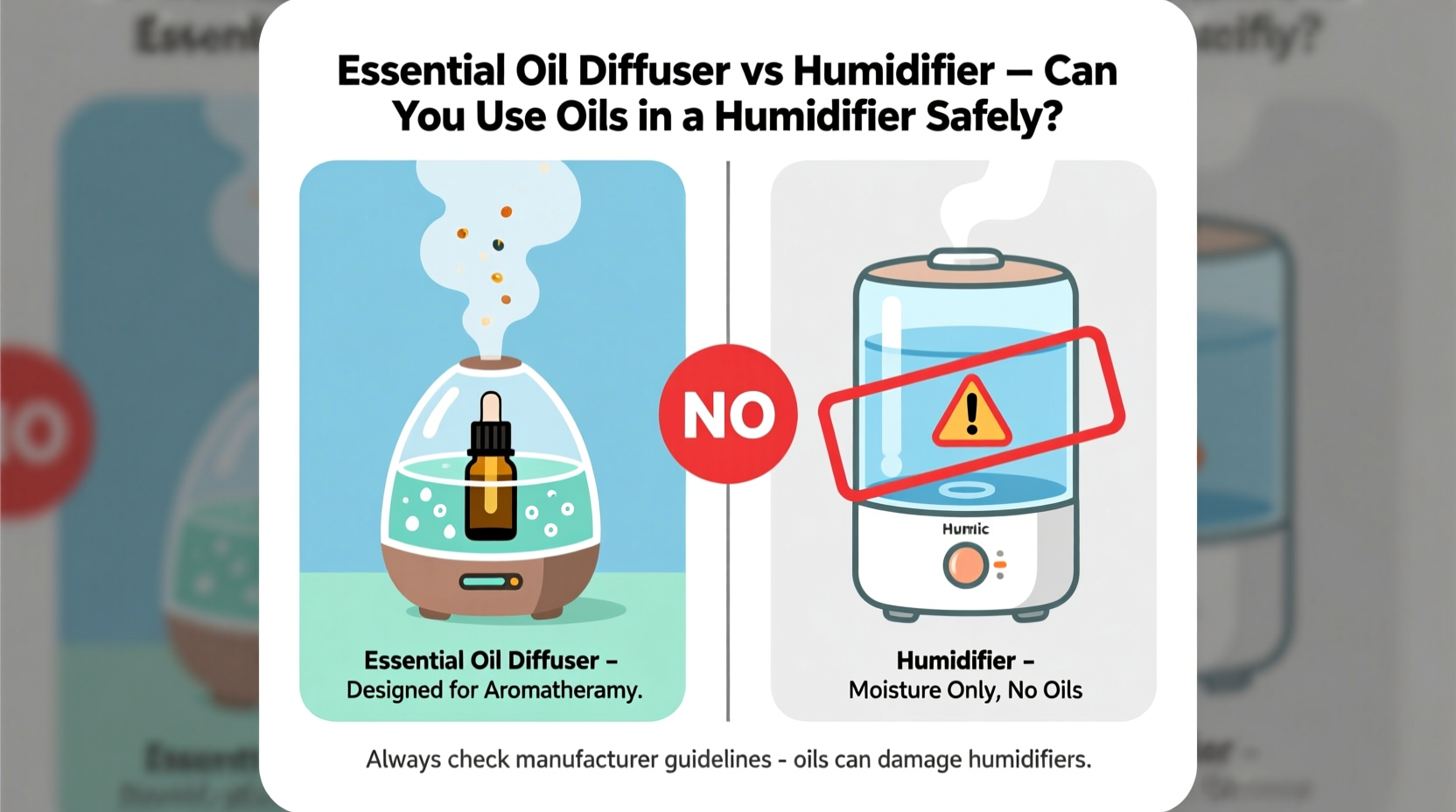
An essential oil diffuser is specifically designed to disperse aromatic plant extracts into the air. Most operate using one of four technologies: ultrasonic, nebulizing, heat-based, or evaporative.
- Ultrasonic diffusers use high-frequency vibrations to break essential oils into micro-particles, creating a fine mist that carries scent throughout a room. These are the most common and typically combine water with a few drops of oil.
- Nebulizing diffusers atomize oils without water or heat, producing a more concentrated aroma. Ideal for therapeutic use but consume oils faster.
- Heat diffusers gently warm oils to release their fragrance. While quiet, heat can alter the chemical composition of some delicate oils.
- Evaporative diffusers use a fan to blow air through an absorbent pad soaked in oil, releasing scent gradually.
Diffusers are built with materials resistant to essential oils’ potency. Their internal components—especially in ultrasonic models—are engineered to handle small amounts of oil mixed with water without corrosion or clogging.
How Humidifiers Function and Their Types
Humidifiers are designed to increase humidity levels in dry environments, helping alleviate dry skin, irritated sinuses, and respiratory discomfort. Unlike diffusers, their primary purpose is not scent dispersion but moisture delivery.
The main types include:
- Cool mist humidifiers, which use either ultrasonic vibration or a rotating wick filter to produce a fine, cool vapor.
- Warm mist humidifiers, which boil water to create steam, then release it as cooled vapor. These naturally reduce microbial growth due to boiling.
- Evaporative humidifiers, which rely on a fan to blow air through a wet wick, increasing humidity through natural evaporation.
While effective at moisturizing air, most humidifiers are constructed with plastics and metals not meant to withstand prolonged exposure to essential oils. Over time, oils can degrade seals, corrode sensors, or leave behind sticky residues that harbor mold and bacteria.
“Humidifiers are medical-grade devices when used properly, but introducing foreign substances like essential oils can compromise both function and hygiene.” — Dr. Lena Patel, Environmental Health Specialist
Can You Use Essential Oils in a Humidifier? Safety Considerations
The short answer: Not all humidifiers are safe for essential oils—even if some users do it regularly.
Standard humidifiers lack oil-resistant components. When essential oils are added to the water tank:
- Oils can coat internal parts like sensors, fans, and nozzles, reducing efficiency.
- Residue buildup becomes a breeding ground for mold and bacteria, especially in cool mist models that don’t heat water.
- Volatile organic compounds (VOCs) released from certain oils may irritate lungs, particularly in individuals with asthma or allergies.
- Manufacturer warranties are often voided by oil use, leaving users responsible for repairs or replacements.
However, some humidifiers are explicitly labeled as “aromatherapy” or “oil-compatible.” These models include oil trays or designated compartments that keep oils separate from water and mechanical parts. In such cases, essential oils can be used safely—but only as directed.
Real-World Example: A Cautionary Scenario
Sarah, a teacher in Colorado, began adding lavender oil to her bedroom humidifier during winter to help with sleep. After two months, she noticed a musty odor and persistent coughing at night. Upon inspection, the unit’s base was coated in oily film, and the wick filter was discolored and stiff. A technician confirmed that the oil had degraded the plastic housing and encouraged microbial growth. Sarah switched to an ultrasonic diffuser for aromatherapy and now uses a dedicated humidifier for moisture—keeping the two functions separate.
Essential Oil Diffuser vs Humidifier: Key Differences
| Feature | Essential Oil Diffuser | Humidifier |
|---|---|---|
| Purpose | Disperse essential oils for aroma and mood enhancement | Increase air humidity to relieve dryness |
| Water Capacity | Small (100–500 ml) | Larger (1–6 liters) |
| Oil Compatibility | Yes, designed for oils | Rarely; only if labeled oil-safe |
| Mist Output | Low to moderate, intermittent | High, continuous for hours |
| Maintenance Frequency | Daily rinse, weekly deep clean | Every 1–3 days, depending on use |
| Health Focus | Aromatherapy, relaxation | Respiratory comfort, skin hydration |
| Material Resistance | Oils and water-resistant plastics/ceramics | Water-resistant only; oils may cause degradation |
This comparison highlights why substituting one device for the other—especially by adding oils to a standard humidifier—can lead to suboptimal results or hazards.
Step-by-Step Guide: Using Essential Oils Safely at Home
If your goal is both increased humidity and aromatic benefits, follow this safe approach:
- Assess your needs: Determine whether you primarily need moisture, scent, or both. This guides your device selection.
- Check device labels: Only use essential oils in a humidifier if it has a dedicated oil compartment or is explicitly labeled as oil-safe.
- Use a diffuser for scent: Choose an ultrasonic or nebulizing diffuser for consistent aroma diffusion. Add 3–6 drops of 100% pure essential oil to water.
- Run a humidifier separately: Place it in the same room but operate independently to maintain optimal humidity (ideal range: 40–60%).
- Monitor air quality: Use a hygrometer to track humidity and ventilate rooms regularly to prevent VOC buildup.
- Clean both devices weekly: Use white vinegar and water to descale and disinfect. Rinse thoroughly to avoid chemical residue.
- Store oils properly: Keep in dark glass bottles, away from sunlight and children, to preserve potency and prevent accidents.
Common Myths and Misconceptions
Several myths persist about using oils in humidifiers:
- Myth: “All humidifiers can handle a few drops of oil.”
Truth: Most cannot. Even small amounts can damage sensors and void warranties. - Myth: “Essential oils purify the air when dispersed via humidifier.”
Truth: While some oils have antimicrobial properties in lab settings, airborne dispersion in homes does not achieve clinically significant purification. - Myth: “If it smells nice, it’s safe.”
Truth: Pleasant scents don’t guarantee safety. Oils like eucalyptus or tea tree can trigger asthma or allergic reactions in sensitive individuals.
Checklist: Safe Aromatherapy and Humidity Management
Before using essential oils or adjusting humidity levels, verify the following:
- ☑ I have read the user manual for both my diffuser and humidifier.
- ☑ My humidifier is labeled as oil-compatible—or I am using a separate diffuser.
- ☑ I am using 100% pure essential oils, not fragrance oils or blends with additives.
- ☑ Both devices are cleaned at least once a week with vinegar or manufacturer-recommended solution.
- ☑ Rooms are well-ventilated, especially when using strong oils like peppermint or citrus.
- ☑ Children, pets, and individuals with respiratory conditions are not exposed to concentrated oils.
- ☑ I am monitoring humidity levels to avoid over-humidification (above 60% can promote mold).
Frequently Asked Questions
Can I add eucalyptus oil to my humidifier for cold relief?
You should only do so if your humidifier has an essential oil tray or is specifically rated for oils. Adding eucalyptus directly to the water tank of a standard humidifier can damage internal components and release irritating particles. For safer inhalation therapy, use a dedicated diffuser with 2–3 drops of oil and ensure good ventilation.
What happens if I accidentally put essential oil in a regular humidifier?
Immediate effects may include oily mist, strange odors, or reduced mist output. Over time, residue can clog the unit, promote bacterial growth, and degrade plastic parts. If this occurs, stop use immediately, disassemble and clean all parts with white vinegar, and inspect for damage before reuse. Consider replacing the wick filter or unit if performance declines.
Is there a humidifier that safely combines moisture and scent?
Yes—look for models labeled “aromatherapy humidifier” or those with a separate essential oil compartment. Brands like Levoit, Honeywell, and URPOWER offer hybrid units designed to diffuse scent without contaminating water pathways. Always confirm compatibility with essential oils in the product specifications.
Conclusion: Prioritize Safety and Functionality
While the desire to combine moisture and fragrance is understandable, conflating the roles of essential oil diffusers and humidifiers can compromise both health and equipment longevity. A diffuser excels at delivering therapeutic scents; a humidifier specializes in maintaining healthy humidity. Using them as intended ensures optimal performance and safety.
For those seeking both benefits, the smart solution is not modification—but multiplication. Run a humidifier to combat dry air and a diffuser to enjoy aromatherapy, keeping the systems separate and properly maintained. This dual approach respects the engineering of each device and protects your indoor environment.




 浙公网安备
33010002000092号
浙公网安备
33010002000092号 浙B2-20120091-4
Comments
No comments yet. Why don't you start the discussion?