
When it comes to filling your home with natural fragrance, two popular options stand out: essential oils and reed diffusers. Both are celebrated for their ability to create a calming, inviting atmosphere without synthetic chemicals. But one common question arises—do essential oils actually smell stronger than reed diffusers? The answer isn’t as simple as “yes” or “no.” It depends on the method of diffusion, concentration, room size, and personal sensitivity to scent. Let’s explore the science, mechanics, and real-world performance behind both systems to determine when and why one might outperform the other in terms of scent intensity.
How Scent Is Released: The Science Behind Diffusion
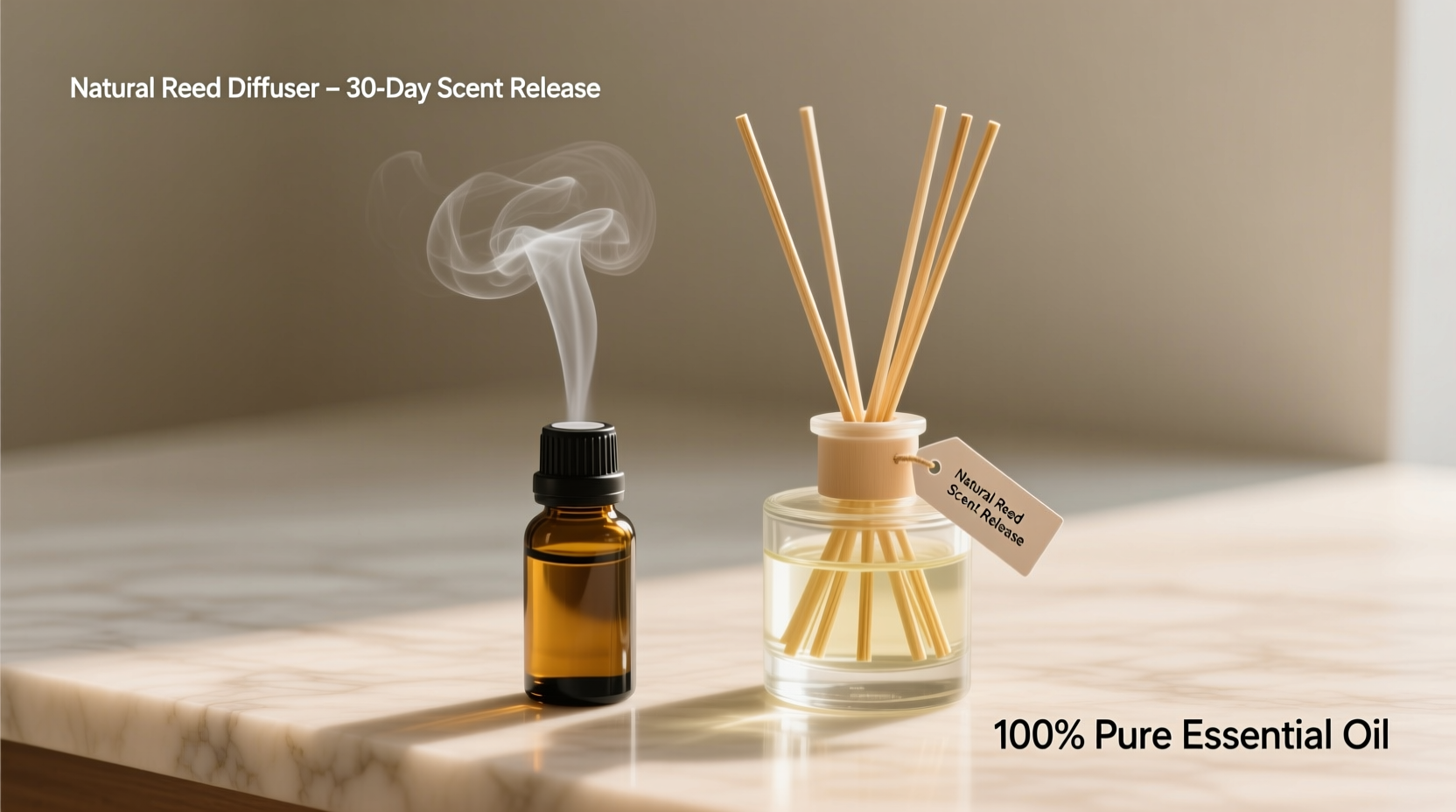
The strength of a fragrance depends not just on its chemical composition but also on how it is dispersed into the air. Essential oils and reed diffusers use fundamentally different mechanisms, which directly affect how strong the scent feels at any given moment.
Essential Oils (via Diffusers): When used in an ultrasonic or nebulizing diffuser, essential oils are broken down into microscopic particles and suspended in a fine mist. This allows the aromatic molecules to disperse rapidly throughout a room, creating an immediate and often potent olfactory impact. Because the oil is actively atomized, the scent can be perceived as strong within minutes.
Reed Diffusers: These rely on passive diffusion. Aromatic liquid—usually a blend of essential oils and carrier solvent—is absorbed by porous reeds and slowly evaporates from the exposed ends. This process is gentle and consistent, but inherently slower. The scent builds gradually over hours or days, offering subtle background fragrance rather than an intense burst.
“Passive diffusion spreads aroma more evenly over time, while active diffusion creates a sensory ‘peak’ that users often interpret as stronger.” — Dr. Lena Patel, Aromatherapy Researcher, Institute of Holistic Wellness
Scent Strength Comparison: Real-World Performance
To understand which system produces a stronger smell, consider three key factors: initial impact, coverage area, and duration.
| Factor | Essential Oil Diffuser | Reed Diffuser |
|---|---|---|
| Initial Scent Intensity | High – noticeable within minutes | Low to moderate – takes several hours to become perceptible |
| Room Coverage | Broad – effective in medium to large rooms | Limited – best for small to medium spaces |
| Longevity | Short bursts (30–60 min per session) | Continuous for 4–12 weeks |
| Control Over Strength | Adjustable (timer, mist frequency) | Fixed (unless adding/removing reeds) |
| Aroma Consistency | Can fade quickly after shutdown | Steady and predictable |
In direct comparison, essential oil diffusers deliver a stronger *immediate* scent due to active dispersion. However, reed diffusers provide a longer-lasting, low-level fragrance that avoids overwhelming the senses. If you're looking for a powerful aroma boost—say, after cooking or during a gathering—an essential oil diffuser will almost always win. For everyday ambiance, many people prefer the subtlety of a reed diffuser.
Factors That Influence Perceived Scent Strength
Perception of scent strength varies from person to person and environment to environment. Several variables affect how strong either system will seem:
- Oil Concentration: Pure essential oils in diffusers are typically undiluted, whereas reed diffuser liquids are diluted with carrier oils or solvents (often 15–25% essential oil). Higher concentration equals stronger potential aroma.
- Room Ventilation: Drafty or well-ventilated rooms dissipate scent faster, reducing perceived strength for both methods.
- Humidity Levels: Ultrasonic diffusers add moisture to the air, which can carry scent further. In dry climates, reed diffusers may evaporate too slowly to produce noticeable fragrance.
- Scent Type: Some essential oils—like peppermint, eucalyptus, or citrus—are naturally more volatile and pungent. Others, such as sandalwood or patchouli, are deeper and less immediately detectable, especially in passive systems.
- Number of Reeds: Most reed diffusers come with 6–8 reeds. Using fewer reeds reduces surface area for evaporation, weakening the scent. Adding more (up to 10) can moderately increase strength.
Mini Case Study: Office vs. Bedroom Use
Jamie, a wellness coach in Portland, uses both systems in her home. In her small home office (approx. 120 sq ft), she runs a 100ml ultrasonic diffuser with lemon and rosemary oil for 30 minutes each morning. The scent is sharp, invigorating, and fills the room instantly—ideal for focus. In her bedroom, she prefers a lavender-scented reed diffuser placed on a nightstand. She finds the diffuser’s constant soft aroma helps her wind down without being overpowering. After two months, she notes: “The essential oil diffuser shocks my nose at first, but the reed is what actually helps me sleep.” This illustrates how purpose shapes preference—and why “stronger” doesn’t always mean “better.”
Practical Guide: Choosing Based on Your Needs
Deciding between essential oils and reed diffusers shouldn't hinge solely on scent strength. Consider your lifestyle, space, and goals. Follow this step-by-step guide to make the right choice:
- Assess Your Space: Measure the square footage. Diffusers work better in larger or open-concept areas. Reed diffusers suit enclosed, smaller rooms.
- Determine Usage Frequency: Do you want fragrance only during certain times (e.g., mornings or evenings)? Use a diffuser with a timer. Need all-day scent? Choose a reed diffuser.
- Evaluate Safety Needs: Homes with pets or small children may benefit from reed diffusers, which don’t release moisture or fine particles. Some essential oils (e.g., tea tree, eucalyptus) can be toxic if inhaled excessively or spilled.
- Check Maintenance Tolerance: Diffusers require daily wiping and weekly deep cleaning to prevent mold. Reed diffusers need minimal upkeep—just occasional reed flipping.
- Compare Long-Term Costs: While reed diffuser refills are expensive ($20–$35 for 100ml), they last 6–12 weeks. A 10ml bottle of essential oil costs $8–$15 and lasts about 20–30 diffusing sessions. Frequent users may save with essential oils; occasional users benefit from reed convenience.
Frequently Asked Questions
Can I use pure essential oils in a reed diffuser?
No. Pure essential oils are too viscous and lack a proper carrier to travel up reeds effectively. Always use a pre-diluted reed diffuser base or mix essential oils with a lightweight carrier like dipropylene glycol (DPG) or fractionated coconut oil at a ratio of 20% essential oil to 80% carrier.
Why does my reed diffuser stop smelling after a few weeks?
Over time, the reeds become fully saturated and the evaporation rate slows. Dust buildup can also clog the pores. Replace the reeds every 4–6 weeks and ensure the bottle is kept away from direct sunlight to maintain performance.
Are essential oil diffusers safe for continuous use?
No. Continuous operation can lead to oversaturation of the air, potentially causing headaches or respiratory irritation. Limit use to 30–60 minutes at a time, followed by a break of several hours, especially in poorly ventilated rooms.
Final Verdict: Which Smells Stronger?
Yes, essential oils—when used in an active diffuser—do smell stronger than reed diffusers, particularly in the short term. Their ability to saturate the air quickly gives them a clear edge in scent intensity. However, reed diffusers excel in consistency and safety, offering a gentle, maintenance-free alternative ideal for sustained background fragrance.
The choice ultimately depends on your priorities. If you crave bold, immediate aromas for mood enhancement or odor elimination, go with an essential oil diffuser. If you value a subtle, always-on ambiance with minimal effort, a reed diffuser is likely your best bet. Many find that using both—strategically—delivers the full spectrum of aromatic benefits.




 浙公网安备
33010002000092号
浙公网安备
33010002000092号 浙B2-20120091-4
Comments
No comments yet. Why don't you start the discussion?