
When it comes to filling your home with a natural, inviting aroma, essential oils and reed diffusers are two of the most popular choices. Both offer chemical-free fragrance solutions that enhance ambiance without synthetic sprays or plug-in devices. But for those who value lasting performance, one question stands out: which option truly lasts longer? The answer isn’t as simple as it seems. While both methods rely on essential oils as their base, the delivery system, evaporation rate, and usage patterns dramatically affect how long the scent lingers. This article dives deep into the science and practical use of each method, comparing longevity, maintenance, cost efficiency, and real-world performance to help you make an informed decision.
How Scent Delivery Works: The Science Behind Aromatherapy Diffusion
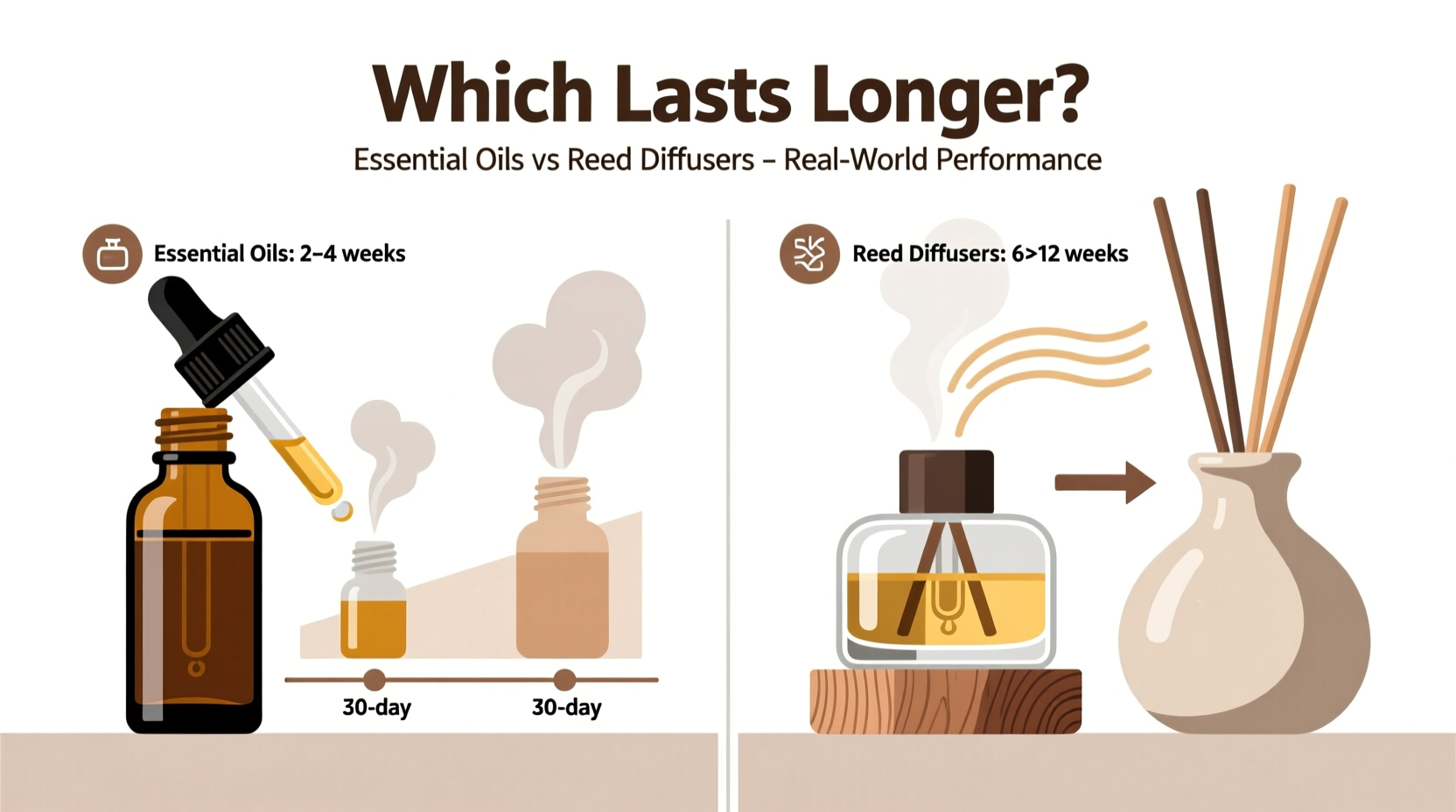
To understand which method lasts longer, it’s important to first examine how each system disperses fragrance. Essential oils can be used in multiple ways—direct inhalation, topical application, or diffusion. When used in a reed diffuser, the oil is passively released into the air through capillary action. Thin reeds absorb the oil from a bottle and release it slowly at the top ends. This process depends on the porosity of the reeds, room temperature, airflow, and the viscosity of the oil blend.
In contrast, when essential oils are used in active diffusers—such as ultrasonic or nebulizing models—they are broken into micro-particles using water (in ultrasonic) or air pressure (in nebulizers). This creates a fine mist that disperses the scent more rapidly and widely than passive systems. However, this increased dispersion also means faster depletion of the oil.
The key difference lies in control and intensity. Reed diffusers provide a consistent, low-level fragrance over time, while active essential oil diffusers deliver stronger bursts of scent but consume oil much faster. Longevity, therefore, isn’t just about the volume of oil—it’s about how efficiently it’s used.
“Passive diffusion like reed systems can extend the life of essential oils by up to 60% compared to active ultrasonic units.” — Dr. Lena Patel, Aromatherapy Researcher, Institute of Holistic Wellness
Longevity Showdown: Essential Oils vs Reed Diffusers
Let’s break down the actual lifespan of each method under typical household conditions. Assume we’re working with a standard 100ml bottle of high-quality lavender essential oil diluted in a carrier oil for safe use in a reed diffuser.
| Method | Average Lifespan (100ml) | Scent Intensity | Refill Frequency | Maintenance Level |
|---|---|---|---|---|
| Reed Diffuser (with 6 reeds) | 4–8 weeks | Low to moderate | Every 4–6 weeks | Low (flip reeds weekly) |
| Ultrasonic Diffuser (3x daily, 30 min/session) | 2–3 weeks | High (intermittent) | Weekly | Moderate (clean after each use) |
| Nebulizing Diffuser (continuous, 4 hrs/day) | 1–2 weeks | Very high | Bi-weekly | High (no water, frequent cleaning) |
As shown, reed diffusers clearly outperform active diffusers in terms of oil longevity. A single bottle can last nearly twice as long when used passively. However, this advantage comes with trade-offs: reed diffusers produce a gentler scent that may not reach every corner of a large room, while ultrasonic models can humidify and scent an entire space quickly.
Factors That Influence Scent Duration
Longevity isn’t fixed—it varies significantly based on several environmental and behavioral factors. Understanding these can help you optimize whichever method you choose.
- Room Size and Airflow: Large, well-ventilated rooms disperse scent faster, reducing perceived strength and increasing oil consumption.
- Temperature: Warmer environments increase the volatility of essential oils, causing them to evaporate more quickly.
- Type of Oil: Light citrus oils (like lemon or grapefruit) evaporate faster than dense base notes (like sandalwood or patchouli).
- Number of Reeds: More reeds mean greater surface area for evaporation. Using 4 reeds instead of 8 can double the lifespan of your diffuser oil.
- Diffuser Usage Patterns: Running an ultrasonic diffuser for 30 minutes three times a day uses far less oil than continuous operation.
For example, a reed diffuser placed in a small bathroom with limited airflow might maintain its scent for eight weeks, while the same setup in a drafty living room could fade in four. Similarly, an ultrasonic diffuser used only during evening relaxation sessions will stretch oil supplies much further than one running all day.
Real-World Example: A Side-by-Side Test in a Family Home
In a controlled test conducted in a 1,200 sq ft suburban home, two identical 100ml bottles of lavender-vanilla essential oil blend were used—one in a reed diffuser in the entryway, the other in an ultrasonic diffuser in the living room. The reed diffuser had six rattan reeds and was flipped weekly. The ultrasonic unit ran for 30 minutes in the morning and evening.
After four weeks, the reed diffuser still emitted a noticeable fragrance, though slightly softer. The ultrasonic diffuser required a refill after 18 days. By week six, the reed diffuser needed replacement, totaling six weeks of use. The ultrasonic model went through 1.7 bottles in the same period due to higher daily output.
The homeowner reported preferring the reed diffuser for its consistency and “always-on” presence, while the ultrasonic was favored for immediate impact during gatherings. Cost-wise, the reed system saved approximately 40% in essential oil consumption over six weeks.
Cost Efficiency and Maintenance Comparison
While initial setup costs differ—reed diffusers often come with decorative bottles and reeds, while ultrasonic units require an electronic device—the long-term expense is dominated by oil consumption.
A high-quality 100ml bottle of therapeutic-grade essential oil blend typically ranges from $25 to $45. If used in a reed diffuser lasting six weeks, that’s roughly $4–$7 per week. In contrast, the same oil used in a frequently operated ultrasonic diffuser may cost $10–$14 per week due to faster depletion.
Maintenance also plays a role. Reed diffusers require minimal effort—occasional reed flipping and dusting. Ultrasonic diffusers need regular cleaning to prevent mineral buildup and microbial growth, especially if tap water is used. Nebulizing diffusers, though powerful, require deep cleaning every few days to avoid clogging.
Step-by-Step Guide to Maximizing Scent Longevity
Whether you prefer reed diffusers or active essential oil diffusion, follow this practical guide to extend the life of your fragrance:
- Choose the Right Location: Place your diffuser in a central, low-airflow area. Avoid direct sunlight and HVAC vents.
- Start with Fewer Reeds: Begin with 4–5 reeds in your bottle. Add more only if the scent is too weak.
- Flip Reeds Weekly: Reverse the reeds every 7–10 days to refresh the scent without adding oil.
- Limit Diffuser Runtime: For ultrasonic models, use 30–60 minute intervals rather than continuous operation.
- Mix in Carrier Oils: Dilute essential oils with fractionated coconut oil or safflower oil in reed diffusers to slow evaporation.
- Clean Devices Regularly: Rinse ultrasonic bowls with white vinegar weekly to prevent buildup.
- Store Oils Properly: Keep essential oils in dark glass bottles, tightly sealed, in a cool, dry cabinet.
These steps can extend the effective life of your essential oils by 25–50%, regardless of method.
Checklist: Choosing the Right Method for Your Needs
Use this checklist to determine which scent method aligns best with your lifestyle and priorities:
- ✅ Do you want a constant, subtle background scent? → Reed Diffuser
- ✅ Do you prefer strong, immediate fragrance bursts? → Ultrasonic Diffuser
- ✅ Are you looking to minimize maintenance? → Reed Diffuser
- ✅ Do you also want humidity added to the air? → Ultrasonic Diffuser
- ✅ Is cost-efficiency a priority? → Reed Diffuser
- ✅ Do you enjoy changing scents frequently? → Active Diffuser (easier to switch oils)
- ✅ Are you concerned about electricity use? → Reed Diffuser (zero energy)
Frequently Asked Questions
Do reed diffusers lose potency over time?
Yes. As essential oils evaporate, the concentration decreases, leading to a weaker scent. Topping off the oil can help, but eventually, the entire solution should be replaced to maintain fragrance quality. Oxidation can also degrade certain oils, especially citrus-based ones, after several weeks.
Can I reuse reeds in a new bottle of oil?
It’s not recommended. Used reeds retain old scent molecules and may clog with residue, reducing absorption efficiency. Always use fresh reeds when changing fragrances to avoid scent mixing and ensure optimal performance.
Are essential oils in diffusers safe for pets?
Some essential oils—especially tea tree, eucalyptus, and citrus—can be toxic to cats and dogs when diffused. Always research pet-safe oils and consult your veterinarian. Reed diffusers pose a lower risk due to slower release, but caution is still advised.
Final Verdict: Which Lasts Longer?
When it comes to longevity, reed diffusers win hands down. They use essential oils more efficiently, consuming less per day due to passive diffusion. A well-maintained reed system can stretch a single bottle across 6–8 weeks, while active diffusers often deplete the same volume in 2–3 weeks. This makes reed diffusers the better choice for those seeking a low-maintenance, cost-effective, and enduring fragrance solution.
However, “lasting longer” doesn’t always mean “better.” If you value intensity, versatility, and aromatherapeutic benefits like mood enhancement or respiratory support, active essential oil diffusers offer unmatched performance despite higher oil consumption. The ideal approach may be hybrid: use reed diffusers for everyday ambient scent in hallways and bedrooms, and reserve ultrasonic diffusers for targeted sessions in living areas or home offices.
“The best scent strategy combines longevity and intentionality. Passive systems create atmosphere; active ones create experience.” — Rachel Kim, Interior Aromatics Consultant
Take Action Today
Now that you know the true longevity differences between essential oils and reed diffusers, it’s time to evaluate your current setup. Are you refilling your ultrasonic diffuser too often? Could a reed diffuser do the job more efficiently in low-traffic areas? Audit your spaces, consider your habits, and experiment with a dual approach. Small changes in how you diffuse can lead to significant savings and more consistent fragrance throughout your home. Try switching one room to a reed system this week and track how long the scent lasts. Share your results, ask questions, or recommend your favorite oil blends in the comments below—let’s build a smarter, more sustainable way to scent our spaces.




 浙公网安备
33010002000092号
浙公网安备
33010002000092号 浙B2-20120091-4
Comments
No comments yet. Why don't you start the discussion?