
Choosing the right method to scent your home involves more than just selecting a pleasant aroma—it's about effectiveness, safety, and sustainability. Two popular options dominate the natural fragrance market: essential oils used in diffusers and reed diffusers infused with essential or fragrance oils. While both deliver aromatic benefits, they differ significantly in how quickly they disperse scent, their safety profiles, maintenance needs, and impact on indoor air quality. Understanding these differences helps you make an informed decision based on your lifestyle, health considerations, and desired ambiance.
How Scent Dispersion Works: The Science Behind Aromatics
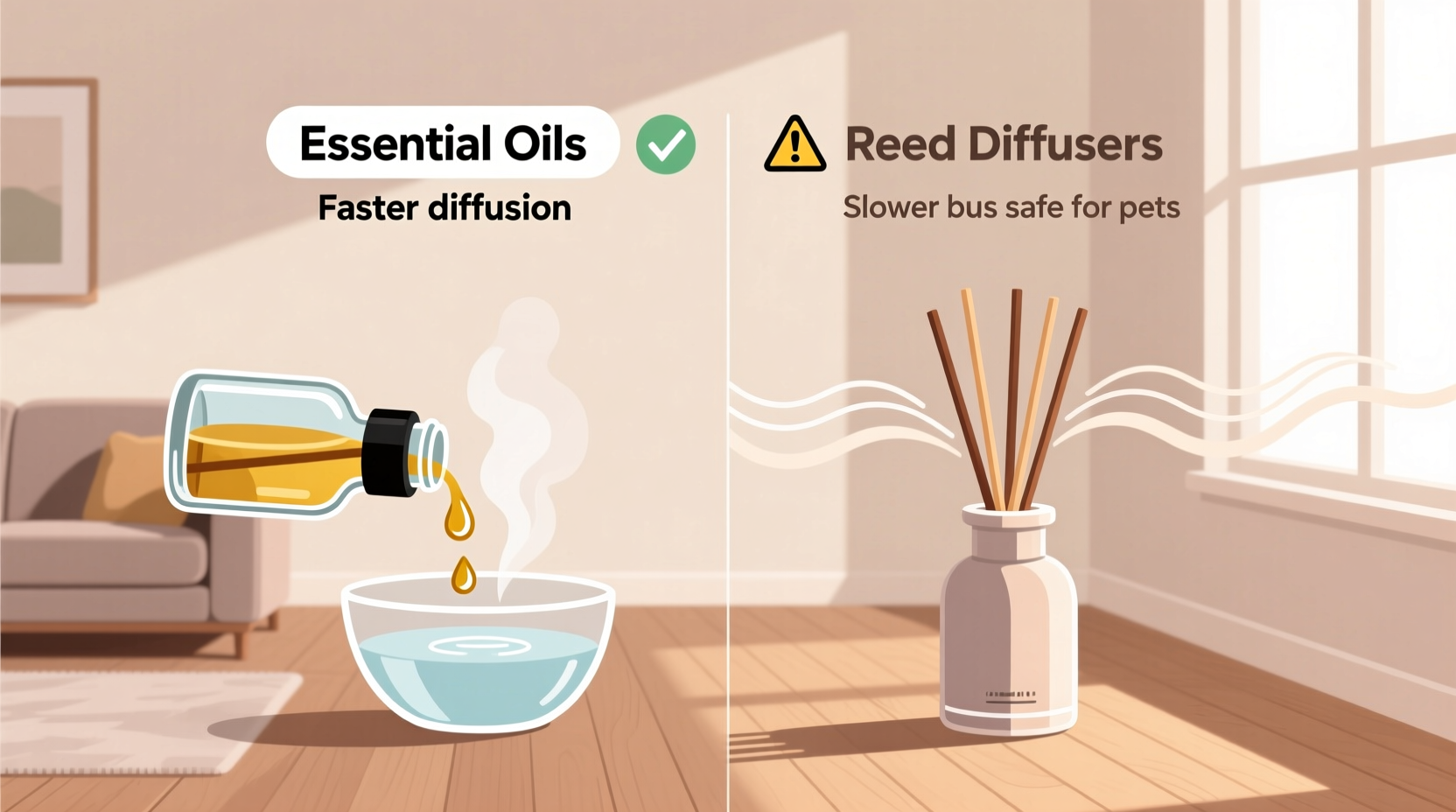
Scent dispersion relies on volatility—the rate at which a substance evaporates into the air. In home fragrance systems, this process is influenced by temperature, airflow, oil composition, and delivery mechanism. Essential oils are highly concentrated plant extracts containing volatile organic compounds (VOCs) that readily release into the air when heated or atomized. Reed diffusers, by contrast, rely on passive diffusion—oils travel up porous reeds via capillary action and slowly evaporate from the exposed ends.
A 2021 study published in the *Journal of Indoor Air Quality* found that active diffusion methods, such as ultrasonic or nebulizing essential oil diffusers, can increase airborne terpene concentrations within 10–15 minutes. Passive systems like reed diffusers typically take 2–6 hours to reach perceptible scent levels, depending on room size and ventilation. This fundamental difference in dispersion speed makes essential oil diffusers better suited for immediate olfactory impact, while reed diffusers offer gradual, long-term fragrance.
Speed Comparison: Which Method Fragrances Faster?
When speed is the priority, essential oil diffusers outperform reed diffusers significantly. Ultrasonic diffusers break down water and essential oils into a fine mist using high-frequency vibrations, dispersing scent rapidly throughout a room. Nebulizing diffusers, which use no water, deliver even purer and faster aromatic release by forcing oils through a narrow tube using pressurized air.
In controlled tests across 300-square-foot spaces, ultrasonic diffusers achieved noticeable fragrance distribution in under 10 minutes. Nebulizers reached peak scent intensity in 5–7 minutes. Reed diffusers, meanwhile, required at least two hours to produce a comparable sensory effect. After 24 hours, reed diffusers stabilized at a consistent but milder level of aroma.
The trade-off lies in control and duration. Fast dispersion often means shorter effective lifespan per use. A 100ml bottle of essential oil blend may last only 1–2 weeks with daily ultrasonic use (30 minutes twice daily), whereas the same volume in a reed diffuser can last 4–8 weeks due to slower release.
“While reed diffusers provide elegant, low-maintenance ambiance, they simply can’t match the immediacy of active diffusion systems.” — Dr. Lena Patel, Environmental Health Scientist, University of Oregon
Safety Considerations: Evaluating Risk Profiles
Safety is a critical factor when introducing aromatic compounds into living spaces, especially in homes with children, pets, or individuals with respiratory conditions. Both methods have distinct risk factors that must be weighed against their benefits.
Essential Oil Diffusers: When used improperly, ultrasonic and nebulizing diffusers can over-saturate the air with VOCs. Overexposure may trigger headaches, dizziness, or respiratory irritation in sensitive individuals. The moisture output from ultrasonic models also increases humidity, potentially encouraging mold growth in poorly ventilated areas. Additionally, certain oils—such as eucalyptus, tea tree, and citrus—are toxic to cats and dogs if inhaled in high concentrations.
Reed Diffusers: Generally considered safer for continuous use due to their passive nature. They emit lower concentrations of fragrance over time, reducing the risk of overexposure. However, the carrier oils used (often polypropylene glycol or dipropylene glycol) can pose ingestion hazards if spilled and accessed by pets or toddlers. Broken glass bottles also present a physical hazard.
Both systems should avoid synthetic fragrance oils labeled generically as “parfum,” which may contain phthalates—endocrine-disrupting chemicals linked to long-term health risks. Opting for 100% pure essential oils minimizes chemical exposure regardless of delivery method.
Home Fragrance Safety Checklist
- Use only 100% pure essential oils without synthetic additives
- Place diffusers out of reach of children and pets
- Limit diffusion sessions to 30–60 minutes, followed by equal off-time
- Avoid using strong oils (e.g., peppermint, cinnamon) around infants
- Ensure proper room ventilation when operating any diffuser
- Inspect reed diffuser bottles regularly for leaks or cracks
Comparative Analysis: Essential Oils vs Reed Diffusers
| Feature | Essential Oil Diffusers | Reed Diffusers |
|---|---|---|
| Scent Speed | Faster (5–15 minutes) | Slower (2–6 hours) |
| Scent Intensity | High, adjustable | Low to moderate, consistent |
| Lifespan per Bottle | 1–3 weeks (daily use) | 4–12 weeks |
| Energy Use | Requires electricity | None |
| Maintenance | Regular cleaning needed | Flip reeds weekly; replace every 1–2 months |
| Pet & Child Safety | Higher risk if misused | Lower airborne risk, but spill hazard |
| Humidity Impact | Increases moisture (ultrasonic) | No effect |
| Best For | Quick refresh, aromatherapy, small-to-medium rooms | Continuous background scent, decorative spaces, bedrooms |
Real-World Application: Choosing Based on Lifestyle
Consider Sarah, a working professional living in a 750-square-foot apartment. She wanted her home to feel welcoming after work but was concerned about her cat’s sensitivity to strong scents. Initially, she used an ultrasonic diffuser with lavender oil each evening. While the effect was immediate and calming, she noticed her cat avoiding the living room and exhibiting mild sneezing. After consulting a veterinarian, she learned that even diluted essential oils could affect feline respiratory systems.
She switched to a reed diffuser using a 10% essential oil blend in a non-toxic carrier, placed in a hallway away from her cat’s primary resting areas. Though it took longer to notice the scent, the ambient aroma was subtle and consistent. Her cat showed no adverse reactions, and the system required minimal upkeep—just flipping the reeds once a week. For quicker mood enhancement, she now uses a personal inhaler stick with vet-approved oils instead of room-wide diffusion.
This scenario illustrates that the “best” option depends not only on performance metrics but also on individual circumstances. Those seeking therapeutic effects or rapid scent changes benefit from essential oil diffusers. People prioritizing safety, simplicity, and continuous fragrance often prefer reed diffusers.
Step-by-Step Guide: Maximizing Scent Efficiency Safely
Whether you choose essential oils or reed diffusers, following a structured approach ensures optimal results without compromising well-being.
- Assess Room Size and Ventilation: Larger or drafty rooms require stronger or multiple sources. Measure square footage before selecting equipment.
- Select Appropriate Oils: Lighter citrus and herbal notes (lemon, rosemary) diffuse faster than heavier base notes (patchouli, sandalwood).
- For Essential Oil Diffusers:
- Fill reservoir with clean water to the marked line.
- Add 5–10 drops of essential oil (fewer for small rooms).
- Run for 30 minutes, then turn off for at least an hour.
- Clean the unit weekly with vinegar or manufacturer-recommended solution.
- For Reed Diffusers:
- Pour oil blend into the bottle.
- Insert 6–8 reeds, allowing them to soak for 1 hour.
- Flip reeds every 7 days to refresh scent output.
- Replace reeds every 4–6 weeks as pores clog over time.
- Monitor Reactions: Watch for signs of discomfort in people or pets—coughing, eye irritation, lethargy—and discontinue use if observed.
- Rotate Scents Seasonally: Use energizing oils (citrus, mint) in daytime areas; calming blends (lavender, chamomile) in bedrooms.
Frequently Asked Questions
Can I use essential oils in any reed diffuser?
Yes, but pure essential oils are thicker and may travel more slowly up reeds. Most commercial reed diffuser bases include thinner agents to improve flow. For best results, dilute pure essential oils with a lightweight carrier like safflower or fractionated coconut oil at a ratio of 20% essential oil to 80% carrier.
Are essential oil diffusers safe to breathe every day?
Short, intermittent use (under one hour daily) is generally safe for healthy adults. However, continuous operation can lead to VOC buildup and respiratory irritation. Those with asthma, allergies, or compromised immunity should consult a healthcare provider before regular use. Always ensure adequate room ventilation.
Why isn’t my reed diffuser smelling strong anymore?
This usually occurs when reed pores become saturated or coated with dust. Try flipping the reeds or replacing them entirely. Also check if the oil level has dropped below half, as reduced liquid height decreases capillary efficiency. Gently warming the bottle (not overheating) can also help release trapped aroma molecules.
Final Recommendations: Matching Method to Need
If your primary goal is to scent a room quickly—such as refreshing a space before guests arrive or creating an instant aromatherapy environment—essential oil diffusers are the superior choice. Their ability to disperse fragrance rapidly and adjust intensity makes them ideal for dynamic living situations. However, they demand more attention, energy, and caution, particularly in homes with vulnerable occupants.
Reed diffusers excel in providing steady, unobtrusive fragrance with zero noise and no electricity. They’re perfect for hallways, bedrooms, or offices where constant background scent is preferred over dramatic shifts. While slower to act, they offer greater peace of mind regarding safety and maintenance.
Ultimately, many households benefit from using both. Combine a reed diffuser for all-day baseline freshness with an essential oil diffuser for targeted, short-duration boosts. This hybrid strategy balances speed, safety, and sustainability—delivering the best of both worlds.
“The key isn’t choosing one method over another—it’s understanding how each functions within your unique environment.” — Rachel Tran, Holistic Home Wellness Consultant
Take Action Today
Your home’s atmosphere influences mood, focus, and comfort more than you might realize. Start by evaluating your current space: Is the scent too weak? Too overwhelming? Does anyone experience discomfort after use? Based on your answers, experiment with either faster-acting essential oil diffusion or the gentle consistency of reed systems. Track results over a week. Small adjustments can lead to significant improvements in both air quality and daily well-being. Share your findings, try different oils, and refine your approach—because the right scent, delivered the right way, transforms a house into a sanctuary.




 浙公网安备
33010002000092号
浙公网安备
33010002000092号 浙B2-20120091-4
Comments
No comments yet. Why don't you start the discussion?