
Astrophysics is a captivating field that explores the universe’s most profound mysteries—from black holes and dark matter to the origins of galaxies. While the path to becoming an astrophysicist is demanding, it is also deeply rewarding for those passionate about space, data, and discovery. Unlike many professions, astrophysics requires a long-term academic commitment, specialized skills, and strategic networking. However, with the right approach, motivated individuals can transition from curious students to contributing researchers in this elite scientific community.
1. Build a Strong Academic Foundation
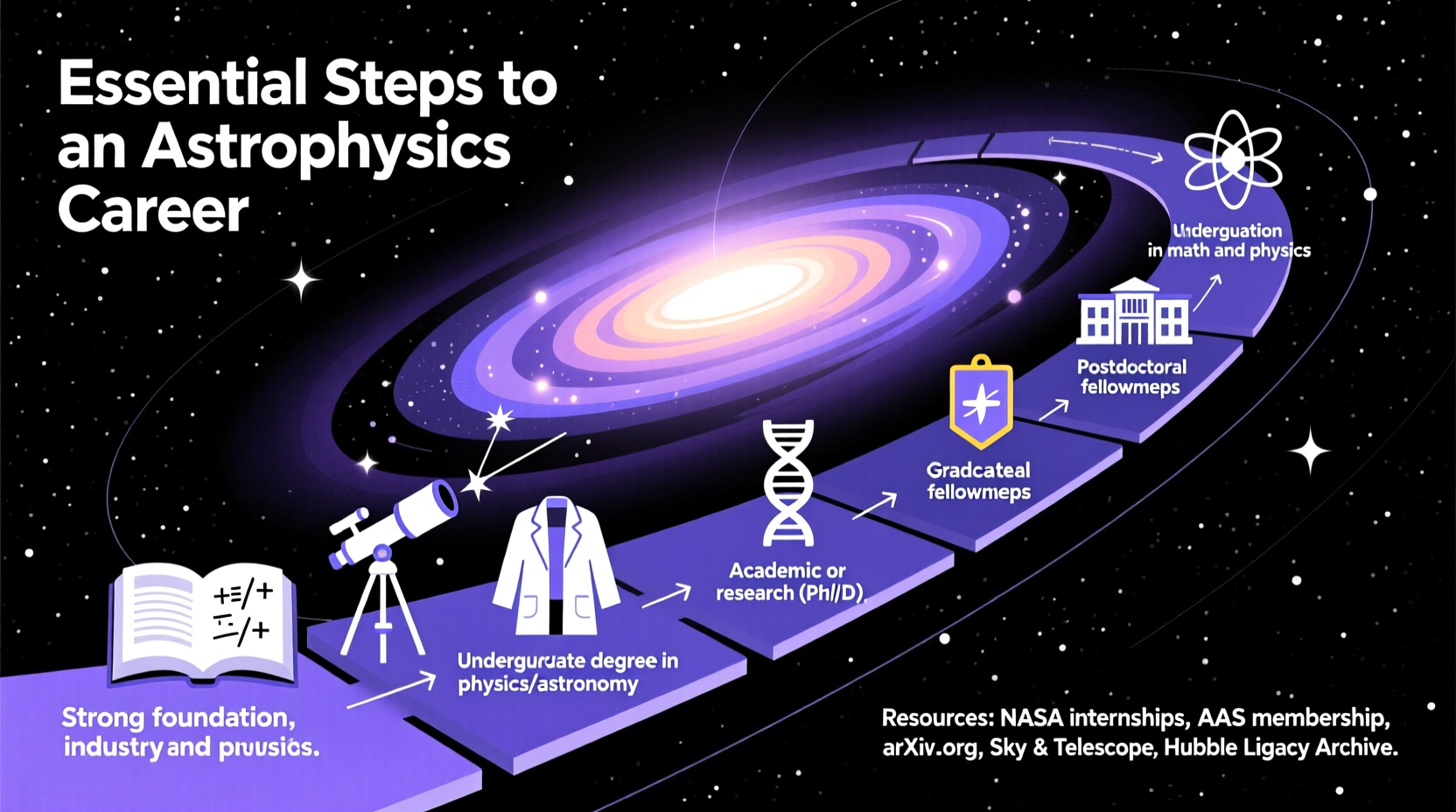
The journey into astrophysics begins with rigorous academic training. A bachelor's degree in physics or astronomy is typically the first step. During undergraduate studies, focus on mastering core concepts in classical mechanics, electromagnetism, quantum physics, and thermodynamics. Mathematics—especially calculus, linear algebra, and differential equations—is equally critical. These subjects form the backbone of theoretical and observational astrophysics.
Students should seek out institutions with strong physics departments and access to observatories or computational labs. Courses in computer programming (Python, C++, or MATLAB) are increasingly essential, as modern astrophysics relies heavily on simulations and data analysis.
2. Gain Research Experience Early
Academic knowledge alone is not enough. Real-world research experience is one of the most decisive factors in securing graduate placements and future positions. Undergraduates should actively seek summer research programs such as the NSF REU (Research Experiences for Undergraduates) in astronomy and astrophysics, which offers paid internships at leading universities and observatories across the U.S.
Many institutions also allow undergraduates to work directly with faculty on ongoing projects. Whether analyzing telescope data, modeling stellar evolution, or assisting in instrument development, hands-on experience strengthens both understanding and applications for advanced degrees.
“Early exposure to real research transforms students from passive learners to independent thinkers.” — Dr. Elena Rodriguez, Astrophysicist at MIT
Step-by-Step Guide to Securing Research Opportunities
- Identify professors whose research aligns with your interests by reviewing department websites.
- Email them directly with a concise message expressing interest, attaching your CV and transcript.
- Apply to formal programs like NSF REU, NASA internships, or international opportunities such as the European Southern Observatory (ESO) summer student program.
- Follow up politely if you don’t hear back within two weeks.
- Present your work at conferences or university symposia to build visibility.
3. Pursue Graduate Studies Strategically
A Ph.D. in astrophysics or astronomy is nearly mandatory for most research and academic roles. The application process is competitive, so preparation starts well before graduation. Strong GRE Physics scores (though declining in requirement), compelling letters of recommendation, and a clear statement of purpose are crucial.
When selecting graduate schools, consider more than rankings. Look at faculty research areas, available telescope access, computing infrastructure, and placement records of past graduates. Some programs emphasize observational work; others focus on theory or computational astrophysics. Choose based on alignment with your goals.
During a Ph.D., students typically spend the first two years in coursework, followed by qualifying exams and original dissertation research. This phase often includes publishing papers, attending conferences, and presenting findings—key components for building a professional reputation.
| Factor | Do | Avoid |
|---|---|---|
| Advisor Selection | Choose someone active in research with good mentorship reviews | Selecting based solely on fame or convenience |
| Program Fit | Prioritize research alignment over prestige | Ignoring department culture and support systems |
| Funding | Ensure full tuition coverage and stipend | Accepting unfunded positions |
4. Develop Technical and Transferable Skills
Modern astrophysics is as much about data as it is about theory. Researchers routinely handle petabytes of data from instruments like the Hubble Space Telescope, James Webb Space Telescope, and ground-based observatories. Proficiency in programming languages such as Python (with libraries like NumPy, SciPy, Astropy), IDL, or Julia is expected. Familiarity with machine learning techniques is increasingly valuable for pattern recognition in large datasets.
Beyond technical abilities, communication skills are vital. Writing clear research papers, giving conference talks, and explaining complex ideas to non-specialists—all are part of a successful career. Teaching experience during graduate school also enhances employability, especially for academic positions.
Mini Case Study: From Community College to Research Scientist
Jamal Carter began his journey at a community college in Arizona, taking introductory physics and math courses while working part-time. Inspired by a public lecture on exoplanets, he transferred to the University of Arizona’s astronomy program. There, he joined a research group studying planetary atmospheres using Spitzer Space Telescope data.
He secured an NSF REU at Caltech, where he co-authored a paper on atmospheric models. That experience helped him gain admission to a top-tier Ph.D. program. Today, Jamal works at the Space Telescope Science Institute, supporting JWST data calibration. His story highlights that while the path isn’t linear, persistence and proactive engagement can overcome initial disadvantages.
5. Leverage Key Resources and Networks
Navigating the astrophysics landscape is easier with the right tools and connections. Below is a checklist of essential resources:
Career Development Checklist
- Join professional societies: American Astronomical Society (AAS), International Astronomical Union (IAU)
- Subscribe to arXiv.org (specifically astro-ph sections) to stay current
- Attend virtual or in-person conferences (e.g., AAS meetings)
- Use NASA’s Astrophysics Data System (ADS) to search literature
- Participate in online forums like Astronomy Stack Exchange
- Apply for fellowships (e.g., NASA Hubble Fellowship, Jansky Postdoctoral Fellowship)
Networking plays a subtle but powerful role. Presenting at conferences, engaging on social media (e.g., X/Twitter academic communities), and collaborating across institutions can lead to job offers or co-authorship opportunities. Many postdoctoral positions are filled through word-of-mouth or direct outreach.
FAQ
Is a master’s degree sufficient for a career in astrophysics?
In most cases, no. While a master’s may lead to technical or outreach roles in planetariums or science communication, research and university teaching positions require a Ph.D. Some students earn a master’s en route to a doctorate, but terminal master’s degrees are uncommon in the U.S. system.
Can I enter astrophysics from another field?
Yes, though it requires catching up on foundational physics and math. Engineers, mathematicians, or computer scientists with strong quantitative backgrounds can transition by taking prerequisite courses, pursuing post-baccalaureate programs, or entering bridge programs designed for underrepresented groups in physics.
How long does it take to become an astrophysicist?
Typically 10–12 years post-high school: 4 years for a bachelor’s, 5–6 years for a Ph.D., and 2–3 years in one or more postdoctoral positions before securing a permanent role. The timeline varies, especially if breaks occur between stages.
Conclusion
Breaking into astrophysics is not a sprint—it’s a marathon fueled by curiosity, resilience, and continuous learning. Success hinges not only on academic excellence but on initiative, collaboration, and adaptability. The field is competitive, but opportunities exist for those who seek them proactively. Whether you're analyzing cosmic microwave background radiation or simulating galaxy formation, every contribution advances our understanding of the cosmos.




 浙公网安备
33010002000092号
浙公网安备
33010002000092号 浙B2-20120091-4
Comments
No comments yet. Why don't you start the discussion?