
Moving to Canada to work is a life-changing opportunity that combines professional growth with access to one of the most stable and welcoming countries in the world. However, navigating the immigration process, securing employment, and adapting to Canadian workplace culture requires careful planning and informed decisions. This guide breaks down every essential step—from eligibility and visa applications to landing your first job and thriving in your new environment—so you can transition smoothly and confidently into your Canadian career.
Step 1: Determine Your Eligibility and Work Permit Options
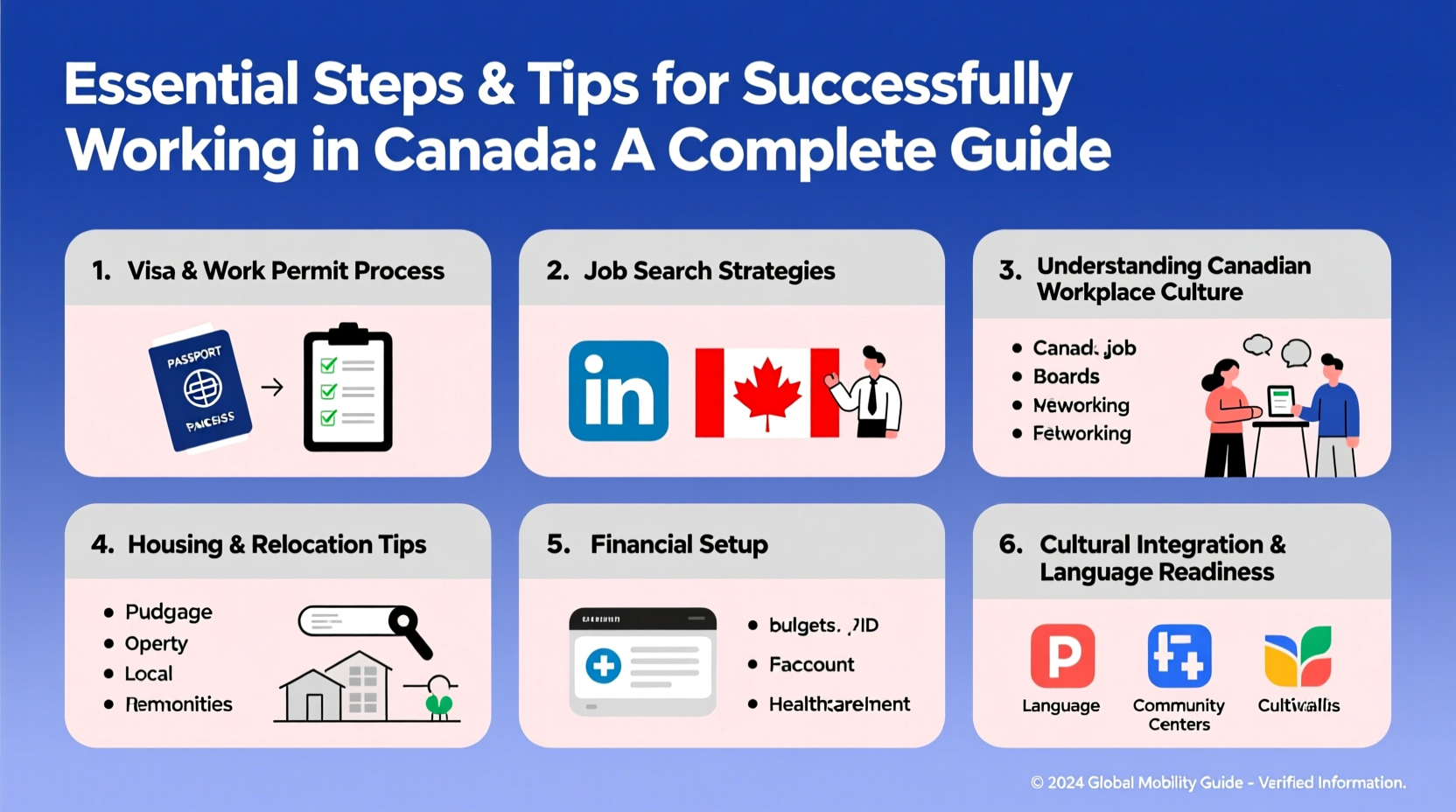
Before applying for jobs in Canada, you must understand how you can legally work there. Most foreign nationals need a work permit, which comes in two main forms: employer-specific and open. An employer-specific permit ties you to a particular job and company, while an open work permit allows you to work for any employer in Canada, with some exceptions.
The most common pathways include:
- Temporary Foreign Worker Program (TFWP): Requires a job offer and a Labour Market Impact Assessment (LMIA) from the employer.
- International Mobility Program (IMP): Includes LMIA-exempt permits for certain roles, such as intra-company transfers or partners of skilled workers.
- International Experience Canada (IEC): For young adults (ages 18–35, depending on country) seeking temporary work through exchange agreements.
- Express Entry: A points-based system for permanent residency targeting skilled workers in high-demand occupations.
Step 2: Prepare a Canadian-Style Resume and Cover Letter
Canadian employers expect resumes that are clear, concise, and tailored to the position. Unlike some international formats, Canadian resumes typically do not include photos, age, marital status, or religious affiliation due to anti-discrimination laws.
A strong Canadian resume includes:
- Contact information at the top (name, phone, email, LinkedIn if applicable)
- A professional summary (optional but helpful)
- Reverse-chronological work history with quantified achievements
- Education and certifications
- Relevant skills (e.g., software proficiency, languages)
“Employers in Canada value specificity. Instead of saying ‘responsible for team management,’ say ‘led a team of 5 developers, delivering projects 20% under budget.’” — Sarah Thompson, HR Consultant, Toronto
Common Resume Mistakes to Avoid
| Do’s | Don’ts |
|---|---|
| Tailor each application to the job posting | Send generic, one-size-fits-all resumes |
| Use action verbs like “managed,” “developed,” “increased” | Use passive language or vague descriptions |
| Keep it to 1–2 pages maximum | Submit lengthy, multi-page documents |
| Include keywords from the job description | Ignore ATS (Applicant Tracking Systems) optimization |
Step 3: Navigate the Job Search Strategically
Finding a job in Canada often takes longer than expected, especially without local experience. Networking plays a crucial role—many positions are filled before they’re even advertised.
Start by leveraging these platforms:
- Job boards: Indeed.ca, LinkedIn, Glassdoor, Workopolis
- Government resources: Job Bank (jobbank.gc.ca) offers real-time labor market data and verified postings
- Professional associations: Join industry groups like Engineers Canada or CPA Canada to access exclusive job listings and events
Attend virtual or in-person networking events, connect with alumni from your university in Canada, and don’t hesitate to request informational interviews to learn about companies and build relationships.
Step 4: Relocate and Settle In Effectively
Once you have a job offer and work permit, preparation for relocation begins. Key tasks include:
- Arrange temporary accommodation upon arrival (e.g., Airbnb, corporate housing)
- Apply for a Social Insurance Number (SIN) as soon as you land—it's required to work and access benefits
- Open a Canadian bank account (major banks like RBC, TD, and Scotiabank assist newcomers)
- Obtain provincial health insurance (processing times vary by province)
- Transfer important documents: passport, degree certificates, reference letters (get them translated if needed)
Many newcomers underestimate the cost of living differences between cities. For example, renting a one-bedroom apartment in downtown Vancouver averages over $2,500/month, while in Winnipeg, it’s closer to $1,300.
Mini Case Study: Maria’s Move from Colombia to Calgary
Maria, a civil engineer, secured a job through Express Entry after scoring highly on language proficiency and work experience. She arrived in Calgary with short-term housing arranged and applied for her SIN within three days. By joining the Association of Professional Engineers and Geoscientists of Alberta (APEGA), she accessed mentorship programs and continuing education credits. Within six months, she transitioned from a contract role to a full-time position with benefits and began her path toward licensure. Her key success factors? Early preparation, professional networking, and persistence.
Step 5: Adapt to Canadian Workplace Culture
Canadian workplaces emphasize collaboration, punctuality, and respectful communication. Hierarchies tend to be flat, and employees are encouraged to share ideas during meetings. Understanding unwritten cultural norms can significantly impact your integration and advancement.
- Punctuality: Arrive on time for work and meetings. Being late is seen as unprofessional.
- Work-life balance: Canadians generally respect personal time. Avoid sending emails late at night unless urgent.
- Feedback style: Constructive criticism is delivered politely. Phrases like “Have you considered…?” are common instead of direct commands.
- Diversity and inclusion: Employers actively promote inclusive environments. Discrimination complaints are taken seriously.
“In Canada, soft skills matter as much as technical expertise. The ability to collaborate, adapt, and communicate clearly often determines long-term success.” — James Reed, Talent Acquisition Lead, Vancouver Tech Firm
Checklist: Your Roadmap to Working in Canada
- Confirm eligibility and choose the right immigration pathway
- Create a Canadian-style resume and cover letter
- Apply for jobs using targeted platforms and networking
- Secure a job offer and obtain your work permit or PR visa
- Prepare financially and logistically for relocation
- Arrive, get your SIN, and set up banking and healthcare
- Adapt to workplace norms and continue building professional networks
- Explore pathways to permanent residency if desired
Frequently Asked Questions
Can I work in Canada without a job offer?
Yes, if you qualify under programs like International Experience Canada (IEC) or Express Entry. Open work permits also allow job searching upon arrival, though competition can be high without prior connections.
How long does it take to get a work permit?
Processing times vary by country and program. On average, it takes 1 to 6 months. Some Express Entry applications are processed in as little as 6 weeks.
Is my foreign degree recognized in Canada?
Not automatically. You may need an Educational Credential Assessment (ECA) from organizations like WES (World Education Services) to verify equivalency, especially for regulated professions like medicine or engineering.
Conclusion: Start Building Your Canadian Career Today
Working in Canada is more than just a change of address—it’s an investment in your future. With the right preparation, realistic expectations, and proactive approach, you can secure meaningful employment, integrate into a supportive society, and enjoy a high quality of life. Whether you're aiming for temporary work or permanent settlement, every step you take now brings you closer to long-term success. Take control of your journey, use the resources available, and embrace the opportunities waiting for you in Canada.




 浙公网安备
33010002000092号
浙公网安备
33010002000092号 浙B2-20120091-4
Comments
No comments yet. Why don't you start the discussion?