
Air conditioning systems are critical for maintaining indoor comfort, especially during peak summer months. However, a unit that runs constantly or fails to cool properly may not be operating at peak efficiency. An inefficient AC doesn’t just compromise comfort—it increases energy consumption, drives up utility bills, and shortens the lifespan of the system. Recognizing early signs of inefficiency allows homeowners and facility managers to take corrective action before minor issues become costly repairs.
Diagnosing AC efficiency isn't reserved for HVAC professionals alone. With a few practical checks and observations, you can determine whether your system is performing as it should—and when it’s time to call in an expert.
1. Evaluate Cooling Performance and Airflow
The most immediate indicator of AC efficiency is how well it cools your space. Start by measuring temperature differences between rooms and near vents. Use a thermometer to record the air temperature directly from a supply vent and compare it to the ambient room temperature. A properly functioning system should produce cooled air that is 14–20°F cooler than the room air.
Poor airflow often signals underlying problems. Check all vents to ensure they’re open and unobstructed. Feel the airflow strength—weak output may indicate clogged filters, blocked ducts, or blower motor issues. If some rooms remain warmer than others despite equal vent coverage, this could point to duct leaks or improper zoning.
2. Inspect and Replace the Air Filter
One of the simplest yet most overlooked maintenance tasks is checking the air filter. A dirty or clogged filter restricts airflow, forcing the system to work harder and reducing cooling efficiency. Filters should be inspected monthly during peak usage seasons and replaced every 1–3 months, depending on usage and environmental factors like pets or dust levels.
When removing the filter, hold it up to a light source. If you can’t see light through it, it’s too dirty to allow proper airflow. Using a high-efficiency particulate air (HEPA) or MERV 8–13 filter improves air quality and system performance—but only if changed regularly.
3. Monitor Thermostat Behavior and Calibration
Your thermostat is the control center of your cooling system. Inaccurate readings or outdated programming can lead to inefficient operation. First, verify that the thermostat is set to “cool” and the desired temperature is lower than the current room temperature. If the AC doesn’t activate, the issue may lie with the thermostat itself.
To test accuracy, place a calibrated thermometer next to the thermostat and wait 15 minutes. If there’s more than a 2°F difference, recalibrate or replace the unit. Smart thermostats offer additional diagnostics, such as runtime tracking and alerts for abnormal cycling, which help identify inefficiencies early.
“Thermostat inaccuracies account for nearly 15% of unnecessary cooling cycles in residential systems.” — National Institute of Building Sciences, HVAC Efficiency Report
4. Conduct a Visual and Auditory Inspection
Step outside and examine the condenser unit. Ensure the area around it is clear of debris, vegetation, or obstructions that impede airflow. The coils should be clean and free of dirt buildup, which insulates them and reduces heat exchange efficiency.
Listen carefully when the system starts. Unusual sounds—such as grinding, squealing, or banging—can indicate mechanical wear. A healthy system produces a steady hum followed by consistent airflow. Frequent short cycling (turning on and off rapidly) suggests refrigerant issues, electrical faults, or an oversized unit.
| Symptom | Possible Cause | Action Required |
|---|---|---|
| Weak airflow indoors | Clogged filter, duct blockage | Replace filter, inspect ducts |
| Frost on refrigerant lines | Low refrigerant, airflow restriction | Turn off unit, call technician |
| Water pooling near indoor unit | Clogged condensate drain | Clean drain line |
| Outdoor unit not running | Tripped breaker, faulty capacitor | Check electrical panel, contact pro |
5. Track Energy Usage and Runtime Patterns
An efficient AC should maintain comfort without running nonstop. During moderate weather, expect 2–3 cooling cycles per hour, each lasting 10–20 minutes. If your system runs continuously—even when outdoor temperatures are mild—it’s likely underperforming.
Monitor your electricity bill over several months. A sudden spike in summer usage—without changes in habits or rates—may signal declining efficiency. Consider installing an energy monitor to track real-time power draw from your HVAC system. Units drawing significantly more wattage than their rated capacity are working too hard and may need servicing.
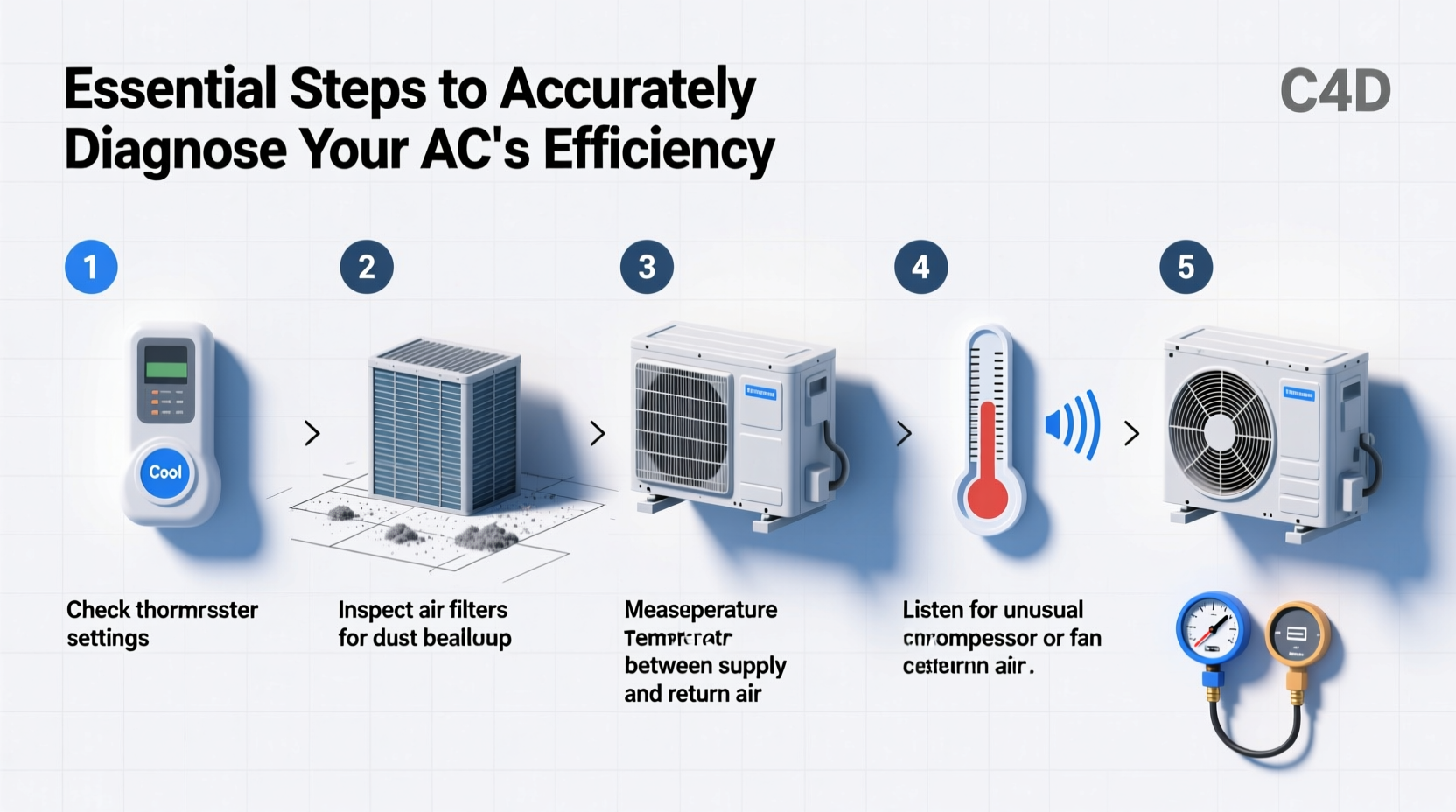
Step-by-Step Guide: Diagnosing AC Efficiency in 6 Steps
- Check thermostat settings – Confirm correct mode, temperature, and fan operation.
- Inspect and replace air filter – Install a clean, appropriately rated filter.
- Test airflow at vents – Use a thermometer and hand feel to assess volume and temperature drop.
- Examine outdoor unit – Clear debris, check for ice, listen for odd noises.
- Monitor cycle frequency – Note how often the system turns on and how long it runs.
- Review recent energy bills – Compare seasonal usage trends for anomalies.
Mini Case Study: Identifying Hidden Duct Leaks
Sarah, a homeowner in Phoenix, noticed her upstairs bedrooms were consistently hotter than the rest of the house, despite closing vents in unused rooms. Her AC ran almost nonstop, and her July electric bill was 40% higher than the previous year. She followed basic troubleshooting steps: replaced the filter, cleaned the outdoor unit, and verified thermostat calibration—all appeared normal.
After consulting an HVAC technician, a duct blaster test revealed significant air leakage in the attic ductwork. Up to 30% of cooled air was escaping before reaching living spaces. After sealing the leaks with mastic and insulating exposed ducts, Sarah’s system cycled less frequently, temperatures balanced out, and her next month’s bill dropped by $75. This case illustrates how invisible issues like duct leakage can severely impact efficiency—even when the AC unit itself functions correctly.
Common Do’s and Don’ts When Assessing AC Performance
| Do | Don’t |
|---|---|
| Change filters regularly | Ignore strange noises |
| Keep outdoor unit clear | Block return air grilles |
| Use a programmable thermostat | Set thermostat too low to cool faster |
| Schedule annual professional tune-ups | Attempt refrigerant handling yourself |
| Seal visible duct leaks | Overload circuits with other appliances |
FAQ
How often should I have my AC professionally serviced?
Annual maintenance is recommended, ideally in spring before heavy summer use. A professional inspection includes refrigerant level checks, electrical component testing, coil cleaning, and safety verification.
Can a dirty outdoor unit reduce efficiency?
Yes. Dirt and debris on the condenser coils reduce heat dissipation, forcing the compressor to work harder. This increases energy use and wear. Clean the area around the unit monthly and schedule professional coil cleaning annually.
Is it worth repairing an older AC system?
If your system is over 10–15 years old and requires frequent repairs, replacement may be more cost-effective. Modern units are 30–50% more efficient than models from the early 2000s, offering long-term savings on energy and maintenance.
Conclusion
Accurately diagnosing your AC’s efficiency involves a combination of observation, simple tests, and awareness of energy patterns. By systematically evaluating airflow, thermostat function, physical condition, and operational behavior, you can identify inefficiencies early and take appropriate action. While some tasks are DIY-friendly, knowing when to involve a licensed HVAC technician ensures safety and prevents further damage.




 浙公网安备
33010002000092号
浙公网安备
33010002000092号 浙B2-20120091-4
Comments
No comments yet. Why don't you start the discussion?